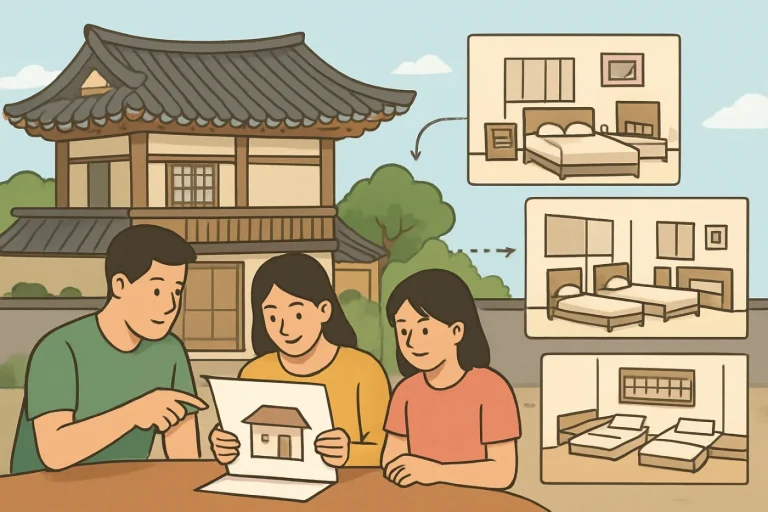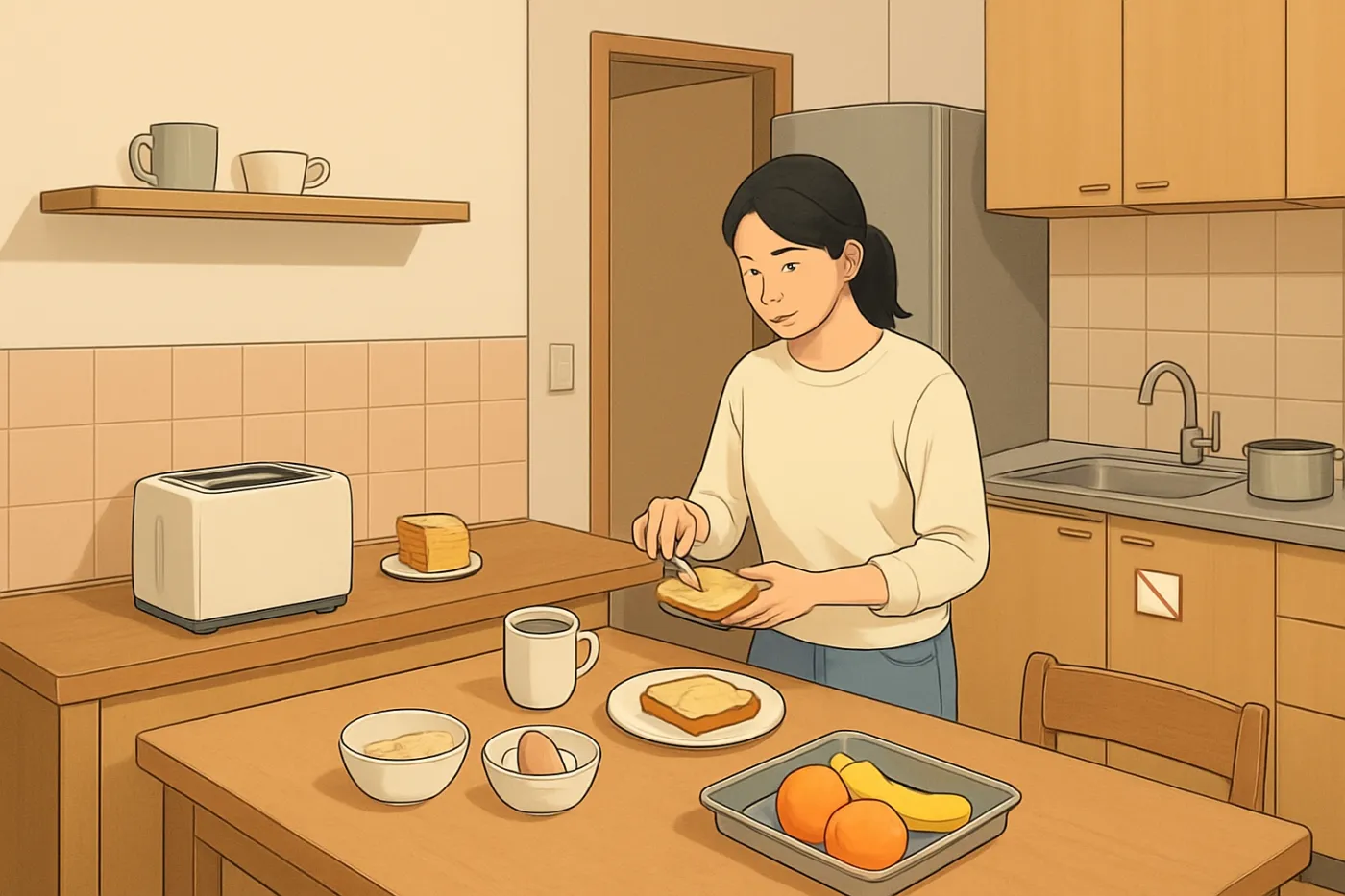
If you stay in a guesthouse in South Korea, do not assume there will be a hotel-style buffet or a full self-catering kitchen. Many places offer only a light breakfast, some have limited cooking facilities, and almost all have clear rules about food, smells, and cleaning.
To avoid frustration and extra costs, check three things before you book: what “breakfast included” really means, how the shared kitchen is equipped and when you can use it, and which food-related rules or deposits apply.
What guesthouse breakfast and kitchen usually mean in South Korea
Guesthouses in South Korea sit somewhere between a hostel and a small hotel. They are popular with budget and independent travelers, and many are run by owners who live on-site. That affects how breakfast and kitchens are set up.
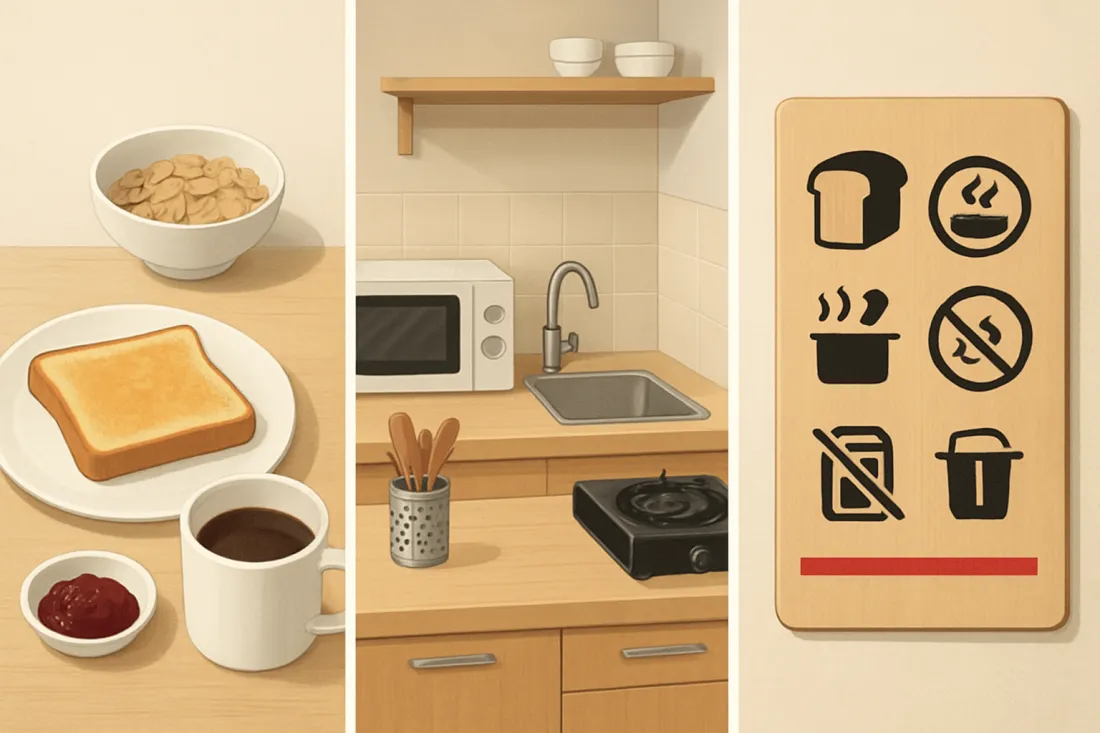
- Breakfast is often light and self-service – think toast, jam, instant coffee, maybe eggs or cereal, not a full restaurant-style buffet.
- Shared kitchens exist in many, but not all, guesthouses – some only have a microwave and kettle, others have a full stove and cookware.
- Food rules are strict compared with some other countries – common limits on strong smells, late-night cooking, and leaving food in the fridge too long.
- Extra charges usually appear only if you break rules – for example, cleaning fees for strong smells, damage, or leaving a big mess.
Because there is no single standard, treat every guesthouse as different and confirm the details that matter to you.

Typical breakfast options in Korean guesthouses
Breakfast in South Korean guesthouses ranges from nothing at all to a simple home-style meal. The most common patterns are:
- No breakfast – the guesthouse focuses on beds and social space; you buy food outside.
- Basic Western-style self-service – toast, jam, butter, instant coffee, tea, maybe cereal or boiled eggs.
- Light Korean-style breakfast – rice, soup, and side dishes prepared by the host at a set time.
- Weekend-only or seasonal breakfast – breakfast only when occupancy is high or on specific days.
When you see “breakfast included” on a booking page, it usually means the basic self-service version unless the description clearly says otherwise. Do not expect a hotel buffet unless the photos and description show one.
As a rough planning guide, many travelers find that a light guesthouse breakfast covers about 20–30% of their daily food needs, so you should still budget for at least two additional meals or snacks outside.
How shared kitchens in Korean guesthouses usually work
Shared kitchens are a big reason many travelers choose guesthouses in South Korea, but the facilities can be very different from place to place.
Common features you may find:
- Fridge space – usually one or more shared refrigerators with labeled shelves or baskets. Many places ask you to write your name and checkout date on each item so staff know when to clear it.
- Microwave and kettle – almost universal for heating convenience food and boiling water.
- Stove or induction cooktop – available in many, but not all, guesthouses; sometimes limited to certain hours.
- Basic cookware – pots, pans, knives, chopping boards, and simple utensils.
- Shared dishes – plates, bowls, cups, and chopsticks/spoons for guest use.
However, some guesthouses restrict cooking to simple meals only, and a few do not allow any cooking beyond reheating food. This is usually to control smells, noise, and cleaning workload.
In many properties, kitchen access is limited to specific time windows, for example 07:00–22:00, with quiet hours outside that range. Always check the posted schedule when you arrive.
Comparison table: breakfast and kitchen options in Korean guesthouses
| Option you might see | What it usually means in practice | When it suits you | Risks or downsides |
|---|---|---|---|
| “No breakfast” and “no kitchen” | Only beds and maybe a lounge. You eat out or buy ready-to-eat food from convenience stores and restaurants. | Short city stays, food-focused trips, travelers who plan to eat out every meal and want to try local dishes. | Higher daily food costs; less flexibility if you are tired, arrive late, or have dietary restrictions. |
| “Breakfast included” with “simple shared kitchen” | Toast/coffee breakfast and a kitchen with microwave, kettle, and limited cookware. Often enough for instant noodles and reheating leftovers. | Most budget travelers who want to save a bit on breakfast and cook or reheat simple meals occasionally. | Not ideal for serious cooking; peak-time crowding in the morning and evening; you still buy most meals outside. |
| “Full kitchen access” and “self-catering allowed” | Stove or induction, pots and pans, fridge space, and flexible cooking hours within house rules. | Longer stays, families, and people with dietary restrictions who need to cook several times per week. | Requires time for shopping and cleaning; strong-smell rules still apply; you share space with other guests. |
| “Korean-style breakfast provided” | Host-cooked rice, soup, and side dishes at a set time in the morning, often served family-style in the dining area. | Travelers curious about local food and routine, early risers, and those who like a warm breakfast. | Fixed time; may not suit late sleepers or very restricted diets; usually no choice of menu. |
| “Breakfast available for a fee” | Optional set breakfast you can add or pay on-site, sometimes only on certain days or with advance notice. | Those who want flexibility to decide day by day whether to eat in or outside. | Costs add up over several days; may sell out or be unavailable if you do not reserve in advance. |
Food-related rules and etiquette in Korean guesthouses
Because guesthouses are shared spaces, food rules are taken seriously. While each property is different, you can expect some version of the following:
- Quiet hours – cooking and eating in common areas may be limited late at night or very early in the morning to avoid noise and smells. Many places set quiet hours around 22:00–07:00.
- Smell control – strong-smelling foods (for example, some fermented dishes or grilled meats) may be banned from the kitchen or rooms.
- Clean-up rules – you are expected to wash, dry, and put away dishes and wipe surfaces immediately after use.
- Labeling food – many guesthouses ask you to label your food with your name and departure date; unlabelled food may be thrown away during regular fridge clean-outs.
- No cooking in bedrooms – using portable stoves or cooking appliances in rooms is usually forbidden for safety and smell reasons.
- Shared items only in common areas – dishes and cookware should not be taken to rooms or kept there.
Ignoring these rules can lead to warnings, cleaning fees, or, in serious cases, being asked to leave. Always read the house rules posted in the kitchen or in your room.
Typical cost considerations for breakfast and kitchen use
Guesthouses in South Korea usually bundle breakfast and kitchen access into the nightly rate rather than charging separate daily fees. However, food-related costs still affect your budget in several ways:
- Room rate differences – places with breakfast included may charge more per night than similar guesthouses without breakfast. When comparing, look at the total cost of room plus food, not just the base rate.
- Optional breakfast fees – some properties offer a paid breakfast that you can add to your stay or buy on specific days. Check whether you must reserve it at least one day in advance or if you can decide on the morning.
- Food shopping for self-catering – using a kitchen helps you save compared with eating out every meal, but you will still buy groceries. A simple self-catered breakfast and dinner can often replace two restaurant meals per day, which matters over a week-long stay.
- Possible cleaning or damage fees – if you leave a big mess, cause strong lingering smells, or damage equipment, you may be charged extra. Always check the house rules or booking conditions for any mention of “extra cleaning” or “damage” fees.
Because exact amounts vary by city, season, and property, treat any price you see as a snapshot, not a rule. If you are comparing options, look at the total daily cost of accommodation plus food, not just the room rate.
Checklist: how to choose a guesthouse with the right breakfast and kitchen
Use this practical checklist before you book a guesthouse in South Korea:
- Read the full description carefully
Look for explicit mentions of “breakfast included,” “shared kitchen,” “self-catering,” or “no cooking.” If the description is vague, assume facilities are basic until confirmed. - Check recent guest reviews
Scan for comments about breakfast quality, kitchen cleanliness, and how strict the rules feel in practice. Pay attention to reviews from the last 6–12 months, as policies can change. - Study the photos
Confirm whether the kitchen has a stove, fridge space, and enough counter area to cook comfortably. Count roughly how many burners and sinks you see to understand how many people can cook at once. - Confirm breakfast style and time
If it matters to you, message the host to ask what is served and during which hours. Check whether breakfast is self-service (flexible) or host-served at a fixed time. - Ask about cooking limits
Check whether strong-smelling foods, meat frying, or late-night cooking are allowed. If you plan to cook specific dishes, describe them briefly and ask if they are acceptable. - Clarify fridge and storage rules
Ask how food should be labeled, how long it can stay, and whether there is a separate shelf or basket for each room. This helps you avoid buying more fresh food than you can store. - Check if utensils and basics are provided
Find out whether there are pots, pans, knives, and basic seasonings like salt or oil, or if you should bring or buy your own. - Look for any extra charges
Check house rules for cleaning fees, towel replacement fees, or penalties related to kitchen misuse. If something is unclear, ask the host directly before booking. - Match facilities to your eating habits
If you plan to eat out most of the time, a simple breakfast and microwave may be enough. If you have dietary restrictions or want to cook most dinners, prioritize a full kitchen. - Consider location and nearby food options
If the guesthouse has limited kitchen facilities, make sure there are convenience stores, bakeries, or restaurants within easy walking distance.
You are choosing between several guesthouses in South Korea and want to know which one best matches your food needs, such as having a reliable breakfast, space to cook, and clear rules that fit your routine and budget.
Your main options are: a guesthouse with no breakfast and no kitchen, one with a simple breakfast and basic kitchen, or one that clearly offers a full self-catering kitchen and more substantial breakfast or paid breakfast choices.
Write down your top three priorities, for example “need to leave by 07:30 most mornings,” “want to cook dinner at least 3 nights,” or “happy to eat out every meal if the area has many restaurants.” Then, for each guesthouse, check the description, photos, and recent reviews specifically for breakfast type, kitchen equipment, access hours, and house rules. If anything is unclear, send a short message to the host asking about breakfast times, what is actually served, and whether you can cook the kind of meals you plan. Remove from your list any option that cannot confirm your top one or two priorities.
By matching your priorities to what each guesthouse actually offers, you narrow your choices to one or two places where the breakfast and kitchen setup fits your habits, reducing the risk of surprise costs, hunger, or frustration once you arrive.
After booking, re-check the confirmation email and house rules for breakfast times, kitchen access hours, and any food restrictions. If they differ from what you understood, contact the host immediately to clarify or adjust your plans while you can still change dates or cancel according to the booking policy.
Common mistakes travelers make with guesthouse breakfast and kitchens
Many problems come from assuming that all guesthouses work like hotels or like hostels in other countries. Avoid these frequent mistakes:
- Assuming “breakfast included” means a big buffet
In many Korean guesthouses it means toast, jam, and instant coffee. If you need a substantial meal, plan to supplement it with snacks or a second breakfast outside. - Not checking kitchen photos
Some listings say “kitchen” but only show a microwave and kettle. Always confirm with photos or a message before you rely on cooking. - Ignoring cooking rules
Frying strong-smelling food late at night or leaving dirty dishes can upset hosts and other guests and may lead to extra cleaning fees. - Overbuying groceries
Buying large amounts of fresh food on day one without checking fridge space or your schedule can lead to waste when you cannot store or finish it before checkout. - Leaving food unlabeled
Unlabeled items may be thrown away during cleaning rounds. Use any labels or markers provided and add your name and departure date. - Expecting 24/7 kitchen access
Some guesthouses close the kitchen during quiet hours or cleaning times. Check the posted schedule and plan meals around it. - Bringing personal cooking appliances
Using hot plates or grills in rooms is usually against house rules and can be dangerous. It can also trigger alarms or upset other guests. - Not considering nearby food options
Choosing a guesthouse with limited kitchen facilities in an area with few restaurants can make meals stressful and time-consuming.
Decision criteria: which type of guesthouse setup suits you
To decide what you need from breakfast and kitchen facilities, think about your travel style and constraints:
- Budget-focused travelers
If saving money is your priority, a guesthouse with a simple included breakfast and a usable kitchen can reduce your daily food costs. You might cook breakfast and some dinners, and eat out for selected meals. - Short-stay city visitors
For one or two nights in a busy area, you may not need a full kitchen. A basic breakfast and access to a kettle and microwave might be enough, especially if there are many restaurants and convenience stores nearby. - Families and groups
Cooking simple meals in a full kitchen can make it easier to manage different tastes and save money. Look for clear photos of a spacious kitchen and dining area. - Travelers with dietary restrictions
If you have allergies, religious requirements, or specific diets, a reliable kitchen can be more important than breakfast. You may prefer a place that allows full self-catering, even if breakfast is minimal or not included. - Early risers or late workers
If you need to leave early or work late, check breakfast and kitchen hours carefully. A flexible kitchen may matter more than a set-time breakfast.
Once you know which group you fit best, you can filter guesthouses more confidently and avoid options that will not match your routine.
Practical process: how to use a Korean guesthouse kitchen smoothly
Once you arrive at your guesthouse, follow this simple process to make the most of the kitchen and breakfast without causing friction:
- Read the posted rules
Look for signs in the kitchen or common area that explain cooking hours, cleaning expectations, and any banned foods. - Walk through the kitchen
Check what equipment is available, where dishes are stored, and how the fridge is organized. - Claim and label your space
Use any baskets or shelves assigned to your room, and label your food with your name and departure date. - Plan simple meals first
Start with easy dishes that use minimal equipment and create fewer smells, such as noodles, rice bowls, or salads. - Cook during quieter times
If possible, avoid peak times when many guests want to cook, such as right at breakfast or dinner rush. - Clean as you go
Wash dishes immediately, wipe counters, and leave the stove and sink as you would like to find them. - Respect shared items
Use only what is clearly marked as communal and return it clean to its place. - Check the fridge before checkout
Throw away or pack any remaining food so the host does not have to deal with leftovers.
What to do next once you understand guesthouse breakfast and kitchens
After you know how breakfast and kitchens usually work in Korean guesthouses, you can refine your accommodation search and planning:
- If you are still unsure whether a guesthouse is the right type of accommodation for you, read more about what is a guesthouse in Korea and who it suits.
- If you are comparing guesthouses with other budget options, look at overall budget accommodation in South Korea to see how food facilities differ across hostels, hotels, and guesthouses.
- When you are ready to pick a specific place, follow a structured approach using a guide like how to choose a guesthouse in Korea so you can match facilities, including breakfast and kitchen, to your trip plan.
FAQ about guesthouse breakfast and kitchen in South Korea
Do most Korean guesthouses include free breakfast?
Many Korean guesthouses offer some form of breakfast, but it is not universal and it is often very simple. You might get toast, jam, and instant coffee rather than a cooked meal. Some places do not provide breakfast at all, while others offer a more substantial Korean-style meal. Always check the listing details and recent reviews to see what “breakfast included” means at that specific property.
Can I cook my own meals in a Korean guesthouse?
In many guesthouses you can cook simple meals in a shared kitchen, but the level of equipment and the rules vary. Some have full stoves, pots, and pans, while others only provide a microwave and kettle. There may also be restrictions on strong-smelling foods or late-night cooking. Before you book, look at kitchen photos and ask the host what kind of cooking is allowed.
Are there extra charges for using the guesthouse kitchen?
Guesthouses in South Korea usually do not charge a daily fee just to use the kitchen. However, you may face extra costs if you break rules, cause damage, or leave a serious mess that requires extra cleaning. To avoid surprise charges, follow the posted rules, clean up after yourself, and use equipment carefully.
What food should I avoid cooking in a Korean guesthouse kitchen?
Many guesthouses ask guests not to cook very strong-smelling foods or anything that produces a lot of smoke or oil splatter. This can include certain fermented dishes, grilled meats, or deep-fried foods. These smells can linger in shared spaces and rooms. If you are unsure, ask the host or choose milder dishes that cook quickly and cleanly.
What should I do if breakfast time clashes with my schedule?
If you need to leave earlier than the official breakfast time or expect to miss it often, plan alternatives. You can buy simple items from convenience stores, such as bread, yogurt, or fruit, and store them in the guesthouse fridge if allowed. When choosing a place, consider whether a flexible kitchen or nearby cafes might serve you better than relying on a fixed-time breakfast.