How Korea accommodation prices shift by season and events
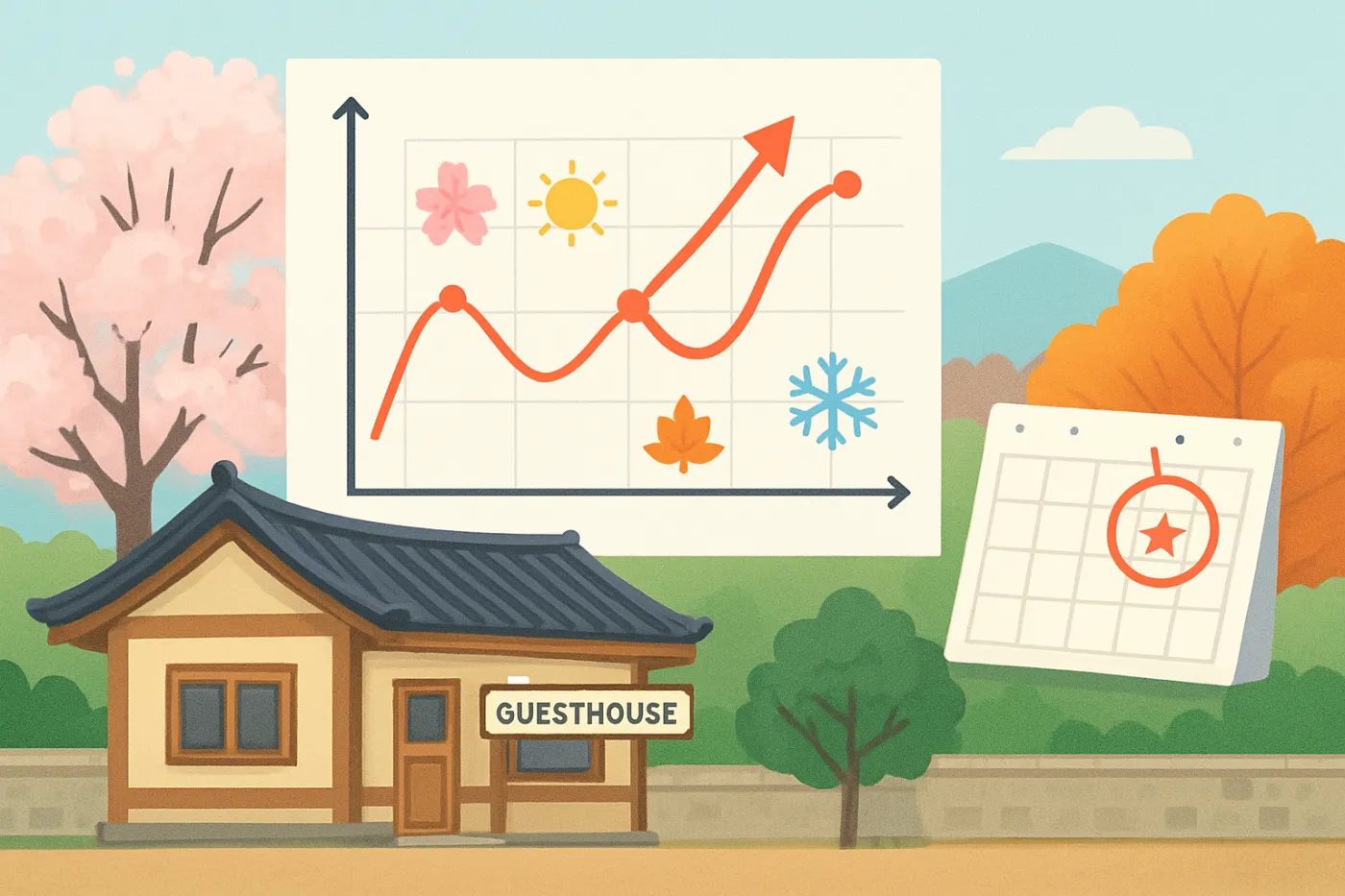
If you only remember one thing about Korea accommodation prices by season, make it this: the same guesthouse room can cost noticeably more or sell out completely during cherry blossom, autumn foliage, big holidays, and festival weekends than it does just one or two weeks earlier or later. You do not need live price charts to avoid overpaying. You need to know which dates are risky, how to spot hidden surcharges, and when to shift your trip by a few days to keep your budget under control.
This site gives planning guidance and examples, not live prices or booking services. Always confirm current rates, availability, and conditions directly with your chosen accommodation or booking platform before you commit.
In practice, most travelers see three patterns:
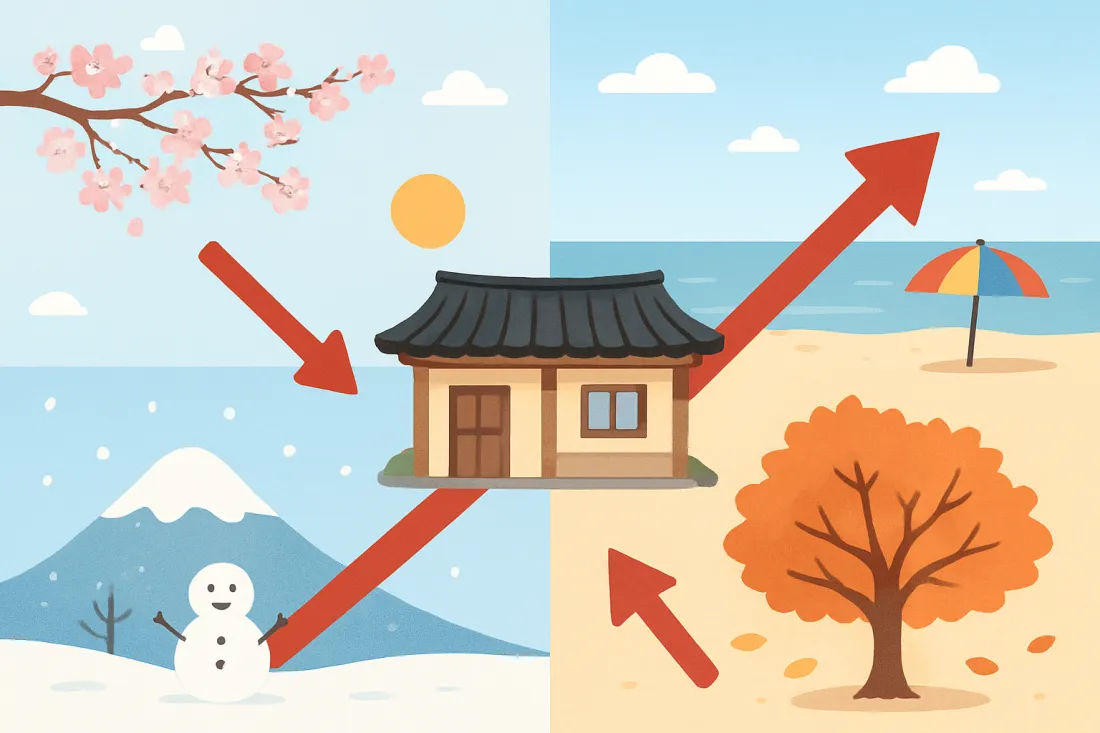
- Prices tend to be higher in peak seasons (blossoms, foliage, beaches, ski season).
- Prices often jump around national holidays and big events even if the weather is not special.
- Weekdays and shoulder dates (just before or after the peak) usually offer more choice and better value than the exact peak weekend.
Peak seasons that push up accommodation prices in Korea
South Korea has several tourism “waves” that repeat every year. Guesthouses, hostels, and budget hotels tend to be busier and more expensive in these periods than in quieter months.
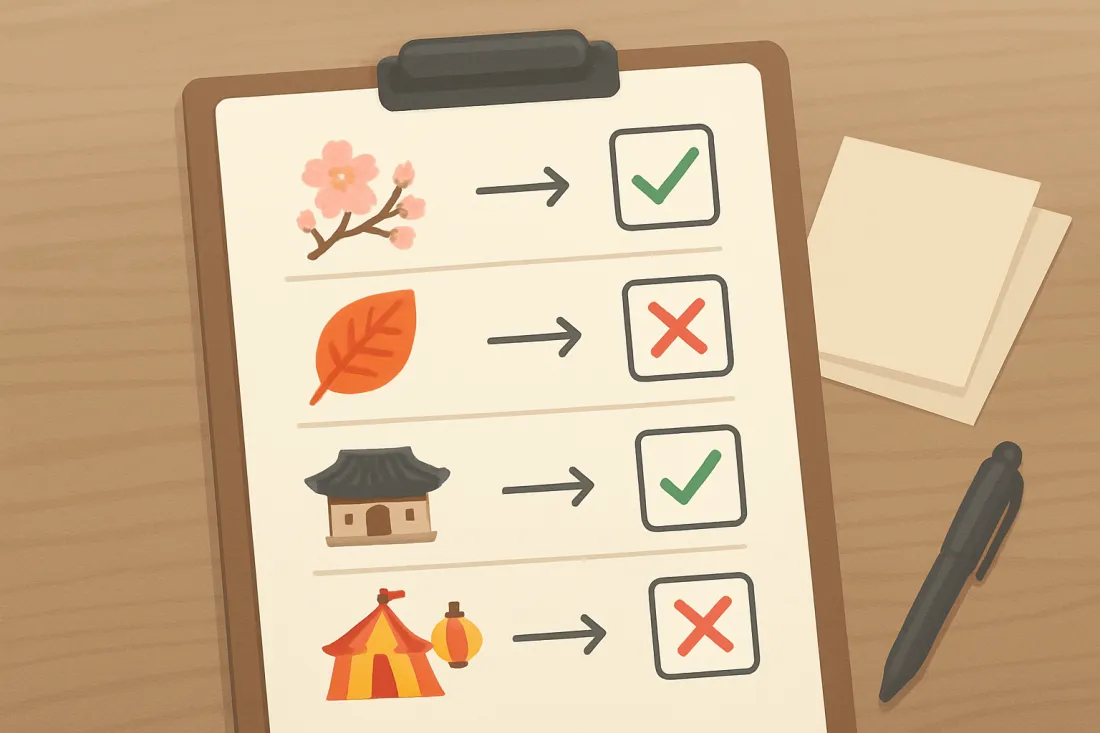
Cherry blossom season (roughly late March to early April)
- Where it hits hardest: Seoul, Busan, Gyeongju, and famous cherry blossom parks and riversides.
- What happens: Domestic travelers and international visitors all chase a short bloom window. Central areas and scenic neighborhoods see fast bookings and higher demand.
- What to expect: Budget rooms that are usually easy to book can require earlier reservations. Flexible cancellation options may be limited or noticeably more expensive than non-refundable ones.
- How to soften the impact: Aim for weekdays or the shoulder days just before or after the predicted peak bloom. Consider staying one subway line away from the most famous blossom spots.
Autumn foliage season (roughly late October to mid-November)
- Where it hits hardest: Seoul, mountain regions, national parks, and historical cities like Gyeongju.
- What happens: Clear skies and colorful leaves attract hikers, photographers, and tour groups. Weekends near famous foliage spots are especially competitive.
- What to expect: Weekend nights can feel like mini-peak seasons, while midweek nights in the same period may be calmer and more affordable.
- How to soften the impact: If you can, stay near foliage areas Monday–Thursday and keep city sightseeing for the weekend, when city-center prices may be more stable than mountain pensions.
Summer vacation and beach season (roughly late July to mid-August)
- Where it hits hardest: Busan, East Coast beaches, and Jeju Island.
- What happens: School holidays and hot weather push families and groups to the coast. Beachfront and sea-view rooms are in highest demand.
- What to expect: Weekend nights can be much more expensive than weekdays in the same week. Minimum-stay rules (for example, two or more nights) are more common in popular beach areas.
- How to soften the impact: Stay a few subway stops or a short bus ride from the beach, or visit just before or after the main school holiday window.
Ski season (roughly December to February)
- Where it hits hardest: Ski resort areas, especially in Gangwon Province.
- What happens: Resorts and nearby pensions/guesthouses fill up on weekends and during school breaks.
- What to expect: Rooms close to the slopes are in high demand. Last-minute budget options can be scarce on snowy weekends.
- How to soften the impact: Visit on weekdays, or stay in a nearby town and commute to the slopes by shuttle or local bus.
Holidays and events that quietly spike Korea accommodation prices
Beyond broad seasons, specific holidays and events can cause sudden jumps in demand. These are the dates that can quietly turn a normal trip into an expensive one if you do not check them before booking flights.
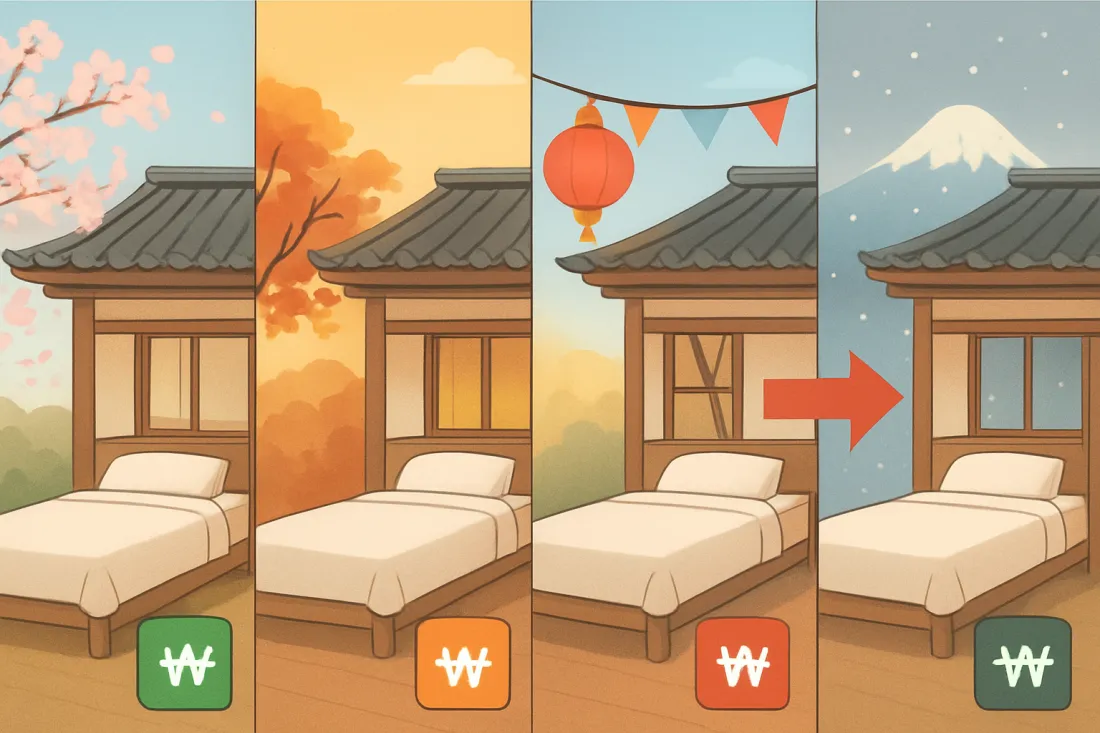
Seollal (Lunar New Year)
- Impact: Many Koreans travel to their hometowns or take short trips. Some international visitors time their visit to experience the holiday atmosphere.
- Accommodation effect: Transport tickets sell out quickly, and some city guesthouses and hotels adjust prices or sell out for the main holiday nights and the surrounding weekend.
- Practical note: Some small guesthouses may close for family time, reducing budget options in certain neighborhoods and pushing demand to the properties that remain open.
Chuseok (Korean harvest festival)
- Impact: Similar to Seollal: a major family holiday with heavy travel.
- Accommodation effect: Fewer budget rooms may be available in some cities, and remaining options can have stricter rules or longer minimum stays.
- Practical note: Historical cities and scenic areas can see a mix of family visitors and tourists, so book early if your dates overlap.
Golden Week visitors and regional holidays
- Impact: When neighboring countries have long holidays (often called “Golden Week” or similar), many travelers choose Korea as a short-haul destination.
- Accommodation effect: Central Seoul, Busan, and Jeju can feel like a mini-peak season, especially around major shopping and sightseeing districts.
- Practical note: Even if Korea itself does not have a national holiday, foreign holiday periods can still push up demand and reduce last-minute bargains.
University festivals, concerts, and fan events
- Impact: Spring and autumn university festivals, large concerts, and fan events can fill up guesthouses near campuses or stadiums.
- Accommodation effect: Neighborhoods around major universities and venues may see higher prices and limited availability for just a few nights.
- Practical note: If you are not attending the event, staying one or two subway stops away can often keep costs more stable.
Film festivals and city events (Busan, Jeonju, and others)
- Busan: The international film festival period draws large crowds, especially to areas near cinemas and the beach.
- Jeonju: The film festival and other cultural events can make this usually affordable city busier and more expensive for a short window.
- Other cities: Flower festivals, fireworks shows, and cultural events can create local spikes even if the rest of the country is quiet.
City-by-city patterns for seasonal accommodation prices
Seasonal price changes are not uniform across Korea. Different cities have different “pressure points.” Understanding these patterns helps you decide where to base yourself and when to move.
Seoul: steady demand with sharp peaks
- Baseline: As the capital, Seoul has relatively steady tourism and business travel. Even in quieter months, central areas rarely feel empty.
- Peak periods: Cherry blossom and autumn foliage, long weekends, big concerts, and foreign holiday periods.
- Neighborhood differences: Central districts near major palaces, shopping streets, and transport hubs feel price pressure first. Outlying or residential areas can stay more stable, especially on weekdays.
- Budget angle: If central guesthouses are pricey on your dates, compare them with slightly less central neighborhoods that still have direct subway access.
Busan: beach and festival surcharges
- Baseline: Outside summer and big events, Busan can be relatively good value compared with its peak periods.
- Peak periods: Summer beach season, long weekends, and the film festival.
- Neighborhood differences: Beachfront areas and neighborhoods close to major festival venues feel the strongest surges. Inland districts or areas a few subway stops away can remain more affordable.
- Budget angle: Consider staying slightly away from the beach and using public transport, especially during festival or high-summer weekends.
Jeju Island: holidays and school breaks
- Baseline: Jeju is popular for nature, driving trips, and honeymoons, so demand is fairly consistent.
- Peak periods: School holidays, summer, and long weekends when families and couples travel together.
- Location differences: Coastal and resort areas, especially with sea views, tend to see stronger seasonal jumps than simple city guesthouses.
- Budget angle: If you rent a car, you can often find better value slightly inland or away from the most famous beaches.
Gyeongju: blossoms, history, and weekend crowds
- Baseline: A historical city with steady tourism but quieter weekdays outside major seasons.
- Peak periods: Cherry blossom and autumn foliage, long weekends, and school trips.
- Neighborhood differences: Areas close to major historical sites and bus terminals feel the most pressure.
- Budget angle: If your dates are flexible, aim for midweek nights during shoulder periods to enjoy the city with fewer crowds and more stable prices.
Jeonju: festivals and food weekends
- Baseline: Known for its hanok village and food, Jeonju is popular but still feels like a smaller city.
- Peak periods: Film festival dates, cultural events, and popular long weekends.
- Neighborhood differences: The hanok village and nearby guesthouses are the first to sell out or increase prices.
- Budget angle: Consider staying just outside the hanok village and walking in, especially during festival periods.
How guesthouses and budget hotels usually behave in busy periods
Exact prices change constantly and depend on the property, but some patterns are common across guesthouses, hostels, and budget hotels in Korea:
- Weekends vs weekdays: Friday and Saturday nights are usually busier and more expensive than Sunday–Thursday, especially in leisure destinations.
- Peak vs shoulder: The weeks just before and after major seasons often have more moderate prices than the exact peak dates.
- Event nights: A single concert, festival, or sports event can push up prices for one or two nights, even if the rest of the week is quiet.
- Cancellation policies: During busy periods, fully flexible rooms may cost more than non-refundable ones, and some properties may tighten their cancellation rules or minimum-stay requirements.
Because this site does not provide live pricing or booking, treat any example differences as planning signals, not fixed amounts. Always compare several dates and room types on a current booking platform or by contacting the property directly.
Comparison table: when Korea accommodation prices are usually higher
| Season or event | Main affected areas | Typical demand level | Effect on budget stays | Simple workaround |
|---|---|---|---|---|
| Cherry blossom | Seoul, Busan, Gyeongju, popular parks | Very high, especially on weekends | Central guesthouses and hostels book out early; flexible rooms become scarce | Shift to weekdays or shoulder dates; look at less central districts with subway access |
| Autumn foliage | Seoul, mountain areas, Gyeongju | High on weekends, moderate midweek | Weekend surcharges and limited last-minute availability near parks and trails | Stay midweek or base in a nearby city and day-trip to foliage spots |
| Summer beach season | Busan, East Coast, Jeju beaches | Very high during school holidays | Beachfront rooms see strong surcharges; minimum-stay rules appear | Stay a few stops from the beach or travel just before/after school holidays |
| Ski season | Gangwon ski resorts | High on snowy weekends and holidays | Resort-area pensions and guesthouses raise rates and fill quickly | Visit on weekdays or stay in a nearby town and commute to the slopes |
| Seollal / Chuseok | Nationwide, especially transport hubs | Heavy travel but mixed city demand | Some budget stays close; others raise prices or require longer stays | Check holiday dates early; avoid main holiday nights if you want maximum choice |
| Film & city festivals | Busan, Jeonju, other event cities | High in specific neighborhoods | Guesthouses near venues sell out or charge event premiums | Stay one or two districts away and use public transport |
You are planning a trip to South Korea on a fixed budget and want to avoid paying peak-season surcharges for guesthouses or budget hotels. Your travel month is flexible within a few weeks, and you are willing to adjust cities or weekdays if it keeps costs under control.
Start with three inputs: 1) your preferred travel window (for example, late March to mid-April), 2) a draft list of cities such as Seoul, Busan, Jeju, Gyeongju, and Jeonju, and 3) a rough nightly budget range you hope to stay within for accommodation.
First, look up Korean public holidays and major festivals that fall inside your window, including Seollal, Chuseok, film festivals, and university festivals in your target cities. Next, test at least two sets of dates on a booking platform for the same city and room type: one overlapping a busy weekend or event, and one on quieter midweek or shoulder days. Finally, adjust your route so that you visit the most popular or expensive city on its cheaper days and schedule quieter cities on weekends or holidays.
To check that your plan really avoids peak surcharges, compare availability and typical nightly ranges for each city on your chosen dates with dates one week earlier or later. If you see noticeably more options and more stable prices on your chosen dates, you have likely avoided the worst spikes. If prices still look tight, repeat the comparison with a different set of dates or swap the order of cities.
By following this process, you can usually stay in better-located or higher-quality budget accommodation for the same overall trip cost, or reduce your total lodging spend enough to free money for food, transport, or activities, without needing exact seasonal price charts.
If you skip the holiday and event checks and book flights first, you may later discover that your exact dates coincide with a major festival or holiday in Seoul, Busan, Jeju, Gyeongju, or Jeonju. That can leave you with only expensive or inconvenient rooms and may force you into non-refundable bookings that do not match your ideal route.
Checklist: date and event checks before you lock in flights
Use this structured checklist to avoid the most common seasonal pricing traps. Work through it before you buy flights or non-refundable rooms.
- Clarify your must-have experiences
- Decide whether cherry blossoms, autumn leaves, beaches, skiing, or a specific festival are essential or just “nice to have.”
- If nothing is essential, keep your dates flexible and aim for shoulder periods.
- Check Korean public holidays and long weekends
- Look up the dates for Seollal, Chuseok, and other national holidays for your target month.
- Mark any long weekends when a holiday touches Friday or Monday, as these often behave like mini-peak seasons.
- Scan for major events in your target cities
- Search for film festivals, city festivals, university festivals, and large concerts in Seoul, Busan, Jeju, Gyeongju, and Jeonju.
- Note the dates and neighborhoods where events are concentrated, especially near beaches, stadiums, and hanok villages.
- Test at least two date ranges
- On a booking platform, plug in your first-choice dates and note the typical price range and availability for your preferred room type.
- Shift the dates by a few days (for example, from a weekend to midweek, or away from a festival) and compare again. Look at how many properties are available and how far they sit from the city center.
- Compare city combinations and routing
- If one city is expensive on your dates (for example, Busan during a festival), check whether another city (such as Daegu or a smaller coastal town) is more affordable for those days.
- Consider swapping the order of cities so that you hit each place on its cheaper days and keep weekends in less seasonal destinations.
- Review cancellation and minimum-stay rules
- Check whether budget stays require a minimum number of nights during your dates, especially in beach and ski areas.
- Decide whether you are comfortable with non-refundable bookings or prefer flexible options, particularly around holidays and festivals.
- Only then, book flights and accommodation
- Once you have found a date range and city plan that fits your budget, book flights that match those dates.
- Immediately secure accommodation in the most in-demand city on your route, then fill in the rest of the nights.
How shifting dates by a few days can change your trip cost
This site does not provide live pricing, so treat the following as planning patterns rather than exact amounts. The goal is to show how small changes in timing can affect your overall budget.
Example 1: Cherry blossom in Seoul vs shoulder dates
You want to spend a week in Seoul during cherry blossom and stay in a central guesthouse.
- Scenario A – exact peak weekend: You choose the predicted peak blossom weekend. Many rooms are already booked, and remaining options show higher nightly rates and stricter cancellation policies. Some of the cheapest rooms are far from the subway or have poor reviews.
- Scenario B – shoulder dates: You shift your stay to arrive a few days earlier and leave before the main weekend. Availability improves, and you see more budget rooms with better locations and more flexible policies.
Even if the nightly difference is modest, over 6–7 nights the total can be large enough to cover several museum tickets or a side trip to another city.
Example 2: Busan beach weekend vs midweek
You plan to visit Busan in summer and stay near the beach.
- Scenario A – Friday to Sunday: You arrive Friday and leave Sunday. Many beachfront guesthouses show limited availability, and some require a minimum stay or higher weekend rates.
- Scenario B – Sunday to Wednesday: You arrive Sunday and leave Wednesday. More rooms appear at lower nightly rates, and minimum-stay rules are less common. You can choose between several guesthouses within walking distance of the beach.
By sliding your trip a couple of days, you may be able to afford a better-located or more comfortable room without increasing your total budget.
Example 3: Jeju during a holiday vs regular week
You want to drive around Jeju Island and stay in small pensions and guesthouses.
- Scenario A – overlapping a national holiday: Your dates overlap a major holiday. Many family-friendly pensions and guesthouses are booked, and remaining options are concentrated in less convenient locations or have stricter rules.
- Scenario B – week before the holiday: You move your trip to the week before the holiday. Availability opens up, and you have more choice in coastal and scenic areas, often with more relaxed policies.
In practice, this can mean the difference between staying in your first-choice area and compromising on location or comfort.
Common mistakes when planning around Korea accommodation seasons
Avoid these frequent planning errors that lead to higher costs or stress.
- Booking flights before checking holiday and festival calendars
Travelers often lock in attractive flight prices only to discover later that their dates overlap a major festival or holiday, leaving them with expensive or inconvenient accommodation choices. - Assuming all months are equally priced
Some months are naturally quieter, while others attract more visitors due to weather, school breaks, or events. Ignoring this can cause surprise surcharges when you finally search for rooms. - Only checking one neighborhood
Focusing solely on the most famous district in each city can make prices look worse than they really are. Nearby areas with good transport links may be significantly more affordable while still convenient. - Not comparing weekdays and weekends
Many people plug in random dates without noticing that they are comparing a weekend in one city to a weekday in another, which can distort their sense of typical costs. - Relying only on non-refundable deals during uncertain periods
Non-refundable bookings can be cheaper, but if your dates might change or you have not fully checked event calendars, you risk losing money if you need to adjust. - Expecting last-minute bargains during peak times
In busy seasons or during big events, waiting for last-minute discounts can backfire, leaving only high-priced or low-quality options.
Decision criteria for choosing your travel season and route
When you balance budget against experiences, use these criteria to choose your dates and route through Korea.
- Budget flexibility: If your budget is tight, prioritize shoulder seasons and midweek stays over exact festival dates or peak weekends.
- Experience priority: If seeing cherry blossoms or a specific festival is your top goal, accept that you may pay more for central or last-minute rooms and plan the rest of your trip more frugally.
- City vs nature focus: City-heavy trips (Seoul, Busan) can often be adjusted by neighborhood and weekday choices, while nature-focused trips (Jeju, ski resorts) are more sensitive to school holidays and weather.
- Routing flexibility: If you can change the order of cities, visit the most popular or expensive city on its cheaper days and schedule quieter cities on weekends or holidays.
- Risk tolerance: If you dislike uncertainty, book earlier and favor flexible rates, especially when your dates overlap potential peak periods.
If you want more detail on how much to budget for different types of stays, you can also read about South Korea budget accommodation cost and how to choose the right budget accommodation in South Korea for your trip style.
FAQ about Korea accommodation prices by season
What should I understand first about Korea accommodation prices by season?
The key idea is that prices are not random. They tend to rise when three things overlap: pleasant weather (like spring blossoms or autumn foliage), school or public holidays, and big events or festivals. If you learn to spot those overlaps and avoid them when you do not need them, you can usually find better-value guesthouses and budget hotels without sacrificing comfort.
What mistakes should I avoid when booking accommodation in Korea around holidays and festivals?
Avoid booking non-refundable rooms before you check the dates for Seollal, Chuseok, and major city events such as film festivals. During these periods, some properties may close, change their rules, or fill up quickly. Also avoid assuming that city centers will be quiet during family holidays; some areas stay busy, while others empty out. Always confirm opening hours, check-in times, and any special holiday policies directly with your accommodation.
Are minimum-stay rules common around Korean holidays and peak seasons?
Minimum-stay rules can appear around busy periods, especially in beach areas, resort towns, and during major festivals or long weekends. For example, a guesthouse might require a two-night stay over a holiday or film festival. These rules vary by property, so always read the conditions carefully before booking and factor them into your route planning.
How should I handle non-refundable bookings during peak seasons in Korea?
Non-refundable bookings can help you secure a lower rate, but they are risky if your dates are not fully confirmed or you have not checked for local events. During peak seasons, consider mixing flexible and non-refundable bookings: secure your most in-demand nights with a flexible option first, then switch to a non-refundable rate only when you are confident about your schedule and have double-checked holiday and festival calendars.
What should I do next after learning about Korea’s seasonal price patterns?
Next, choose your preferred month and list the cities you want to visit. Then, follow the checklist above: check public holidays, search for major events in those cities, and test at least two different date ranges on a booking platform. Once you find a combination of dates and cities that fits your budget and priorities, book your flights to match and secure accommodation in the busiest city first. If you plan to focus on guesthouses, it can also help to learn more about what is a guesthouse in Korea so you know what to expect.