How to choose between guesthouse and hotel for a Korea family trip
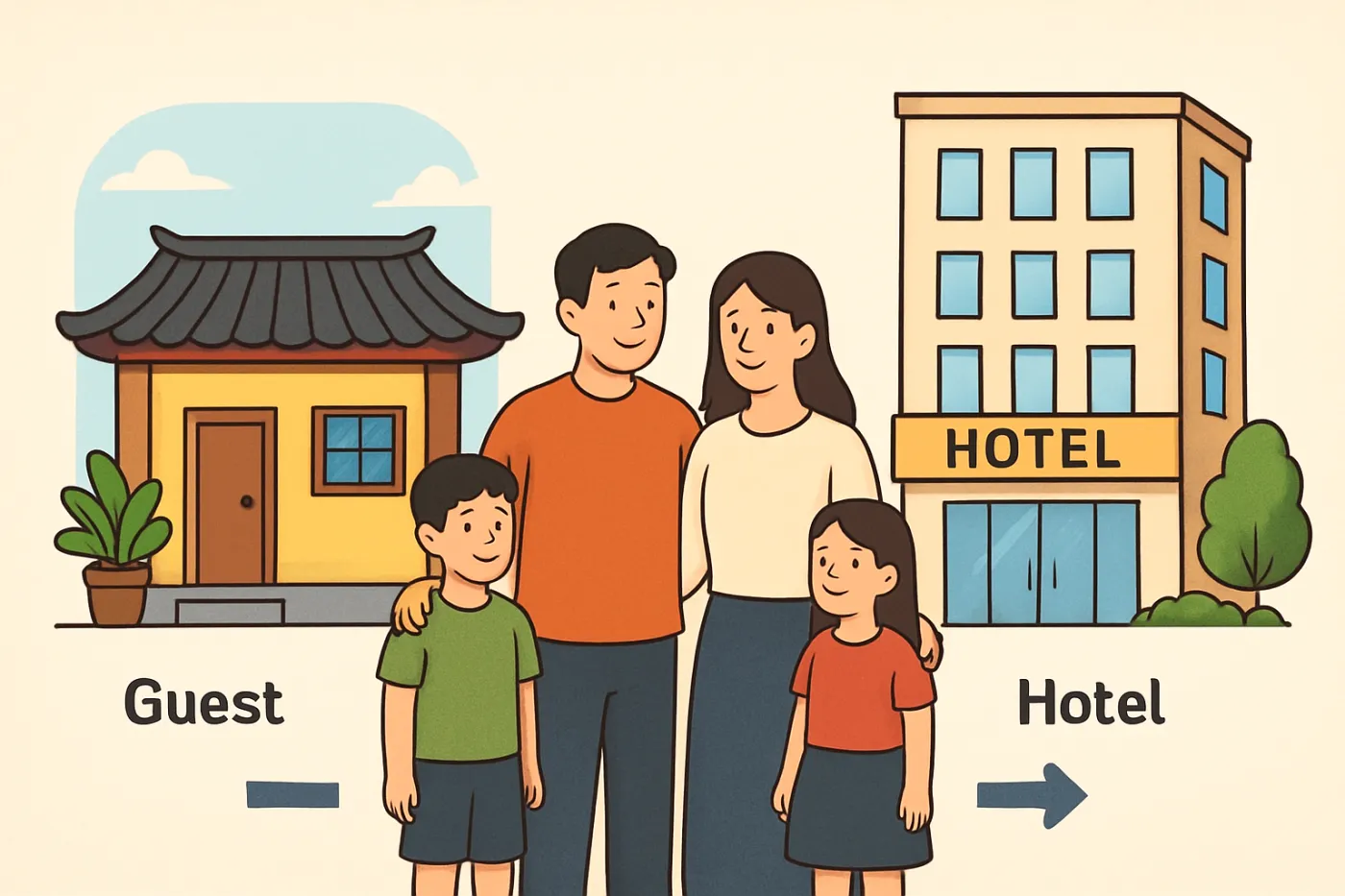
If you are traveling to South Korea with children, start with this simple rule: choose a guesthouse or hostel private room when budget, kitchen access, and a social atmosphere matter most, and choose a hotel or serviced apartment when sleep, space, and privacy matter most. Many families end up mixing both: a few nights in a friendly guesthouse plus a few nights in a more spacious hotel or suite.
The best choice depends on your children’s ages, how lightly everyone sleeps, and how comfortable you are with Korean-style rooms and shared spaces. Below you will find how family rooms really work in Korea, what to expect from guesthouses, hostels, and hotels, where to stay in Seoul, Busan, and Jeju, and a checklist you can use before you book anything.
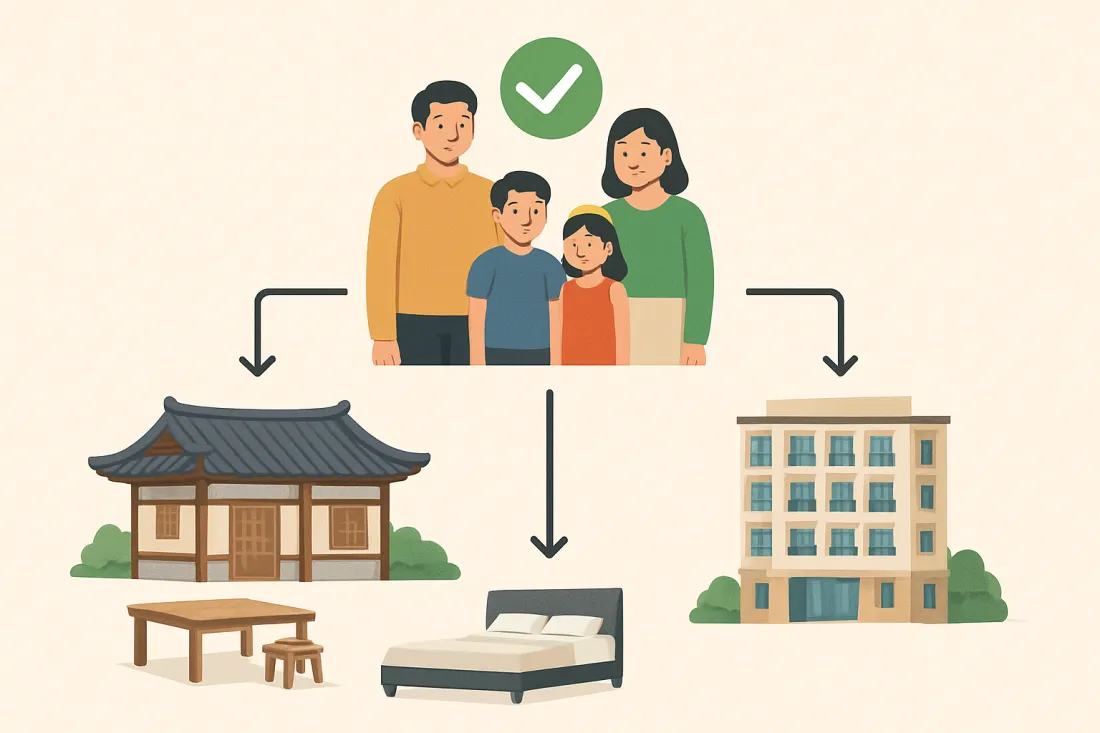
Family travel realities in Korea: rooms, beds, and noise
Before comparing guesthouse vs hotel, it helps to understand how accommodation in Korea feels on the ground with kids and teens.
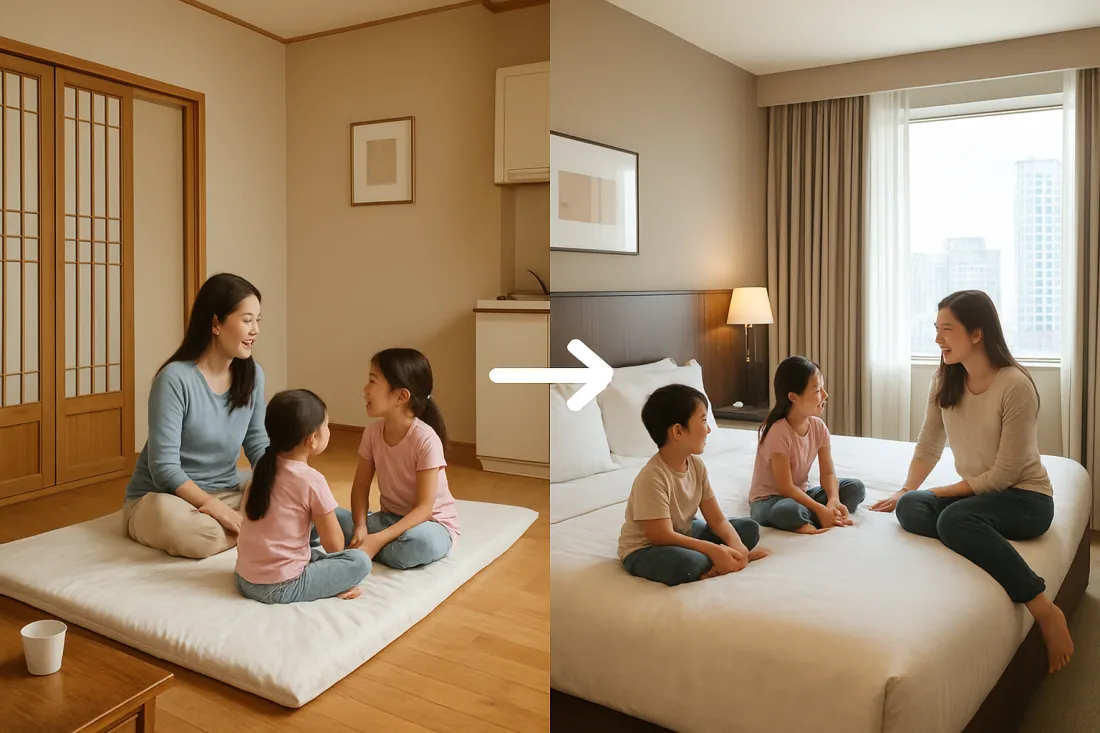
- Rooms are often compact. In big cities like Seoul and Busan, standard rooms can feel tight compared with many North American or European hotels. Fitting two adults, one or two kids, and luggage into a basic double room can feel crowded after the second or third night.
- Bed sizes can feel smaller than expected. A listed “double” or even “queen” bed may feel narrower than what you use at home. Co-sleeping with a toddler on one bed is common for Korean families, but may feel cramped if you are not used to it.
- Noise travels easily in budget buildings. Guesthouses and hostels often have thin walls and doors. Even some city hotels can have street noise from traffic or nightlife. Families with light sleepers should treat noise reviews as a key decision factor, not a minor detail.
- Check-in and check-out times are strict. Mid-afternoon check-in and late-morning check-out are common. If you land early with a baby or toddler, you may need to plan for a few hours in a café or park before your room is ready, or ask in advance about early check-in or luggage storage.
- Shared vs private bathrooms matter more with kids. Many guesthouses and hostels offer shared bathrooms. This can work with older kids and teens but is stressful with toddlers who need frequent toilet trips or baths, especially at night.
- Strollers and stairs often clash. A lot of small guesthouses are in walk-up buildings without elevators. Carrying a stroller, luggage, and sleepy children up two or three flights of stairs several times a day quickly becomes tiring.
Keep these realities in mind as you compare guesthouses, hostels, and hotels for your family.
Guesthouses for families: family rooms, extra bedding, and shared kitchens
Guesthouses in Korea sit between a hostel and a small hotel. They are usually run by individuals or small teams and can feel personal and homelike. For families, they can be a good fit in specific situations.
Why Korean guesthouses can work well for families
- Flexible family rooms. Many guesthouses offer family rooms that sleep three or four people, sometimes more if futons are added on the floor. This can suit families who are happy to share one space.
- Extra bedding on ondol floors. In ondol (heated floor) rooms, owners may add futon-style mattresses for children. This is useful if your kids move a lot in their sleep or you prefer everyone on the floor instead of high beds.
- Shared kitchen access. A big plus is the ability to use a shared kitchen. You can prepare simple breakfasts, heat baby food, wash bottles, or keep snacks and milk in a fridge. Over five or more days, this can save time and reduce stress.
- Friendly hosts and local tips. Owners often live on-site and can suggest kid-friendly restaurants, parks, and rainy-day activities. Teens may enjoy chatting with other travelers in common areas.
- Laundry facilities. Many guesthouses have a washing machine or coin laundry. With kids, being able to wash clothes every few days means you can pack lighter.
Guesthouse drawbacks families should think about
- Noise from common areas. Lounges and kitchens are often close to bedrooms. If other guests stay up late talking, doors slam, or people cook after midnight, young children may wake repeatedly.
- Shared bathrooms and queues. If there are only one or two bathrooms per floor, you may wait for showers or toilets at busy times. This is awkward with small children who cannot wait long.
- Stairs, narrow corridors, and no elevator. Many guesthouses are in older or smaller buildings. Pushing a stroller is often impossible inside; you may need to fold and carry it.
- Basic safety setup. You may not find bathtub mats, corner protectors, or window locks. If you have a toddler, you will need to supervise closely and move hazards (kettles, cords, small objects) out of reach.
How to choose a guesthouse for a family
When you consider a guesthouse, look for these details in the listing and reviews:
- Private family room with private bathroom rather than dorm beds. A private bathroom usually makes mornings and bedtime much easier.
- Clear information on extra bedding: how many futons or mattresses are provided, where they fit on the floor, and whether there is an extra fee per person or per set.
- Kitchen rules: whether guests can cook, store food, and use the fridge freely, and whether there are quiet hours for the kitchen.
- Quiet hours and house rules: look for written quiet times and reviews from other families mentioning peaceful nights.
- Floor level and access: if you have a stroller or heavy luggage, prioritize a building with an elevator or a room on the first or second floor.
If you want a deeper explanation of how these properties work in general, it can help to read a broader guide on what is a guesthouse in Korea before deciding.
Hostels for families in Korea: when they work and when they do not
Hostels in Korea are usually aimed at solo travelers and groups of friends, but some can work for families under the right conditions.
When a hostel can work for a family
- Families with older kids or teens. If your children are around early teens or older, used to sharing space, and not bothered by some noise, a hostel private room can be acceptable for a few nights.
- Private rooms only. Some hostels offer small private rooms with shared bathrooms. These can be a budget-friendly option if you are comfortable walking down the hall for showers and toilets.
- Very short stays. One or two nights in a hostel can work when you arrive late, leave early, or just need a place to sleep near a station or bus terminal.
When hostels are usually a bad idea for families
- Dorm beds with young children. Mixed dorms are rarely suitable for families with small kids due to safety, privacy, and noise. Bunk beds and strangers coming and going at night are not ideal with toddlers.
- Party-oriented hostels. Some hostels focus on nightlife, bar crawls, and social events. These are not compatible with early bedtimes or quiet nights, even if you book a private room.
- Very limited space. Hostel private rooms can be extremely compact, with just enough space for beds and a small bag. There may be nowhere to open a large suitcase or park a stroller.
For most families with children under about early teens, a guesthouse with a family room or a budget hotel will usually feel more comfortable than a hostel.
Hotels and serviced apartments for families: triple, quad rooms, and suites
Hotels and serviced apartments are usually the easiest option for families, especially if you value privacy and predictable facilities.
Standard hotel rooms for families
- Double or twin rooms. Many families book a twin room (two single beds) and co-sleep with a younger child, or a double room and share one bed. Always check the maximum occupancy and whether children can share existing bedding.
- Triple and quad rooms. Some hotels offer rooms with three or four beds, or a mix of beds and futons. These can be more comfortable for families with older children who need their own sleeping space.
- Connecting rooms. Mid-range and higher-end hotels sometimes offer connecting rooms, giving more space and two bathrooms while keeping the family close together. This can work well for families with teens.
Suites and serviced apartments
Serviced apartments and suite-style hotels can be ideal for longer stays or larger families.
- Separate bedroom and living area. Parents can stay up after putting kids to bed without sitting in the dark or whispering in the bathroom.
- Kitchenette or full kitchen. Useful for simple meals, reheating leftovers, and washing bottles. Over a week, being able to cook even one meal a day can make routines easier.
- Washing machine. Some serviced apartments include laundry machines, which helps with spills, accidents, and beach or hiking clothes.
- More storage space. Closets and drawers make it easier to keep kids’ clothes, toys, and snacks organized instead of living out of suitcases.
What to check before booking a hotel or serviced apartment
- Maximum occupancy and child policy. Confirm how many people are allowed in the room and whether children stay free when sharing existing beds. Policies can differ even between hotels in the same chain.
- Bed configuration. Look for photos and descriptions of bed sizes and layouts, especially if you plan to co-sleep or have tall teens.
- Crib or cot availability. Many hotels can provide a baby crib on request, but you should confirm in advance and note any age or weight limits.
- Breakfast options. Check whether breakfast is included and if there are child-friendly items such as fruit, cereal, or simple bread and eggs.
- Access and facilities. Elevators, wide hallways, and step-free entrances matter when you have a stroller or tired children.
How Korean room types work: ondol, futons, bed sizes, and co-sleeping
Understanding Korean room types will help you avoid surprises when you arrive with your family.
Ondol rooms and futon bedding
In Korea, an ondol room is a room with heated floors where you sleep on futon-style bedding laid directly on the floor. For families, this has pros and cons:
- Pros: No risk of children falling out of bed; flexible layout for multiple futons; cozy in cooler months; easy to push futons aside for play space during the day.
- Cons: Getting up and down from the floor can be hard for adults with back or knee issues; some people find the floor too firm; you may need to fold and store futons each morning to move around.
Guesthouses and some hotels may offer ondol rooms as family rooms. Check whether futons are provided for each person and whether there is enough floor space for everyone to sleep comfortably without blocking the door.
Bed sizes and co-sleeping norms
Many Korean families are comfortable with co-sleeping, so accommodation providers may assume that young children will share beds with parents. When you book:
- Read the occupancy rules carefully. A room might list a maximum of two adults but allow an additional child sharing existing bedding. Others may charge for every extra person regardless of age.
- Check for extra bed or futon options. Some places can add a rollaway bed or futon for an extra fee. Confirm whether this is per night and whether it fits in the room without blocking pathways.
- Consider your own comfort and routines. If you are not used to co-sleeping, a room that relies on sharing one bed may not be realistic for several nights. Think about bedtimes, naps, and how much space everyone needs to sleep well.
Guesthouse vs hotel for families in Korea: side-by-side comparison
The table below compares typical guesthouse/hostel private rooms and hotel/serviced apartment options for family accommodation in Korea. Use it as a quick reference while you plan.
| Decision factor | Guesthouse / Hostel (private room) | Hotel / Serviced apartment |
|---|---|---|
| Room and bed space | Often compact; beds plus limited luggage space; extra futons on floor for kids | Standard rooms still compact, but suites and apartments offer separate areas and more storage |
| Sleeping setup | Mix of beds and floor futons; co-sleeping often expected; bunk beds possible in hostels | Mostly fixed beds; some rooms add sofa beds or extra rollaway beds; futons rare outside ondol rooms |
| Bathroom | Shared bathrooms common; some family rooms have private bathrooms | Private bathroom almost always; some suites offer two bathrooms for larger families |
| Kitchen and food | Shared kitchen is common; good for simple meals, baby food, and snacks | Standard rooms rarely have kitchens; serviced apartments usually include kitchenette or full kitchen |
| Noise and privacy | Can be noisy due to thin walls and common areas; limited privacy outside your room | Usually quieter and more private; noise depends on location and building design |
| Access with stroller and luggage | Many buildings have stairs and no elevator; narrow corridors and small lobbies | More likely to have elevators, ramps, and wider hallways; easier with strollers |
| Social atmosphere | High; easy to meet hosts and other travelers; good for outgoing teens | Lower; more anonymous, focused on comfort rather than socializing |
| Best fit scenarios | Budget-conscious families, older kids, short stays, and those wanting a local, social feel | Families who prioritize sleep, space, privacy, and easy logistics, especially with babies or toddlers |
Who should choose guesthouse vs hotel on a Korea family trip
Different family situations call for different accommodation types. Use these scenarios to guide your choice.
When a guesthouse or hostel private room is usually better
- You are traveling with older children or teens who can handle shared bathrooms and some noise.
- Your budget is tight, and you prefer to spend more on attractions and food than on rooms.
- You want access to a kitchen to cook simple meals or manage dietary restrictions.
- You enjoy a social environment and chatting with hosts and other travelers.
- You are staying only one to three nights in a city and can tolerate some inconvenience.
When a hotel or serviced apartment is usually better
- You are traveling with a baby or toddler who needs naps and early bedtimes.
- You or your children are light sleepers who are easily disturbed by hallway or street noise.
- You plan to stay in one place for four or more nights and want more space to spread out.
- You need reliable elevators and easy stroller access.
- You prefer a private bathroom and more predictable facilities.
Neighborhood recommendations for families in Seoul, Busan, and Jeju
Location can matter as much as room type. Here are patterns that often work well for families in major Korean destinations.
Family-friendly areas in Seoul
- Myeongdong and nearby. Very convenient for shopping and food, with multiple subway lines. Streets can be busy, but many families like the central location and easy access to sights.
- Insadong and Jongno. More traditional atmosphere, close to palaces and cultural sites. Good for families who want to walk to major attractions and enjoy quieter evenings on side streets.
- Hongdae (quieter side streets). The main streets are lively and noisy at night, but side streets can have quieter guesthouses and small hotels. Better for families with teens than with toddlers.
- Gangnam and Jamsil. Modern areas with big malls, parks, and entertainment. Hotels here can be more business-oriented but often have good facilities and transport links.
Family-friendly areas in Busan
- Haeundae Beach. Popular with families for the beach, aquarium, and relaxed atmosphere. Many hotels and guesthouses are within walking distance of the water and promenade.
- Gwangalli Beach. Another beach area with views of a large bridge, plus a mix of cafés and restaurants. Good for evening walks with children and casual dinners.
- Nampo-dong and Jagalchi area. Closer to markets and cultural sites. Streets can be busy, but the area is lively and interesting for older kids who enjoy exploring.
Family-friendly areas in Jeju
- Jeju City. Convenient for short stays and early flights, with a range of guesthouses and hotels. A practical base for day trips by car or tour.
- Seogwipo. Popular with families for waterfalls, coastal walks, and a more relaxed pace. Many guesthouses and small hotels cater to tourists.
- Resort zones along the south coast. Larger resorts and serviced apartments can offer pools and family facilities, though they may feel more isolated without a car.
If you are still comparing different budget levels and regions, a broader guide to budget accommodation in South Korea can help you see how these locations fit into your overall plan.
Sample 5-night Seoul family stay: mixing guesthouse and hotel
To see how mixing accommodation types can work, imagine a family of four (two adults, two children) spending five nights in Seoul.
Nights 1–2: Guesthouse in a central area
- Location. A guesthouse near a central subway station, within a short walk of food and basic shops.
- Room type. Private family room with an ondol floor and futons, plus a private bathroom.
- Daily rhythm. Use the shared kitchen for simple breakfasts, then head out early to explore. Ask the host for local restaurant tips and kid-friendly activities.
- Benefits. Lower cost, social atmosphere, and a memorable experience of sleeping on heated floors.
- Considerations. Possible noise from common areas and the need to climb stairs with luggage and stroller.
Nights 3–5: Hotel or serviced apartment
- Location. Hotel near a major transport hub, making it easy to reach different parts of the city and the airport.
- Room type. Family room or small suite with one or two beds plus a sofa bed, private bathroom, and possibly a kitchenette.
- Daily rhythm. Return earlier in the evening so younger children can sleep while parents relax in a separate sitting area.
- Benefits. More space to spread out, quieter nights, easier naps for younger children, and laundry facilities if you choose a serviced apartment.
- Considerations. Higher nightly cost and fewer chances to cook full meals if there is no kitchen.
This kind of split stay lets you experience both a more local, social environment and a more comfortable, predictable one. If you want to align this plan with your budget across the country, you can also look at guidance on South Korea budget accommodation cost.
You are planning a family trip to Korea and must choose between a guesthouse, hostel, hotel, or serviced apartment. Your children’s ages, sleep habits, stroller use, and budget will strongly influence which option works best.
List your family’s non‑negotiables: for example, private bathroom, quiet at night, elevator access, kitchen, separate bedroom for parents, space for a travel crib, or walking distance to a subway station. Note your children’s ages and whether they still nap or co-sleep.
Compare each accommodation type against your list. If private bathroom, quiet nights, and elevator access are essential, focus on hotels and serviced apartments in family-friendly neighborhoods. If kitchen access and a social atmosphere matter more and you can accept shared bathrooms, stairs, and some noise, shortlist guesthouses or hostel private rooms. For longer stays or larger families, prioritize serviced apartments or hotel suites that offer extra space and laundry.
Before booking, read several recent reviews from other families, check photos for bed layouts and stairs, and message the property with specific questions about cribs, extra bedding, and child policies. If the answers match your non‑negotiables, you have chosen an option that should support your routines instead of fighting them during the trip.
Checklist: family-friendly accommodation features to confirm
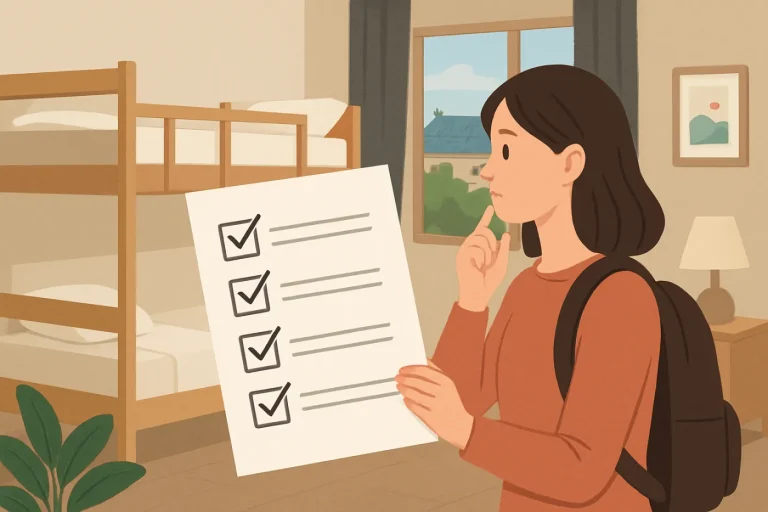
Use this checklist to review any guesthouse, hostel, hotel, or serviced apartment you are considering. Confirm as many items as possible in the listing or by messaging the property.
- Room capacity and child policy
- Maximum number of guests allowed in the room matches your family size.
- Child age limits and extra person rules are clearly stated.
- Policy on children sharing existing beds is clear.
- Bed and sleeping setup
- Number and type of beds are clear (double, twin, futon, sofa bed, bunk bed).
- You know whether children are expected to share existing beds or have their own futons.
- Extra bed or futon options and any fees are confirmed.
- Photos show enough floor space for everyone to move safely at night.
- Bathroom and hygiene
- You know whether the bathroom is private or shared.
- There is a bathtub or shower type that works for your children.
- Hot water availability and basic toiletries are mentioned.
- If shared, the number of bathrooms per floor sounds reasonable for your family.
- Access, stroller use, and safety
- Elevator is available if you have a stroller or heavy luggage, or the room is on a low floor.
- Photos of the entrance show whether there are steep hills or long staircases.
- Windows and balconies look safe for children in photos.
- Building and room doors appear secure, with locks or key cards.
- Noise and environment
- Recent reviews mention quiet rooms or good soundproofing if you are sensitive to noise.
- The property is not directly above bars or clubs if you need early bedtimes.
- House rules include quiet hours.
- Facilities for children
- Cribs, high chairs, or baby baths are available on request if you need them.
- There is space in the room for a stroller or travel cot.
- Staff are aware that you are arriving with children and have confirmed any special requests.
- Food, kitchen, and storage
- Breakfast options are suitable for your children, or you have access to a kitchen.
- There is a fridge for milk, snacks, or medicine.
- Nearby convenience stores or supermarkets are easy to reach on foot.
- Location and transport
- Walking distance to a subway or bus stop is realistic for your children.
- The route from the station to the property is not overly steep or full of stairs.
- Key attractions you plan to visit are reachable without multiple long transfers.
Common mistakes families make when booking accommodation in Korea
Avoid these frequent errors that can make a family trip more stressful than it needs to be.
- Ignoring maximum occupancy rules. Assuming you can squeeze extra children into a room can lead to problems at check-in. Always confirm how many people are allowed and how children are counted.
- Not checking bed types and layouts. Booking a “double room” without realizing how small the bed is can mean uncomfortable nights for co-sleeping families.
- Underestimating noise. Choosing a guesthouse in a nightlife area or a busy street without reading reviews about noise can ruin sleep for days, especially for light sleepers.
- Overlooking stairs and lack of elevator. This is especially hard if you have a stroller, heavy luggage, or mobility issues. Photos and reviews often mention steep hills or long staircases.
- Assuming cribs or high chairs are standard. Some places have them, some do not. You need to ask in advance and get written confirmation if it is essential.
- Booking far from public transport. Long walks with tired children can make each day harder. Proximity to subway or bus stops is important in big cities.
- Not planning for early arrival or late departure. If your flight times do not match check-in and check-out, you may need to arrange luggage storage or book an extra night to avoid long waits with kids.
FAQ about strollers, cribs, and child policies in Korean accommodation
What should families understand first about guesthouse vs hotel in Korea?
The key point is that space and privacy are limited in many budget options. Guesthouses and hostel private rooms can be friendly and affordable, but they often come with shared bathrooms, stairs, and more noise. Hotels and serviced apartments usually cost more but offer private bathrooms, elevators, and more predictable facilities. Decide how much sleep, quiet, and convenience matter for your children before chasing the lowest price.
Do Korean guesthouses and hotels usually provide baby cribs?
Many mid-range and higher-end hotels can provide a baby crib or cot on request, but it is not guaranteed. Guesthouses and hostels are less likely to have cribs available. If you need one, check the room description and message the property before booking to confirm availability, any age or weight limits, and whether there is an extra charge. Some families prefer to bring a lightweight travel crib for consistency.
Is Korea stroller-friendly around guesthouses and hotels?
Major areas of Seoul and Busan have many stroller-friendly sidewalks and subway stations with elevators, but you will still encounter stairs, steep alleys, and crowded streets. Around guesthouses, especially in older neighborhoods or on hills, you may find narrow lanes and steps. When choosing accommodation, look at photos of the street and building entrance, and check reviews for comments about hills or stairs. In large hotels and serviced apartments, elevators and wide lobbies usually make stroller use easier.
How do child policies work in Korean hotels and guesthouses?
Policies vary by property. Some places allow one child to stay free when sharing existing bedding with parents, while others charge for each additional person regardless of age. Maximum occupancy rules are usually enforced, especially in city hotels. Always enter the correct number of adults and children when searching, read the policy section carefully, and confirm directly with the property if anything is unclear.
What mistakes should families avoid when booking family accommodation in Korea?
Common mistakes include ignoring maximum occupancy rules, assuming a “double bed” will be large enough for co-sleeping, overlooking stairs and lack of elevators, and not checking whether bathrooms are shared. Another frequent issue is booking in nightlife areas without reading noise reviews, which can be tough on young children who need early bedtimes.
What should families do next after choosing between guesthouse and hotel?
Once you have decided which type of accommodation fits your family, shortlist a few properties in your preferred neighborhoods. Apply the checklist above to each option, read recent reviews focusing on families, and message the property with specific questions about cribs, extra bedding, and access. After you book, note check-in details, directions from the airport or station, and any special requests you made so arrival with children goes smoothly. If you are still balancing comfort with cost across your route, reviewing guidance on Incheon Airport transit hotel vs nearby guesthouse can also help you plan your first or last night.