Seoul guesthouse room types and amenities at a glance
If you book a typical Seoul guesthouse you can usually expect:
- Compact, efficiently organized rooms that prioritize function over space.
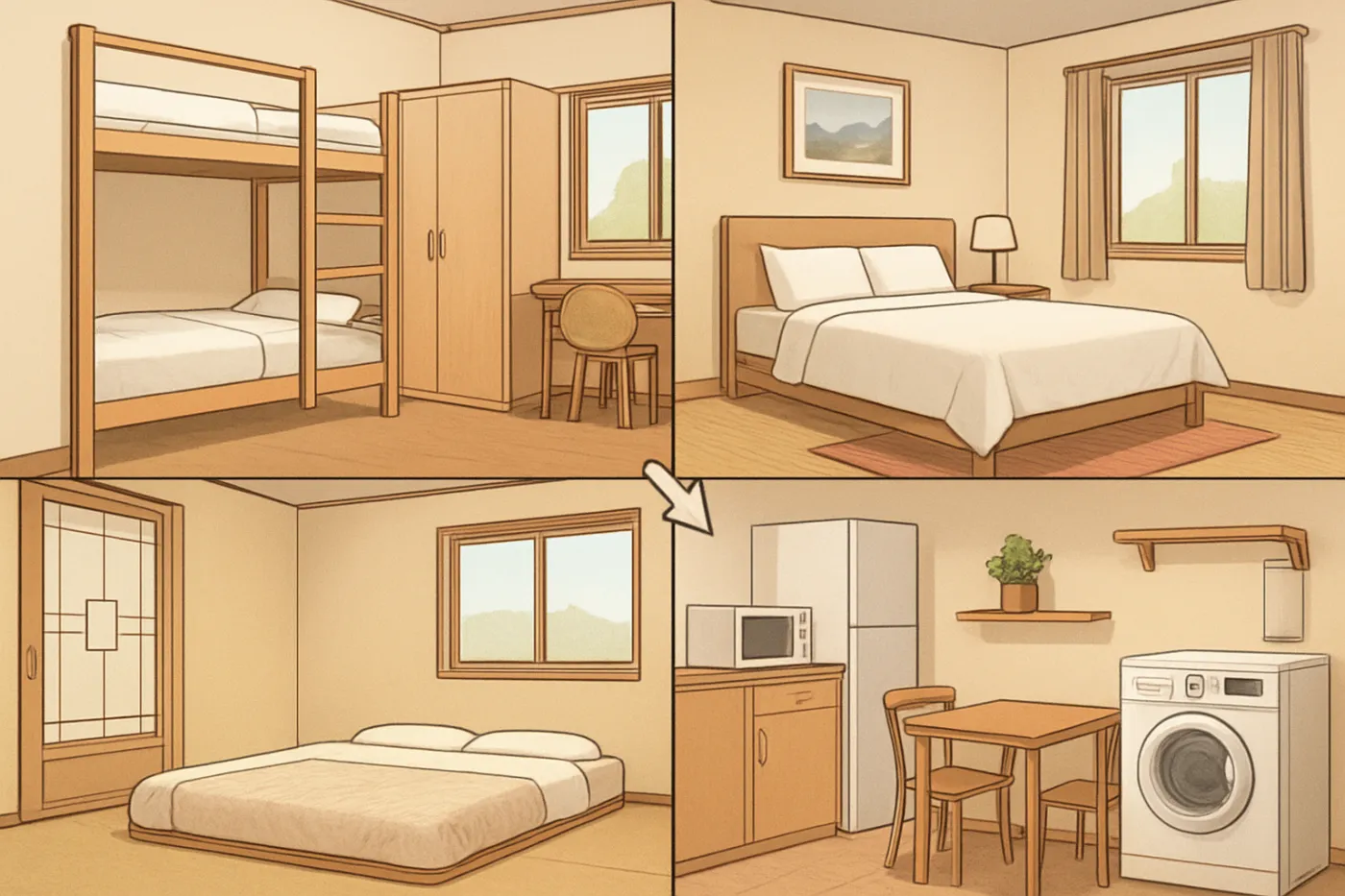
- A mix of dorm beds, private rooms with Western beds, and traditional ondol (heated floor) rooms.
- Either an ensuite bathroom or a shared bathroom down the hall; cleanliness usually tracks closely with recent reviews.
- Core amenities such as free Wi‑Fi, air conditioning, basic toiletries, and often a small shared kitchen or pantry.
- Extra comforts in many places, like laundry machines, lockers, common lounge, rooftop terrace, and simple breakfast.
The important point: every property combines these elements differently. You cannot assume a guesthouse works like a standard hotel. You need to read room descriptions line by line, compare photos carefully, and use a clear checklist of amenities before you book.
How Seoul guesthouses are usually laid out
Most Seoul guesthouses are converted houses or small buildings rather than large, purpose‑built hotels. That shapes how rooms, bathrooms, and shared spaces are arranged.
Typical layout patterns:
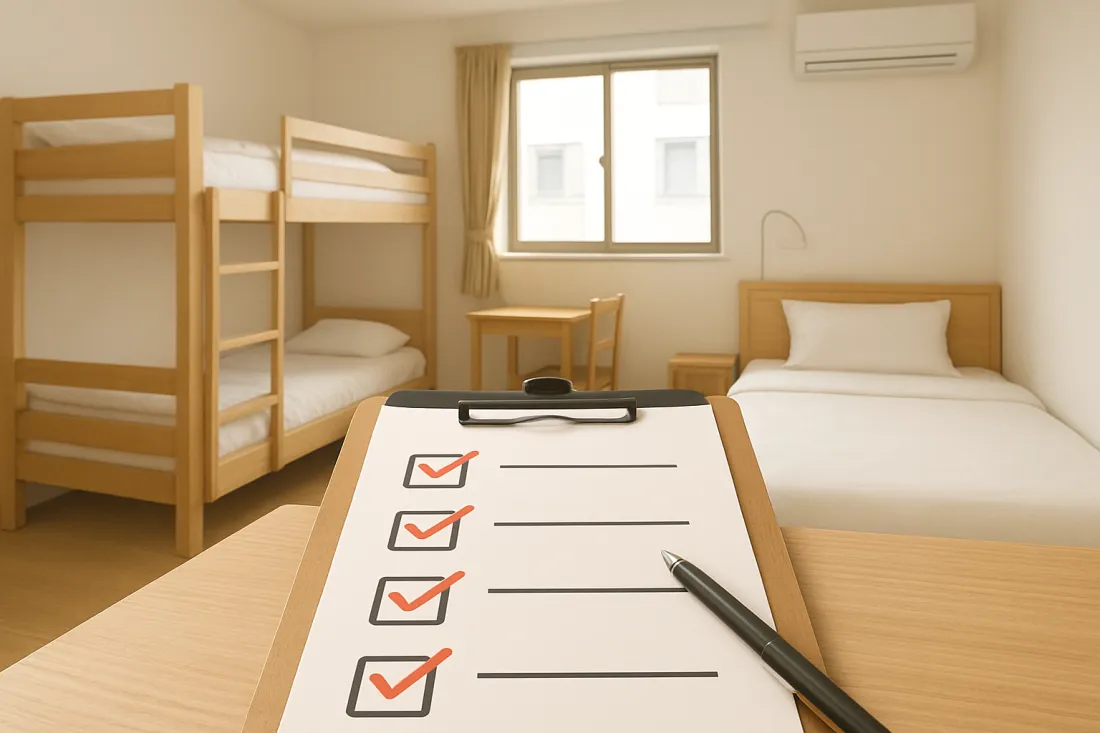
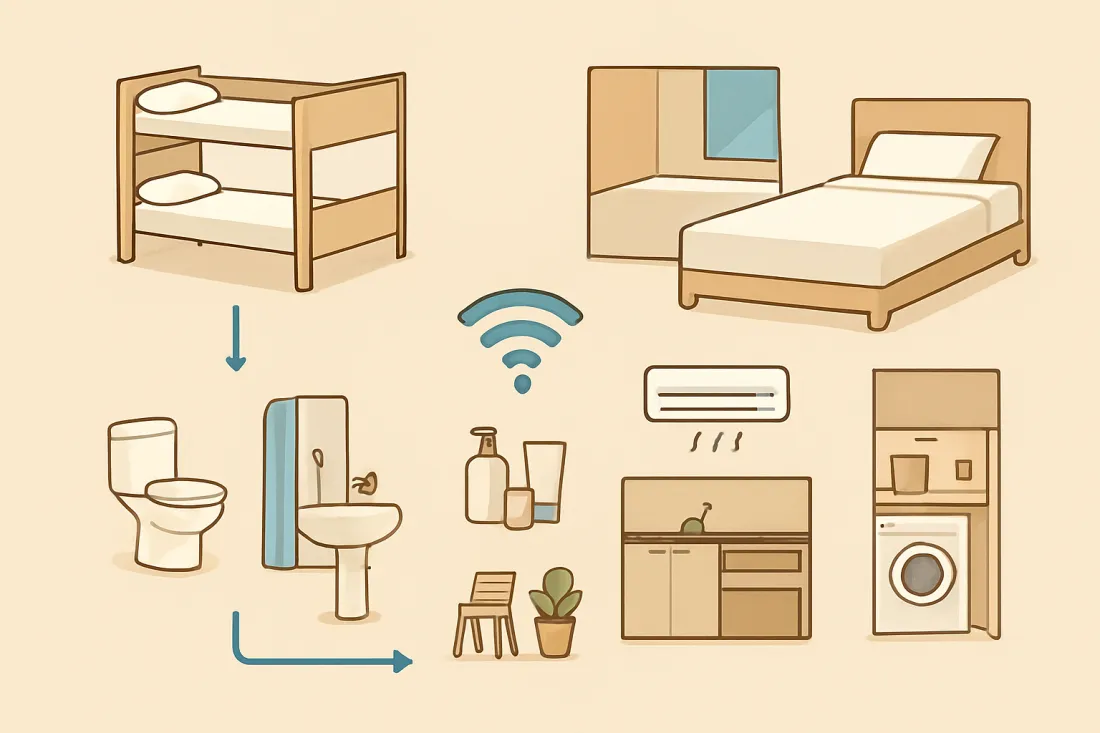
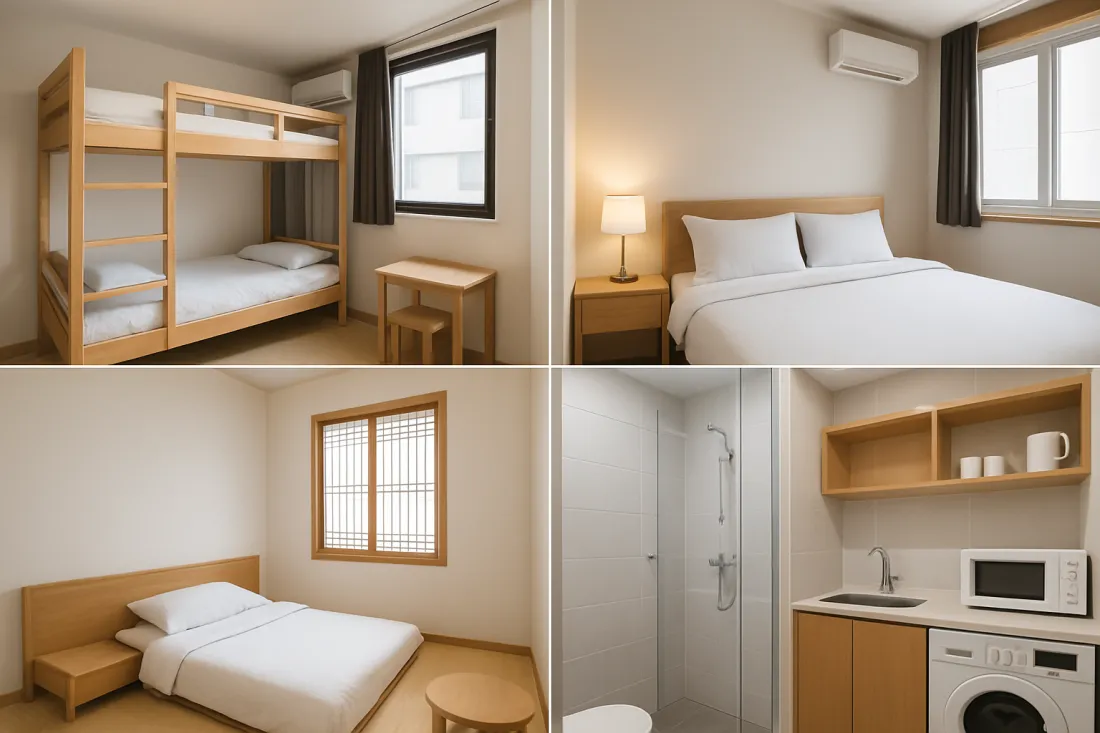
- Narrow corridors with rooms on each side – Rooms are close together, so sound can travel. Light sleepers should scan reviews for comments about noise and quiet hours.
- One or two floors of rooms plus a basement or rooftop – Kitchens, common rooms, or laundry areas are often in the basement or on the rooftop level.
- Compact reception or self check‑in area – Staff might not be on site 24/7. Late arrivals usually receive door codes and instructions by message.
- Shared kitchen near the entrance – Often combined with a breakfast corner and small dining tables.
- Bathrooms grouped together – In guesthouses with shared bathrooms, you may see one bathroom per floor or a cluster of shower rooms and toilets near the stairs.
What this means for you:
- Do not expect big lobbies, restaurants, or room service. Think homestay or hostel scale.
- Check whether there is an elevator if you have heavy luggage or mobility issues—many small buildings are stairs‑only.
- Look for mention of soundproofing, quiet hours, or “calm atmosphere” if you are sensitive to noise.
- If you are unsure what a Korean guesthouse is compared with a hotel or hostel, it can help to read a broader guide such as what is a guesthouse in Korea before you choose.
Comparing main Seoul guesthouse room types
Seoul guesthouses usually offer several room types in the same building. Names on booking sites can be confusing, so it helps to compare them side by side.
| Room type | What it usually looks like | Best for | Key pros | Key trade‑offs |
|---|---|---|---|---|
| Mixed dorm | Shared room with several bunk beds; men and women together; shared bathroom. | Solo travelers on a tight budget who do not mind sharing space. | Lowest price per night; easy to meet other travelers; flexible for short stays. | Very limited privacy; more noise and light at night; valuables must go in lockers or stay with you. |
| Female‑only dorm | Dorm room restricted to women; similar bunk layout to mixed dorms. | Solo female travelers who want a social but more comfortable‑feeling space. | Often feels safer and calmer; guests may be more considerate about noise. | Can sell out quickly; still shared bathroom and shared sleeping area. |
| Private single | Compact room for one person; single bed or small double; ensuite or shared bathroom. | Solo travelers who want privacy without paying hotel prices. | Own space to sleep and store luggage; quieter than dorms; door locks for security. | Room can be very small; some have no desk; bathroom may still be shared. |
| Private double / twin | Room for two; one double bed or two singles; sometimes a small desk or mini table. | Couples, friends, or two solo travelers sharing costs. | More hotel‑like experience; good balance of comfort and price. | Space can be tight around the bed; storage may be limited to hooks and shelves. |
| Ondol room (traditional floor) | Heated floor with thin mattresses and bedding stored in a closet; often 2–4 sets of bedding. | Travelers wanting a Korean‑style stay or flexible sleeping for small groups. | Cozy floor heating in cooler months; room feels spacious when bedding is stored. | You sleep on the floor; may be uncomfortable with back or knee issues; comfort depends on bedding thickness. |
| Family or group room | Larger room with multiple beds, bunks, or a mix of beds and ondol bedding. | Families or groups of 3–5 people who want to stay together. | Everyone in one space; often better value per person than booking several rooms. | Less privacy; only one bathroom if ensuite; can feel crowded with many suitcases. |
When comparing listings, match the photos and description to the exact room type name, not just the property name. Photos often show the nicest room first, which may not be the one you are booking.
Typical room features you can expect
Most Seoul guesthouse rooms, even budget ones, aim to cover basic comfort.
- Climate control – Air conditioning for summer is standard in Seoul guesthouses. Many also provide heating or use underfloor heating (ondol) in winter.
- Bedding – Clean sheets, pillows, and blankets are normally provided. In ondol rooms, bedding is folded and stored when not in use.
- Wi‑Fi – Free Wi‑Fi is common, though speed and stability can vary between rooms and floors.
- Power outlets – Expect at least one outlet near the bed or desk; in dorms, there is often one outlet per bed or per bunk.
- Lighting – Overhead light plus a bedside or bunk light in many dorms.
- Storage – Hooks, small shelves, or a simple rack are common. Full wardrobes are less common in budget guesthouses.
- Small extras – Towels, basic toiletries (like soap or shampoo), a hairdryer, and sometimes instant coffee, tea, or bottled water.
What varies the most:
- Room size – Some doubles are barely larger than the bed itself. Use photos to judge whether there is floor space for two suitcases.
- Desk or table – Not all rooms have a work surface. If you plan to work or study, confirm this in the description.
- Windows – Some budget rooms are semi‑basement or interior rooms with small or frosted windows. If natural light matters, look for photos that clearly show a window and view.
- Sound insulation – Thin walls are common in converted houses. Reviews are the best way to judge how much you will hear neighbors or street noise.
Ensuite vs shared bathrooms and cleanliness expectations
Bathrooms are one of the biggest differences between room types and between properties. Understanding the options helps you avoid surprises.
Ensuite bathrooms in Seoul guesthouses
An ensuite bathroom means the toilet and shower are inside your room.
- Layout – Often a compact wet room: shower, toilet, and sink in one small space.
- Privacy – Best option if you value privacy or are traveling as a couple or family.
- Convenience – No need to carry toiletries down the hall or wait for others to finish.
- Moisture – Because the whole room can get wet when you shower, check photos for a shower curtain, glass partition, or raised shower area.
Shared bathrooms in Seoul guesthouses
Shared bathrooms are located outside the room and used by several guests.
- Number of bathrooms – Some floors have one bathroom for several rooms; others have multiple shower rooms and toilets. Listings sometimes mention this; if not, ask.
- Gender separation – In some guesthouses, bathrooms are unisex; in others, there are separate male and female facilities. The listing or house rules should say which.
- Cleanliness – Well‑run guesthouses clean shared bathrooms regularly during the day. Recent reviews are the best indicator.
- Privacy – Shower rooms usually have doors or cubicles that lock, but space can be tight and there may be queues at peak times.
Cleanliness expectations and how to check them
Most reputable Seoul guesthouses aim to keep bathrooms and rooms clean, but standards vary. Before booking, check:
- Recent reviews mentioning “clean” or “dirty” bathrooms – Look for patterns over the last few months, not just one comment.
- Bathroom photos – Notice whether tiles and corners look well maintained or show mold and rust.
- House rules and cleaning schedule – Some guesthouses mention daily cleaning times or quiet hours for bathrooms; this is a good sign of active management.
If you are particular about bathroom privacy or hygiene, prioritize rooms labeled “private bathroom” or “ensuite” and filter for properties with consistently high cleanliness ratings.
Common amenities in Seoul guesthouses
Amenities differ from place to place, but several features appear again and again in Seoul guesthouses.
Shared kitchen or pantry
Many guesthouses offer a small shared kitchen area.
- Typical equipment – Fridge, microwave, electric kettle, basic dishes and cutlery, and sometimes a stove or induction cooktop.
- Usage rules – Some allow only light cooking (ramen, eggs, simple dishes); others discourage strong smells or late‑night cooking to avoid disturbing neighbors.
- Food storage – Shared fridge shelves or labeled baskets; guests are usually expected to label food with name and checkout date and to keep areas tidy.
Common room or lounge
A common room is where guests can relax, eat, or work.
- Furniture – Tables, chairs, sofas, sometimes a TV, books, or board games.
- Atmosphere – Some places are social and lively; others are quiet spaces mainly used for eating or laptop work.
- Events – A few guesthouses organize simple events like movie nights or group dinners, but this is not guaranteed and should not be assumed without confirmation.
Rooftop or terrace
Because many Seoul buildings are tall and close together, rooftops are popular shared spaces.
- Views – Rooftops can offer pleasant city views, especially at night.
- Facilities – Simple seating, plants, and sometimes laundry drying racks or small tables.
- Rules – Often limited opening hours to avoid noise for neighbors; rules on alcohol or smoking vary and are usually posted.
Laundry facilities
Laundry access is important for longer trips.
- Washing machines – Many guesthouses provide at least one shared machine for guests.
- Drying – Indoor drying racks or rooftop lines are common; tumble dryers are less common in budget properties.
- Detergent – Sometimes provided, sometimes you need to bring or buy your own; check the listing or ask in advance.
Lockers and security
In dorms, lockers are common; in private rooms, you usually rely on the room door lock.
- Locker size – Often fits a daypack or valuables, not always a full suitcase. Check photos if you travel with large luggage.
- Locks – Some lockers have built‑in locks; others require your own padlock.
- Entry system – Keycards, PIN codes, or physical keys are all used. Main doors may have a keypad and be locked at night for security.
What is usually included for free vs extra cost
Each guesthouse sets its own policy, but there are common patterns in Seoul.
Often included in the room price
- Wi‑Fi – Typically free and available throughout the building.
- Basic toiletries – Soap and shampoo are common; some also provide toothpaste or disposable toothbrushes.
- Towels – At least one towel per person; some guesthouses change them every few days rather than daily.
- Hairdryer – Either in the room or shared in the bathroom or common area.
- Simple breakfast – Many guesthouses offer toast, jam, cereal, or instant noodles and coffee in the morning, but not all. Always confirm if breakfast is included.
- Use of kitchen and common areas – Usually free, as long as you follow house rules.
Sometimes free, sometimes paid
- Laundry – Some places let you use the washing machine for free; others charge a small fee per load. Check the “Facilities” section or house rules.
- Extra towels or bedding – One set is often free; additional sets may cost extra.
- Luggage storage – Storing bags before check‑in or after checkout is often free for a few hours, but some guesthouses charge for longer storage.
Usually extra cost or not available
- Daily room cleaning – Budget guesthouses may not clean your room every day unless you request it or stay for many nights.
- Toothbrushes, razors, or other personal items – Sometimes sold at reception or nearby convenience stores.
- Printing, phone calls, or special services – Not standard; if you need them, ask in advance whether the guesthouse can help.
Because policies differ, always read the “Facilities” and “House rules” sections on the booking site carefully before confirming.
How to read photos and descriptions on booking sites
Descriptions and photos are your main tools for understanding what you are really booking. A few details make a big difference.
Room photos: what to look for
- Multiple angles – If you only see close‑ups of decor, the room may be smaller than you expect. Look for photos that show the whole room.
- Bed type – Photos should show whether it is a double bed, twin beds, bunk beds, or floor bedding. Compare this with the written bed type.
- Bathroom – If there is no bathroom photo attached to your room type, it may be shared. Confirm in the text or by messaging the property.
- Window and natural light – Notice whether the room has a real window, a small high window, or none visible. This affects both comfort and ventilation.
- Storage and outlets – Try to spot hooks, shelves, and power outlets near the bed if these matter to you.
Common wording and what it often signals
- “Compact” or “cozy” room – Expect limited floor space; fine if you travel light, less ideal with large suitcases.
- “Shared bathroom” – You will not have a private toilet or shower in your room; they are in the hallway.
- “Private external bathroom” – The bathroom is outside your room but reserved only for you; you still walk through the hallway to reach it.
- “City view” – Could mean a skyline, a street, or neighboring buildings. Check photos rather than relying on the phrase.
- “Upper floors accessible by stairs only” – No elevator; important if you have heavy luggage or mobility issues.
- “Soundproofing” – Helpful, but still read reviews about noise from other guests or the street.
Review sections to focus on
When reading reviews, filter for recent ones and look for comments about:
- Cleanliness – Rooms, bathrooms, and bedding.
- Noise – From other guests, thin walls, or nearby bars and roads.
- Staff responsiveness – How quickly they handle issues like broken air conditioning or missing towels.
- Accuracy of photos – Whether guests felt the room matched what they saw online.
Who should choose which Seoul guesthouse room type
Different travelers will be happier with different setups. Use these scenarios to narrow your choice.
- Solo budget travelers – Mixed or female‑only dorms in guesthouses with strong reviews for cleanliness and security.
- Solo travelers who value privacy – Private single or small double with shared bathroom in a quiet area; check noise reviews carefully.
- Couples – Private double with ensuite bathroom; look for comments about room size and soundproofing.
- Families with children – Family room or ondol room that can sleep several people; confirm safety features like window locks and stair gates if needed.
- Friends traveling together – Twin room, triple room, or a small dorm that you can book out as a group.
- Travelers wanting a cultural experience – Ondol rooms in traditional‑style guesthouses, with clear photos of bedding and heating.
If budget is a major factor, location matters as much as room type. Some neighborhoods offer better value than others; guides such as the best area to stay in seoul on a budget can help you match room style with the right district.
Trade‑offs and risks when choosing a Seoul guesthouse
Every choice involves trade‑offs. Being aware of them helps you pick the right balance for your trip.
- Dorm vs private room – Dorms are cheaper and more social but noisy and less private. Private rooms cost more but give you quiet, security, and your own space.
- Ensuite vs shared bathroom – Ensuite offers convenience and privacy; shared bathrooms save money but depend heavily on other guests’ behavior and the cleaning schedule.
- Ondol vs Western bed – Ondol is warm and traditional but may be hard on your back; Western beds feel familiar but take up more space in small rooms.
- Central location vs quiet area – Staying near nightlife or major stations is convenient but can be noisy; quieter neighborhoods may require longer subway rides.
- Cheapest option vs comfort – The very cheapest rooms may cut corners on soundproofing, space, or amenities. Sometimes paying a little more significantly improves your stay.
Risks to watch for:
- Misleading or incomplete photos – Photos may show the best room, not the one you are booking. Always match the photo set to the specific room type name.
- Hidden stairs – If you have mobility issues, confirm elevator access or ground‑floor rooms before booking.
- Strict house rules – Some guesthouses have curfews, no‑alcohol policies, or limits on visitors. Read the rules to avoid surprises.
- Thin walls and noise – Even if a property is in a quiet area, internal noise can be an issue. Recent reviews are your best guide.
Structured checklist: amenities to confirm before you book
Use this practical checklist while comparing Seoul guesthouses so you know exactly what you are getting.
Room basics
- Room type: dorm, private single, double, twin, ondol, or family?
- Bed type: single, double, queen, bunk, or floor mattress?
- Maximum occupancy: does it match your group size and ages?
- Room size: do photos show enough floor space for your luggage?
- Window: real window with daylight or interior/semi‑basement room?
- Desk or table: do you need a work surface or just a bed?
Bathroom and hygiene
- Bathroom type: ensuite, shared, or private external?
- Number of shared bathrooms per floor (if mentioned) and any mention of queues?
- Recent reviews about bathroom cleanliness and hot water?
- Provision of towels and basic toiletries (soap, shampoo)?
- Availability of hairdryer (in room or shared)?
Comfort and climate
- Air conditioning in the room (important in summer)?
- Heating or ondol floor (important in winter)?
- Noise level mentioned in reviews (street noise, thin walls, party atmosphere)?
- Blackout curtains or blinds if you are sensitive to light?
- Mattress or bedding thickness, especially for ondol rooms?
Common facilities
- Kitchen access: is there a shared kitchen or at least a kettle and microwave?
- Breakfast: included, optional, or not provided?
- Common room or lounge for working or relaxing?
- Rooftop or terrace access and opening hours?
- Laundry: washing machine, dryer or drying racks, and any fee?
Security and access
- Lockers in dorms and whether you need your own padlock?
- Room door locks: key, keycard, or keypad?
- Main entrance security: locked at night, keypad, or CCTV in common areas?
- Check‑in method: staffed reception hours or self check‑in with codes?
- Curfew or quiet hours that might affect your plans?
Location and logistics
- Distance to the nearest subway station and travel time to your main sights?
- Stairs vs elevator: can you manage your luggage and any mobility needs?
- Luggage storage before check‑in and after checkout, and whether there is a time limit?
- Nearby food options: convenience stores, cafes, late‑night restaurants?
- Arrival route from the airport or train station: do you know which subway line or bus to take?
Ticking off these points while you browse listings quickly narrows down which guesthouse actually fits your style and needs.
Packing tips based on typical guesthouse facilities
Because Seoul guesthouses provide many basics but not everything, smart packing can make your stay smoother.
For dorms and shared rooms
- Earplugs and eye mask – Essential for sleeping through other guests’ movements and lights.
- Small padlock – Useful if lockers require your own lock.
- Compact towel – Even if towels are provided, a quick‑dry towel helps for late‑night showers or side trips.
- Flip‑flops – For shared bathrooms and showers.
- Packing cubes – Keep your belongings organized in limited space.
- Small pouch for valuables – Easy to grab when you leave the room or go to the bathroom.
For private and ondol rooms
- Light slippers or socks – Floors are often kept clean, and shoes may be removed at the entrance.
- Travel pillow or back support – Helpful if you are not used to floor sleeping in ondol rooms.
- Small extension cord or multi‑plug – Outlets may be few and not always near the bed.
- Thin sleepwear – Ondol floors can be warm; comfortable sleepwear helps you adjust.
For bathrooms and laundry
- Personal toiletries – Your preferred shampoo, conditioner, and skincare; guesthouse products are usually basic.
- Small toiletry bag with hook – Easy to hang in compact bathrooms or on shower doors.
- Travel‑size detergent – Handy if laundry is available but detergent is not provided.
- Microfiber cloth or small hand towel – Useful in wet‑room bathrooms where floors stay damp.
For electronics and connectivity
- Universal adapter – South Korea uses 220V with two round pins; bring an adapter if your plugs differ.
- Portable power bank – Useful if outlets are limited or far from your bed.
- Offline maps and booking details – Save your guesthouse address and check‑in instructions in case Wi‑Fi or mobile data is slow when you arrive.
Decision checklist: how to choose the right Seoul guesthouse room
Use this step‑by‑step process to move from browsing to a confident booking.
- Set your priorities
Decide what matters most: lowest price, private bathroom, quiet location, social atmosphere, or traditional experience. - Filter by non‑negotiables
On booking platforms, filter for your must‑haves: room type, ensuite bathroom, air conditioning, or specific neighborhood. - Shortlist 3–5 properties
For each one, run through the amenities checklist above. Eliminate any that fail on key points like cleanliness, access, or bathroom type. - Read the most recent reviews
Focus on comments from the last few months about noise, cleanliness, staff, and whether photos match reality. - Check house rules and access
Look for curfews, visitor policies, smoking rules, and check‑in times. Make sure they match your schedule and habits. - Confirm unclear details
If anything is ambiguous (for example, whether the bathroom is private, or if laundry is free), send a quick message to the property before booking. - Plan your arrival
Once you choose, book your room and save the address, check‑in instructions, and contact details offline. If you are flying into Incheon, it can help to plan your transfer in advance using guides such as AREX Incheon Airport to Seoul first time.
FAQ about Seoul guesthouse room types and amenities
How different are Seoul guesthouse rooms from regular hotel rooms?
Seoul guesthouse rooms are usually smaller and simpler than standard hotel rooms. You are more likely to find bunk beds, ondol floor bedding, or compact wet‑room bathrooms instead of large beds and bathtubs. Storage is often just hooks and shelves rather than full wardrobes. In exchange, you get access to shared spaces like kitchens and lounges, a more social atmosphere, and generally lower prices than hotels in the same area.
Are Seoul guesthouse dorms safe for solo travelers?
Many solo travelers use Seoul guesthouse dorms without issues, but safety depends on both the property and your habits. Look for dorms with individual lockers, solid door locks, and positive reviews about security. Choose female‑only dorms if that feels more comfortable. Use your own padlock if needed, keep valuables in lockers or on your person, and avoid leaving important items unattended on beds or in open luggage.
Will I be comfortable in an ondol guesthouse room if I have never slept on the floor?
If you do not have back or knee problems, most people adjust to ondol rooms after a night or two and enjoy the warm floor, especially in cooler months. However, comfort depends on how thick the provided mattresses are. Check photos for bedding thickness and read reviews from guests who mention ondol. If you already have joint or back issues, you may prefer a Western bed or bring a lightweight camping mat for extra cushioning.
Do Seoul guesthouses usually provide towels and toiletries?
Most Seoul guesthouses provide at least one towel per guest and basic toiletries like soap and shampoo. However, towel changes may not be daily, and items such as conditioner, body lotion, or specific skincare products are rarely included. If you are particular about products, bring your own. Always check the amenities list to confirm whether towels are included or available for a small fee.
Can I cook my own meals in a Seoul guesthouse?
Many guesthouses allow light cooking in a shared kitchen, with access to a fridge, microwave, kettle, and basic utensils. Some also provide a stove or induction cooktop. There are usually rules about cleaning up after yourself, labeling food, and avoiding strong smells or late‑night cooking. If cooking is important to you, look for explicit mention of a shared kitchen and read reviews to see how practical it is in daily use.