Realistic South Korea budget accommodation cost at a glance
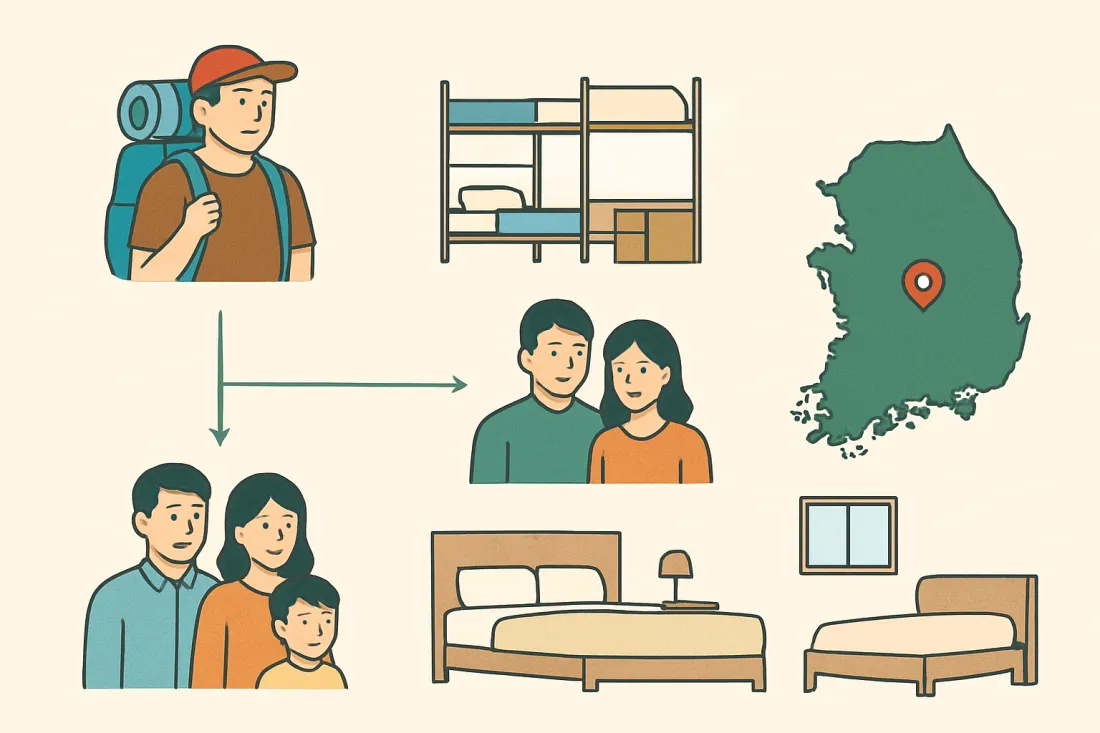
If you are planning a budget trip to South Korea, a realistic starting point for most travelers is:
- Backpackers in dorms: expect a low nightly budget per person for a bunk in a hostel or guesthouse, more in the very center of Seoul or on Jeju in peak season.
- Couples in simple private rooms: plan a moderate nightly budget per room in most cities, higher in central Seoul and on Jeju.
- Families in budget hotels or family rooms: expect a higher nightly budget per room or apartment, depending on space and location.
These are not exact prices. Actual costs change with city, season, weekend vs weekday, and how early you book. Use the ranges below as planning anchors, then check current offers before you lock in a budget.
How South Korea budget accommodation costs change by city
Accommodation is usually the largest fixed cost for a Korea trip, and it varies a lot by destination. Here is how major areas typically compare, from cheapest to most expensive for budget travelers:
- Smaller cities and countryside (e.g., Daegu, Gwangju, many provincial towns) – often the lowest prices, especially on weekdays.
- Busan – beach and festival areas can be pricey in season, but there are still many budget guesthouses and motels.
- Seoul – wide range: you can find cheap dorms, but central private rooms cost more.
- Jeju Island – often the most expensive for budget accommodation in peak season because of limited supply in popular areas.
Average budget ranges by major Korean destinations
Use this comparison to see how your nightly budget might shift between cities. Values are relative, not fixed prices.
| City / region | Typical budget dorm level | Typical budget private room level | Notes for budget travelers |
|---|---|---|---|
| Seoul | Low to mid range for a bunk, higher in ultra-central areas | Mid to upper budget range, especially in Myeongdong, Hongdae, Gangnam | Huge choice; you pay more for location and new buildings. Outskirts and university areas are cheaper. |
| Busan | Low to mid range, rising near beaches in summer | Mid range; beach-view rooms can be higher | Haeundae and Gwangalli cost more in peak beach season; downtown areas can be cheaper. |
| Jeju Island | Mid to upper budget range, especially in peak season | Upper budget range in resort or coastal areas | Car rentals and limited supply near attractions push prices up; inland towns can be cheaper. |
| Daegu / Gwangju / Daejeon | Low range most of the year | Low to mid range | Less tourist demand means better value; big events and festivals can still spike prices. |
| Smaller towns & countryside | Low range where hostels exist | Low to mid range for motels and guesthouses | Choice can be limited; you may rely on motels or pensions rather than classic hostels. |
Dorms vs private rooms: what you really pay for
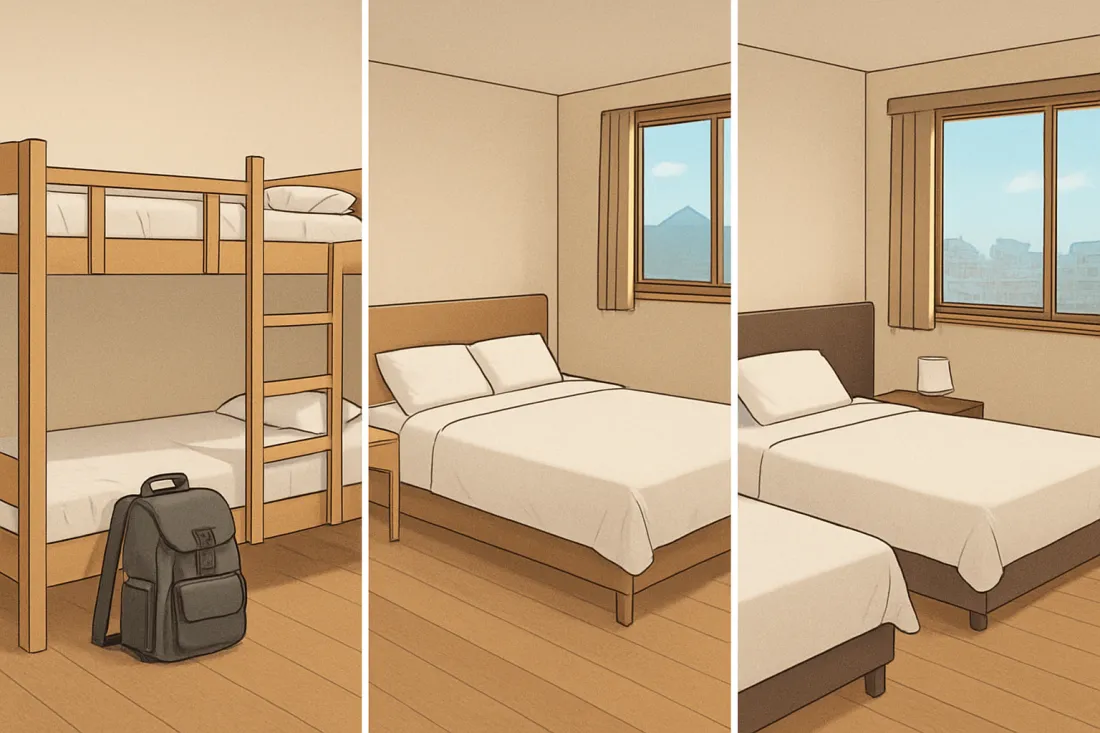
Budget accommodation in South Korea usually falls into four categories:
- Hostel dorms – shared rooms with bunk beds, shared bathrooms.
- Guesthouse private rooms – simple rooms, often with shared bathrooms and basic breakfast.
- Budget hotels and motels – private ensuite rooms, sometimes with quirky decor, no breakfast or simple snacks.
- Hanok stays and pensions – traditional or vacation homes; can be budget-friendly outside peak areas.
Typical cost differences: dorm vs private
In most Korean cities:
- A dorm bed in a hostel or guesthouse is usually the cheapest legal option per person.
- A simple private room in a guesthouse or motel often costs about 2–3 dorm beds in the same area.
- For two people, a private room is often similar in total cost to booking two dorm beds, and gives more privacy.
- For families, a family room or small apartment can be cheaper than multiple hotel rooms, especially outside Seoul and Jeju.
What you trade when you choose each option
| Option | Best for | What you usually get | Typical trade-offs |
|---|---|---|---|
| Hostel dorm bed | Solo backpackers, very tight budgets | Cheapest bed, social atmosphere, shared kitchen, shared bathrooms | Less privacy, noise, need to secure valuables, mixed-gender rooms unless specified |
| Guesthouse private room | Couples, friends, light sleepers | Private sleeping space, often shared bathroom, sometimes simple breakfast | Smaller rooms, thin walls, may lack elevator or 24/7 reception |
| Budget hotel / motel | Couples, short city breaks | Private ensuite bathroom, TV, air-con, usually central or near stations | Limited common areas, variable cleanliness, some motels are designed for couples rather than families |
| Family room / apartment | Families, small groups | More space, multiple beds, sometimes kitchen or kitchenette | Higher nightly cost, may be farther from main sights, cleaning fees possible |
Seasonal price changes and peak dates in Korea
Your travel dates can change your accommodation cost more than your destination. In South Korea, prices tend to rise when domestic travel demand is high.
Times when budget accommodation costs more
Expect higher prices and faster sell-outs during:
- Cherry blossom and spring weekends (roughly late March to mid-April, depending on region) – popular in Seoul, Busan, and Jeju.
- Summer beach season (roughly July–August) – especially in Busan and on Jeju Island.
- Autumn foliage season (roughly late October to early November) – popular in Seoul, mountain areas, and national parks.
- Major national holidays such as Lunar New Year and Chuseok – many Koreans travel to family homes or take domestic trips; transport and accommodation can be very busy.
- Golden Week–style long weekends when public holidays fall near weekends.
During these periods, budget rooms can cost significantly more than in low season, and some properties add weekend or holiday surcharges on top of their base rate.
When you can save on accommodation
You are more likely to find lower prices and last-minute deals if you travel in:
- Late autumn and winter (excluding Christmas/New Year and ski resorts) – many destinations are quieter.
- Midweek stays – Sunday to Thursday nights are often cheaper than Friday and Saturday.
- Shoulder weeks between major seasons – for example, early March or late November.
If your schedule is flexible, shifting your trip by even a few days away from a holiday or festival can noticeably reduce your nightly budget.
Hidden fees and extras that change your real nightly cost
Many travelers underestimate their accommodation budget because they only look at the base room price. In South Korea, watch for these common extras:
- Weekend surcharges – Some properties charge more on Friday and Saturday nights, especially in popular areas.
- Peak-season surcharges – Higher rates during cherry blossom, summer, and holidays.
- Service fees and taxes – Booking platforms may show a lower price first, then add fees at checkout. Always check the final total.
- Towel and linen fees – A few hostels charge extra for towels or linen, especially for very cheap dorms.
- Breakfast – Some guesthouses include simple breakfast; others charge extra or do not offer it at all.
- Cleaning fees – Common for apartments and some pensions; can make short stays more expensive per night.
- Extra person charges – Many rooms have a base price for 2 people and charge extra for a third or fourth guest, even if you share beds.
- Late check-in or luggage storage – Occasionally charged if you arrive very late or store bags for many hours after checkout.
When you compare options, always look at the total cost for your full stay, including all fees, and divide by the number of nights and people to see the real nightly cost per person.
How far in advance to book for the best budget
There is no single perfect booking window, but these guidelines help for South Korea:
- Peak seasons and holidays – book as early as you can once your dates are fixed. Popular budget guesthouses in Seoul, Busan, and Jeju can sell out months ahead for cherry blossom, summer, and major holidays.
- Normal periods (spring and autumn weekdays, non-holiday weekends) – booking 2–6 weeks in advance usually gives a good balance between choice and price.
- Low season weekdays – you can often wait longer, but booking at least 1–2 weeks ahead still helps you secure better-located options.
If your budget is tight and your dates are not flexible, treat accommodation like a priority booking rather than something to leave until the last minute.
Sample nightly budgets for different traveler types
Use these example scenarios to sanity-check your own plan. They are based on typical patterns from budget travelers and should be adjusted using current offers.
1. Solo backpacker staying in dorms
- Accommodation style: mixed or female-only dorms in hostels and guesthouses.
- Destinations: mostly Seoul and Busan, with a few nights in a smaller city.
- Season: shoulder season (not a major holiday).
A realistic plan is to budget for a low to mid range dorm price per night, then add a small buffer for occasional higher nights in central Seoul or during weekends.
2. Budget-conscious couple in private rooms
- Accommodation style: private rooms in guesthouses and budget hotels.
- Destinations: Seoul, Busan, and a short Jeju stay.
- Season: spring or autumn, avoiding major holidays.
For a couple, a realistic starting point is a mid-range nightly budget per room in Seoul and Busan, and a slightly higher range on Jeju, especially near beaches or scenic areas. If you are willing to stay slightly away from the most popular districts, you can often keep the average closer to the lower end of that range.
3. Family of four on a budget
- Accommodation style: family rooms in guesthouses, simple apartments, or two budget hotel rooms.
- Destinations: Seoul and one other city.
- Season: school holidays.
Families often underestimate accommodation costs because they need more space. A realistic plan is to budget for a higher nightly amount per room or apartment than a couple, especially in central Seoul. If you choose a family room with basic kitchen facilities, you may save on meals, which can offset some of the higher room cost.
Money-saving tips that do not sacrifice safety
You can reduce your accommodation budget in South Korea without putting comfort or safety at risk by focusing on location, timing, and property type.
Choose smart locations, not just the absolute center
- Look for areas that are 1–3 subway stops from the main tourist districts instead of right inside them.
- In Seoul, university neighborhoods and residential districts often have cheaper guesthouses than the main shopping streets.
- Check how long it takes to reach key sights by subway or bus; a 10–20 minute ride can save you a lot over several nights.
If you want to understand transport options from the airport into Seoul before choosing a neighborhood, it can help to read about AREX route map and how it connects Incheon Airport to different parts of the city.
Be flexible with dates and length of stay
- Shift your stay by a day or two to avoid Friday and Saturday nights in expensive areas.
- Consider staying longer in cheaper cities and fewer nights in the most expensive ones.
- Look for weekly or multi-night discounts on apartments and some guesthouses.
Use facilities to cut other costs
- Choose places with a kitchen or at least a microwave and fridge so you can eat some meals in.
- Check if laundry is free or cheap; doing laundry on-site can save you from paying for extra luggage on flights.
- Free breakfast (even simple toast and coffee) can reduce your daily food budget.
Balance cancellation policies and price
- Non-refundable rates are often cheaper, but only choose them if your dates are truly fixed.
- If your plans may change, a slightly higher price with free cancellation can protect your budget from last-minute surprises.
Common mistakes when budgeting for accommodation in Korea
Avoid these frequent errors that make trips more expensive or stressful than they need to be.
1. Only checking the nightly rate, not the total
Travelers often compare the headline price and ignore taxes, cleaning fees, and weekend surcharges. Always compare the total cost for your full stay between options.
2. Underestimating peak-season and weekend effects
Many people plan a budget based on low-season blog posts, then travel during cherry blossom or summer weekends. This can push real costs much higher than expected. If you must travel in peak times, build in a generous buffer.
3. Booking too late in popular areas
Leaving Seoul, Busan beach areas, or Jeju bookings to the last minute in busy seasons can force you into more expensive or poorly located options. For popular dates, treat accommodation like a flight: book early.
4. Ignoring location and transport costs
A cheap room far from public transport can cost more overall once you add taxis or long commutes. In big cities, being near a subway line can save both time and money.
5. Assuming all motels or guesthouses are family-friendly
Some budget motels are designed mainly for couples and may not be ideal for children. Always read recent reviews and check photos before booking with kids.
Decision checklist: questions to ask before you book
Use this structured checklist to compare options and avoid surprises. Work through it for each place you consider.
1. Budget and total cost
- What is the total price for my full stay, including taxes, fees, and any cleaning charges?
- How does that break down into cost per night per person?
- Are there weekend or holiday surcharges in my dates?
2. Location and transport
- How far is the property from the nearest subway or major bus stop?
- How long will it take to reach the main places I want to visit?
- If I arrive at Incheon Airport late at night, can I still reach this area easily by public transport or airport train?
If you are comparing airport train options, you may find it useful to read about AREX ticket choices before deciding where to stay on your first night.
3. Room type and facilities
- Am I booking a dorm bed, a private room, or an entire apartment?
- Is the bathroom private or shared?
- Is there heating and air conditioning suitable for the season?
- Do I need a kitchen, fridge, or laundry, and are they available?
4. Policies and extra charges
- Is breakfast included? If not, what are nearby food options?
- Are there towel, linen, or locker fees for dorms?
- What is the cancellation policy and payment method?
- Are there quiet hours or rules that matter to me (e.g., no curfew)?
5. Safety and reviews
- Do recent reviews mention cleanliness, noise, or safety issues?
- Is the area considered safe at night, especially if I will return late?
- Is there 24-hour access or a clear late check-in process?
If a property fails several of these checks, it may be cheaper on paper but more stressful and expensive in practice.
Who should choose which budget option?
Matching your traveler profile to the right type of accommodation can keep your costs realistic and your stay comfortable.
| Traveler type | Best budget option | Why it fits | What to watch out for |
|---|---|---|---|
| Solo backpacker | Hostel dorms in central or near-central areas | Lowest per-person cost, social environment, easy to meet others | Noise, shared bathrooms, need to secure valuables |
| Couple on a budget | Guesthouse private rooms or budget hotels | Privacy at a cost similar to two dorm beds, often better sleep | Smaller rooms, sometimes thin walls or basic decor |
| Family with children | Family rooms, apartments, or two hotel rooms | More space, better control over noise and routines | Higher nightly cost, need to confirm child-friendly environment |
| Group of friends | Entire apartment or multiple private rooms | Shared cost per person can be low, social time together | Cleaning fees, noise rules, and deposit policies |
FAQ: South Korea budget accommodation cost
Is $1,000 enough for a week in South Korea including accommodation?
For many budget travelers, $1,000 for a week in South Korea including accommodation, food, and local transport can be workable, especially if you stay in dorms or simple guesthouses and avoid peak seasons. Your actual comfort level will depend on how much of that budget you allocate to accommodation. If you want private rooms in central Seoul or Jeju during busy periods, you may need to either increase the budget or shorten the trip.
How much should I budget for 2 weeks in South Korea just for accommodation?
A realistic 2-week accommodation budget depends on your style:
- Dorm-based backpacker: plan for a modest nightly amount per person, then multiply by 14 nights and add a buffer for a few more expensive nights.
- Couple in private rooms: plan for a mid-range nightly amount per room, higher if you include several nights on Jeju or in very central Seoul.
- Family: plan for a higher nightly amount per room or apartment, especially if you need more than one bedroom.
Check current prices for your exact dates and cities, then adjust these rough ranges up or down.
How expensive is budget accommodation in Seoul compared to other Korean cities?
Seoul usually sits in the upper half of Korean cities for accommodation cost, but it also has the widest range of options. Dorm beds can still be relatively affordable, especially outside the most famous districts, while private rooms in central areas cost more than in many smaller cities. Compared with Busan, Seoul can be similar or slightly more expensive for central private rooms, while Jeju often surpasses both during peak season.
Do I need to worry about hidden fees in Korean hostels and guesthouses?
Most reputable Korean hostels and guesthouses are transparent, but you should still check for towel or linen fees, breakfast charges, cleaning fees for apartments, and extra person charges. Booking platforms usually show these in the price breakdown before you confirm. Always review the final total and the property’s own policy page.
What should I do next to plan my South Korea accommodation budget?
First, decide your travel style (dorms vs private rooms) and list your cities and dates. Next, use a booking site to check current prices for a few sample properties in each city and note the average nightly cost that matches your comfort level. Finally, multiply by the number of nights, add a buffer for peak dates and hidden fees, and adjust your itinerary or standards until the total fits your overall trip budget. If you are arriving via Incheon, it can also help to review AREX vs airport bus vs taxi Incheon to Seoul so you can choose a neighborhood that balances accommodation cost with easy airport access.