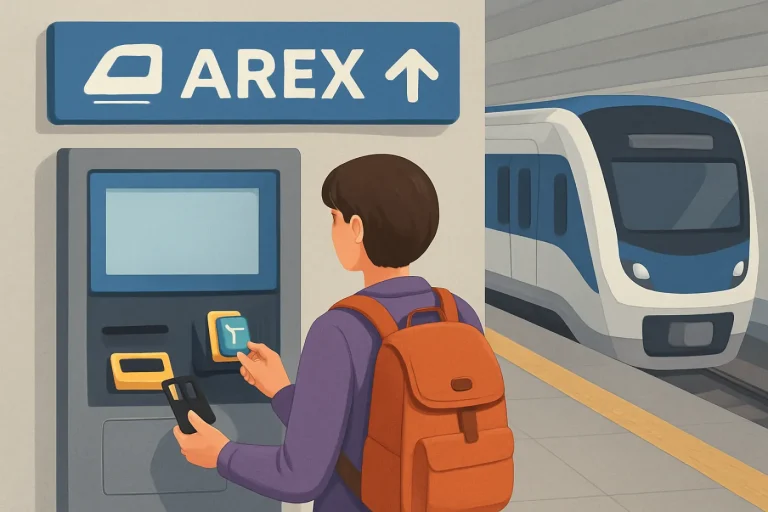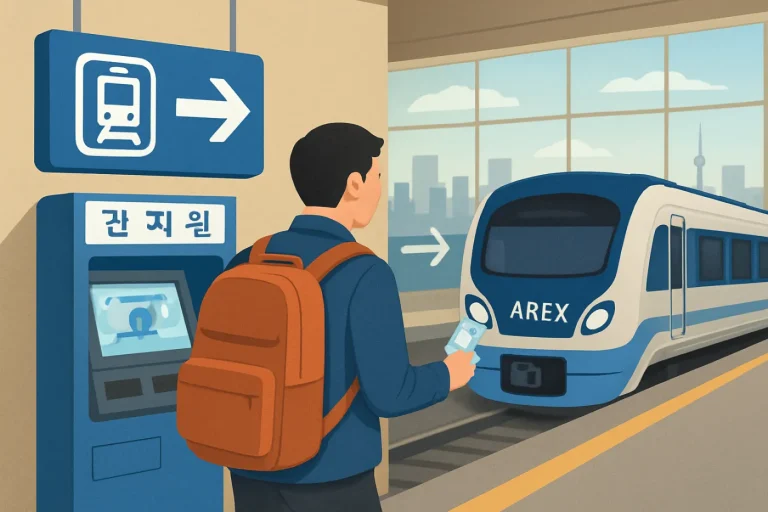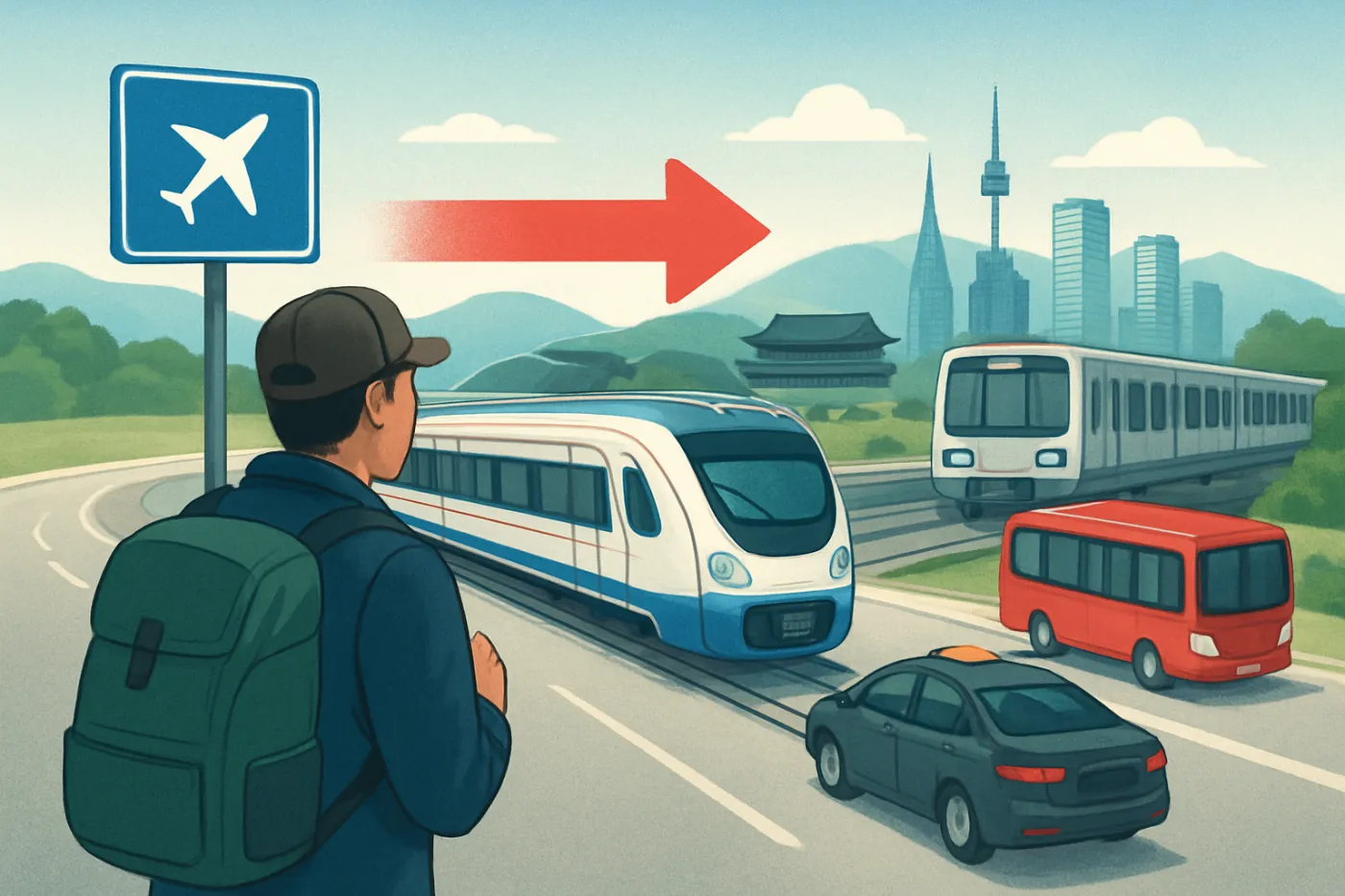
If you want the absolute cheapest realistic way from Incheon Airport to Seoul, the winner for most travelers is the AREX All Stop train paid with a transit card (like T-money). It is usually the lowest fare into the city, reasonably fast, and easy to use even on a first trip.
However, depending on where you are staying and what time you land, a local subway transfer or a cheap airport bus can be almost as cheap, and sometimes more convenient. Shared taxis are usually much more expensive, even when split.
How the main cheap options compare from Incheon to Seoul
For budget-focused travelers, these are the realistic options to compare:
- AREX All Stop train (Incheon Airport ↔ Seoul Station, with stops like Hongdae)
- Regular subway lines (AREX + Line 1/2/4/5/6/9 etc.)
- Cheaper city/airport buses (not the premium “limousine” buses)
- Shared regular taxi (splitting a standard taxi between 3–4 people)
Premium options like the AREX Express, deluxe taxis, and premium limousine buses are more comfortable but usually cost significantly more and are not the focus here.
Ranking the options by minimum cost
Exact fares change over time, but based on typical patterns and public information, the relative ranking by minimum cost usually looks like this (cheapest to most expensive):
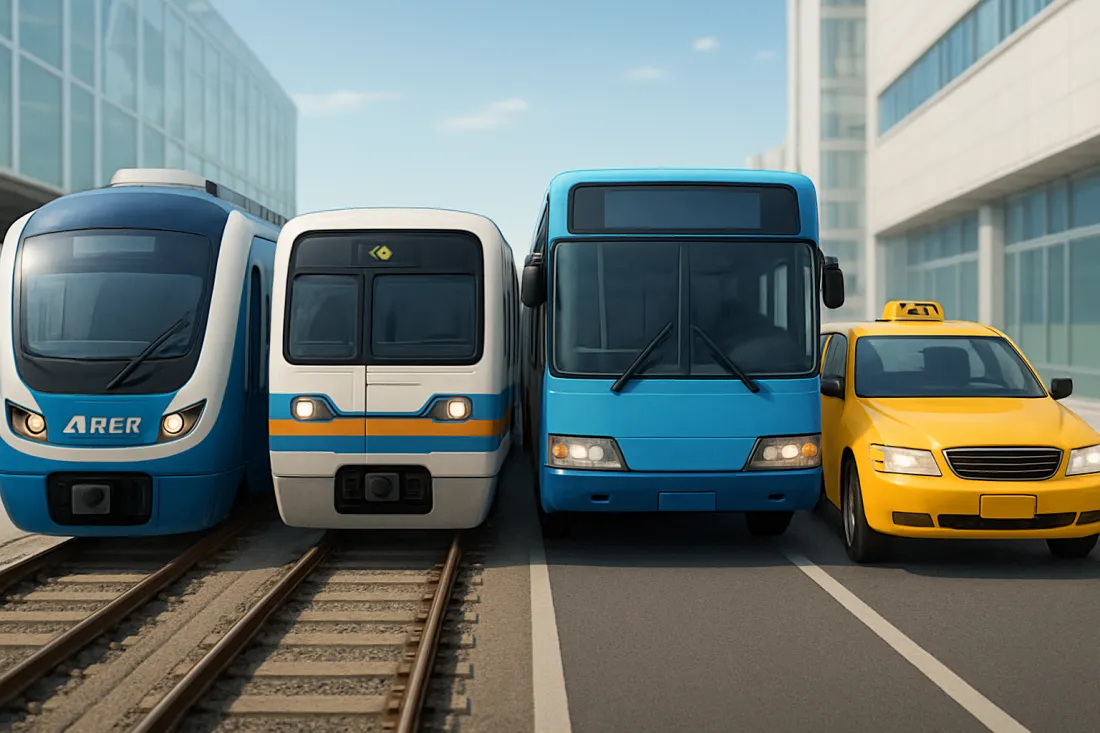
- AREX All Stop train with transit card – usually the lowest or tied for lowest cost into central Seoul.
- AREX + regular subway transfer – slightly more if you need to transfer, but still very cheap.
- Cheaper city/airport buses – often a bit more than the train, but still budget-friendly.
- Shared regular taxi – only cost-effective when split between several people and going to the same address.
Within the train options, the AREX Express is usually more expensive than the All Stop train. It is faster and more comfortable, but not the cheapest choice.
Time vs money: comparison table for main routes
The table below compares the main budget options for a typical trip from Incheon Airport to central Seoul (for example, Seoul Station or nearby neighborhoods). Times are approximate and depend on traffic and waiting time.
| Option | Typical travel time | Relative cost level | Best for | Main downsides |
|---|---|---|---|---|
| AREX All Stop train (no transfer) | ~55–65 minutes to Seoul Station | Very low | Solo travelers and pairs going to Hongdae or Seoul Station on a budget | Standing at busy times, some stairs/escalators when exiting |
| AREX All Stop + subway transfer | ~60–80 minutes depending on transfer | Very low to low | Backpackers heading to areas like Myeongdong, Itaewon, Gangnam | More stairs, crowds, and navigation; less fun with heavy luggage |
| Cheaper city/airport bus | ~60–90+ minutes depending on traffic | Low to medium | Travelers who want fewer transfers and a direct stop near their hotel | Traffic delays, less predictable arrival time |
| Shared regular taxi | ~45–70 minutes depending on traffic | Medium per person (cheaper when 3–4 share) | Groups with heavy luggage or late-night arrivals | Still much more expensive than train; potential tolls and surcharges |
Use this as a starting point, then adjust based on your arrival time, luggage, and exact neighborhood.
Using T-money and transit cards to keep costs down
To get the lowest realistic fares on public transport, you will almost always want a rechargeable transit card such as T-money, Cashbee, or a compatible card built into your phone.
Why a transit card is worth it
- Discounted fares vs single-use tickets – transit cards usually give a small discount on each ride compared with buying a paper ticket from the machine.
- Free or discounted transfers – when you tap in and out correctly, transfers between subway lines and buses within a set time window are either free or cheaper than paying separate fares.
- Less hassle – you avoid ticket machines every time you change lines or take a bus.
- Works almost everywhere – the same card can be used on subways, buses, and many convenience stores.
How to get and use a T-money style card at Incheon Airport
- Buy the card
Look for convenience stores (for example, common chains inside the terminal) or dedicated transit card counters. Ask for a T-money or similar transit card. - Load money onto it
Top up with cash at the counter or at recharge machines near the subway/AREX gates. Start with enough for your airport trip plus a few city rides. - Tap in and out
At the station gate, tap the card on the reader to enter and again when you exit. On buses, tap when boarding and when getting off. - Keep the card for your whole trip
Reuse it for all your subway and bus rides in Seoul and other cities that accept it.
If you plan to use the AREX All Stop train often or explore multiple neighborhoods, reading a detailed guide such as an AREX ticket overview can help you understand the different ticket types and discounts.
Cheapest realistic routes to popular Seoul areas
Below are example low-cost routes from Incheon Airport to some of the most common areas for guesthouses and hostels. Always double-check the latest line maps and station names at the airport, as routes can change.
Incheon Airport to Hongdae (Hongik University)
Cheapest and easiest: AREX All Stop train directly to Hongik University Station.
- Route: Incheon Airport Terminal 1 or 2 → AREX All Stop → Hongik University (Hongdae).
- Transfers: None.
- Why it is good: Direct, cheap, and popular with backpackers. Many guesthouses are within walking distance of the station.
- Downsides: Can be crowded; some exits have long staircases.
Incheon Airport to Myeongdong
Myeongdong does not have a direct AREX stop, so you will need at least one transfer.
Budget-friendly route:
- Route: Incheon Airport → AREX All Stop → Seoul Station → transfer to Line 4 → Myeongdong Station.
- Transfers: 1 transfer at Seoul Station.
- Why it is good: Still very cheap, and the transfer is well signposted in English.
- Downsides: Seoul Station can be busy and confusing; expect walking, escalators, and possibly stairs.
Alternative for fewer stairs: Some airport buses go closer to Myeongdong with fewer transfers. They usually cost more than the train but may be worth it if you have heavy luggage.
Incheon Airport to Itaewon
Itaewon is not on the AREX line, so you must transfer.
Typical cheap route:
- Route: Incheon Airport → AREX All Stop → Seoul Station → transfer to Line 6 → Itaewon Station.
- Transfers: 1 transfer at Seoul Station.
- Why it is good: Low cost and relatively straightforward.
- Downsides: Line 6 trains can be crowded at peak times; more stairs and walking during the transfer.
Alternative: Take a cheaper city/airport bus that stops near Itaewon or nearby main roads, then walk or take a short subway ride. This may reduce transfers but can be slower.
Incheon Airport to Gangnam
Gangnam is on the south side of the river and usually requires a transfer or two.
Common budget route:
- Route: Incheon Airport → AREX All Stop → transfer to a subway line that connects toward Gangnam (for example, via Seoul Station or another transfer hub) → Gangnam Station or nearby station.
- Transfers: Often 1–2 transfers depending on your exact hotel location.
- Why it is good: Still one of the cheapest ways to reach Gangnam.
- Downsides: Multiple transfers, long walks inside big stations, and crowded trains during rush hour.
When a bus might be better: Some airport buses go directly to Gangnam or nearby main roads. They cost more than the train but can be more comfortable with luggage and avoid complicated transfers.
AREX All Stop vs other airport transport: key decision criteria
When choosing between the AREX All Stop train, regular subway, buses, and shared taxis, use these criteria:
- Budget: If your top priority is spending as little as possible, the AREX All Stop plus subway transfers is usually the best combination.
- Number of people: Solo travelers and couples usually save more with trains. Groups of 3–4 might consider a shared taxi if they value comfort.
- Luggage: Heavy or bulky luggage makes multiple subway transfers painful. In that case, a bus or shared taxi can be worth the extra cost.
- Arrival time: Late-night arrivals may have fewer train and bus options. A shared taxi might be the only practical choice after certain hours.
- Comfort and mobility: If you have mobility issues or hate stairs, minimizing transfers is more important than saving the last bit of money.
If you want to see how the AREX line connects to different neighborhoods, an AREX route map can help you visualize transfers and decide where to change lines.
Price breakdown: what you actually pay for
While exact fares change, you can think of your costs in a few simple parts:
- Base fare from the airport – the cost of the first leg (AREX All Stop, bus, or taxi starting fee).
- Transfer fares – small additional costs when you change from train to subway or bus, if not covered by transfer discounts.
- Night surcharges and tolls (for taxis) – extra charges late at night or for expressways.
- Card purchase or deposit – a small one-time cost for a transit card, which you can reuse.
To keep your total low, focus on:
- Using a transit card instead of single-use tickets.
- Choosing routes with fewer paid transfers.
- Avoiding premium services that look similar to regular ones (for example, express trains vs all-stop trains, premium buses vs cheaper city buses).
Tips to avoid extra fees and common money-wasters
Budget travelers often lose money on small mistakes. These are the most common ones to avoid:
1. Accidentally taking the AREX Express instead of the All Stop
- What happens: You follow signs to the AREX platform and buy the first ticket you see, which might be for the more expensive Express train.
- How to avoid it: Look carefully for the words “All Stop” or icons showing multiple stops. The Express train usually has separate ticket machines and a different platform area.
- When Express might be worth it: If you are exhausted, in a hurry, or carrying a lot of luggage, paying more for a faster, more comfortable ride can be reasonable. Just know it is not the cheapest option.
2. Choosing premium airport buses by mistake
- What happens: You see a comfortable-looking bus with big seats and assume all buses cost the same.
- How to avoid it: Check the bus type and fare on the sign or at the ticket counter. Premium or “limousine” buses cost more than basic city/airport buses.
- Tip: If you are on a tight budget, ask staff specifically for the cheapest bus to your area.
3. Unnecessary transfers on the subway
- What happens: You follow the shortest route on a map with many transfers, not realizing each transfer adds time and effort.
- How to avoid it: Sometimes a route with one extra stop but fewer transfers is better. Use a map app that shows both time and number of transfers, and choose the simpler route.
- Extra benefit: Fewer transfers mean fewer chances to get lost or end up on the wrong platform.
4. Taking a taxi for the whole distance when you do not need to
- What happens: You jump into a taxi at the airport for the entire trip to Seoul, which is convenient but expensive.
- How to avoid it: Consider a mixed strategy: take the AREX All Stop or a bus into the city, then use a short taxi ride for the final stretch if needed.
- When a full taxi ride makes sense: Very late-night arrivals, mobility issues, or groups with a lot of luggage who value door-to-door service.
Safety and comfort for late-night budget travel
Many budget travelers land in the evening or late at night and want to save money without feeling unsafe or stranded.
How late do cheap options run?
- AREX and subway: Trains run into the late evening, but not 24 hours. The last trains leave before midnight, and schedules can change, so check the latest timetable at the airport.
- Buses: Some airport buses run late or even overnight on certain routes, but not all. Look for night bus information at the bus information desk.
- Taxis: Available 24/7, but more expensive at night due to surcharges.
Is it safe to take the train or bus at night?
Public transport in South Korea is generally considered safe, even at night. Still, use common sense:
- Keep your backpack zipped and in front of you in crowded trains.
- Avoid falling asleep deeply with your belongings out of sight.
- Stay in well-lit areas of the station and follow signs to official exits and taxi stands.
- If you feel uncomfortable, consider switching to a taxi for the last part of the journey.
Comfort tips for late-night arrivals
- Plan your route in advance: Save your guesthouse address and route screenshots in case your phone data does not work immediately.
- Travel light: A smaller backpack is easier to manage on stairs and in crowds than a huge suitcase.
- Have some cash: Card payments are widely accepted, but having a bit of cash makes topping up transit cards and buying snacks easier.
Decision checklist: choosing the right cheap option for you
Use this structured checklist to decide quickly at the airport.
Step 1 – Clarify your priorities
- Money first: You want the lowest possible cost, even if it takes longer.
- Time first: You are willing to pay more to arrive faster.
- Comfort first: You care most about avoiding stairs, crowds, and confusion.
Step 2 – Check your situation
- How many people?
- Solo or 2 people → trains and buses are usually best.
- 3–4 people → consider a shared taxi if the cost split is acceptable.
- How much luggage?
- Backpack or small suitcase → AREX All Stop + subway is fine.
- Multiple large suitcases → consider a bus or taxi to avoid stairs.
- Arrival time?
- Daytime or early evening → all options are open.
- Late night → check last train times; you may need a bus or taxi.
Step 3 – Match to an option
- If money is your top priority
- Buy or load a transit card.
- Take the AREX All Stop train to the station closest to your accommodation.
- Use the subway or a short bus ride for the final leg if needed.
- If you want a balance of cost and comfort
- Consider a cheaper airport bus that stops near your neighborhood.
- Or take AREX All Stop to a major station, then a short taxi ride.
- If you prioritize comfort and have a group
- Check the approximate taxi fare to your address.
- Divide by the number of people and compare with train + bus costs.
- If the difference per person is acceptable, take a regular taxi from the official taxi stand.
Step 4 – Double-check for common mistakes
- Are you boarding the All Stop train, not the Express, if you want the cheapest fare?
- Did you confirm whether your bus is a premium limousine or a cheaper city/airport bus?
- Do you know where to transfer and which exit to use at your final station?
Frequently asked questions about cheap transport from Incheon to Seoul
What is the best way to get from Incheon Airport to Seoul on a tight budget?
For most budget travelers, the best combination of low cost and convenience is the AREX All Stop train from Incheon Airport to either Hongdae (Hongik University) or Seoul Station, then a short subway or bus ride to your final stop if needed. It is usually cheaper than buses and taxis, runs frequently, and is easy to navigate with English signs.
How much does the AREX train from Incheon Airport to Seoul cost?
There are two main AREX services: the All Stop train and the Express train. The All Stop is the cheaper option and is the one budget travelers usually choose. Exact fares change over time, but public information shows that the All Stop train is typically priced in the lower range of airport transport options, while the Express train costs noticeably more. To get the current fare, check the official fare board at the station or use a local transit app when you arrive.
How much is a train ticket from Incheon Airport to central Seoul with transfers?
If you use a transit card, you usually pay a base fare for the AREX All Stop train plus a smaller additional amount for any subway transfers, often with a transfer discount. Even with one or two transfers, the total cost is typically lower than most airport buses and far below a taxi. Because fares can change, treat any online number as an estimate and confirm the exact amount on the ticket machine or fare chart at the station.
Is Uber or a similar ride-hailing service cheap from Incheon Airport to Seoul?
Ride-hailing and regular taxis from Incheon Airport to central Seoul are not the cheapest options. They can be convenient, especially late at night or with heavy luggage, but the total fare is usually many times higher than the cost of the AREX All Stop train or a bus. If you want to consider a car anyway, check the app or taxi fare estimate for your exact destination and compare it with the combined cost of train plus a short local taxi ride.
Can I walk between terminals at Incheon Airport to save money?
Incheon Airport has more than one terminal, and they are connected by a free shuttle or internal transport. Walking the entire distance outside with luggage is not practical or necessary. If your flight arrives at one terminal and your train or bus leaves from another, follow the signs for the free terminal shuttle or internal train. This transfer does not add to your city transport cost.
Can I sleep at Incheon Airport instead of going into Seoul late at night?
Many travelers choose to stay overnight at Incheon Airport when they land very late or have an early morning flight. The terminals have seating areas, and some zones are more comfortable and quieter than others. There are also nearby hotels and capsule-style options connected to the airport, which cost money but can be more comfortable. If you plan to sleep in the terminal, check the latest airport information on which areas are open overnight and follow staff instructions.
Are there luggage lockers at Incheon Airport or in Seoul stations?
Yes, you can usually find coin or card-operated lockers and luggage storage services at Incheon Airport and at major subway stations in Seoul, such as Seoul Station and Hongdae. Locker sizes and prices vary, and availability can be limited during busy times. If you want to explore the city before check-in, storing your luggage in a locker near your arrival station can make using the AREX All Stop train and subway much easier.