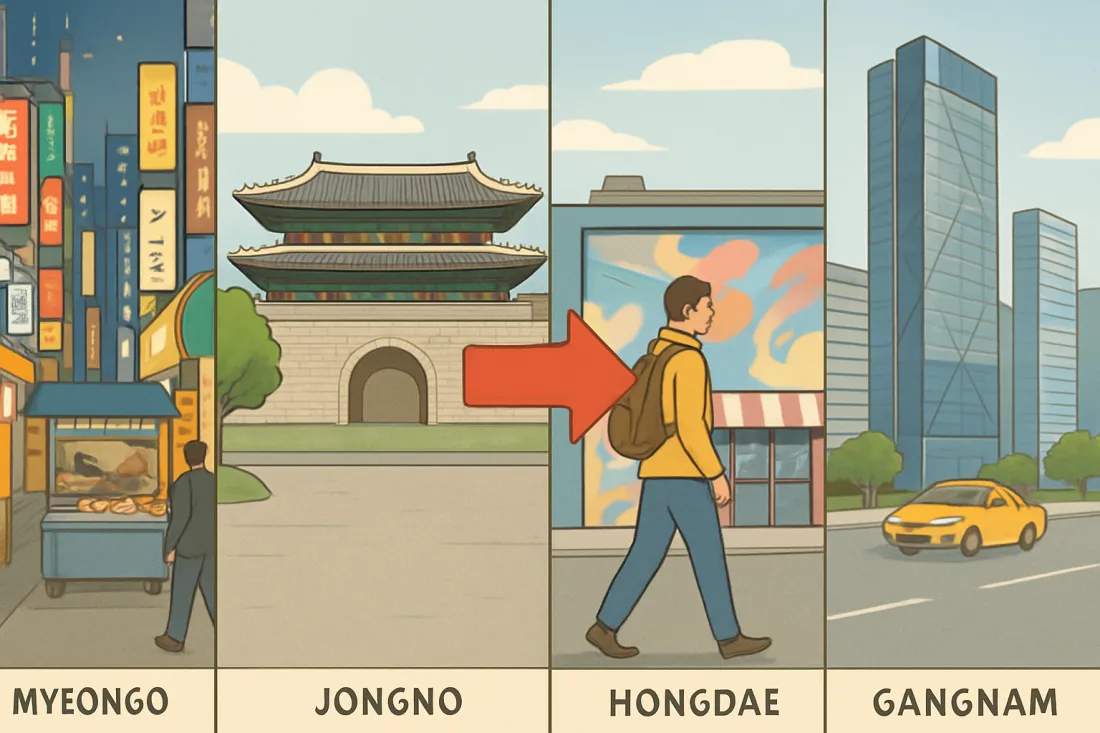
If you are visiting Seoul for the first time and want a clear starting point: most first-time visitors are happiest staying in Myeongdong or Jongno/Insadong. Both are central, convenient for palaces and markets, and reasonably easy to reach from Incheon Airport. From there, you can take short subway rides to trendier areas like Hongdae and Gangnam.
The “best” area still depends on your travel style, budget, and how much nightlife or quiet you want. The guide below compares the main neighborhoods first-time visitors usually consider and helps you choose a base that actually fits your trip.
How your Seoul neighborhood choice shapes your first trip
Seoul is huge and spread out. You will use the subway a lot, but your base still matters. Your neighborhood will shape:
- How much time you spend commuting to palaces, markets, and nightlife.
- How late you feel comfortable staying out (noise, crowds, last trains, taxis).
- What you see when you step outside your door – street food, shopping streets, hanok alleys, or glass towers.
- Your accommodation style and cost level – some areas skew to guesthouses and hostels, others to business hotels.
- How easy your airport days are – especially with luggage and jet lag.
For a first visit of 3–5 days, it usually makes sense to pick one main base that is central and well-connected, then visit other districts during the day or evening.
Quick comparison of the best areas to stay in Seoul for first time visitors
The table below compares the main neighborhoods most first-time visitors consider.
| Area | Best for first-timers who want | Main pros | Main cons | Airport access from Incheon |
|---|---|---|---|---|
| Myeongdong | Central base, shopping, easy first trip | Very central, lots of hotels, street food, walkable to markets and some palaces | Touristy, can be crowded and noisy, fewer late-night bars | AREX to Seoul Station + short subway/taxi; airport buses usually run directly to hotel zone |
| Jongno / Insadong | History, culture, palaces, traditional streets | Walkable to major palaces and Bukchon, many guesthouses, calmer at night | Less flashy shopping, some alleys very quiet late | AREX to Seoul Station + subway; airport buses serve main roads nearby |
| Hongdae | Nightlife, youth culture, cafes, street performances | Direct AREX stop, lively at night, many budget options | Can be loud until late, not as close to palaces | AREX train directly to Hongik Univ. Station |
| Itaewon | International food, bars, mixed crowd | Lots of global restaurants, nightlife, English-friendly | Hilly streets, fewer sights in walking distance, can feel rowdy on weekends | AREX to Seoul Station + subway/taxi; airport buses to nearby main roads |
| Gangnam | Modern Seoul, shopping, cafes, business vibe | Great food and shopping, modern hotels, good subway links | Farther from old-town sights, big roads and traffic | AREX to Seoul Station + subway; airport buses to Gangnam areas |
| Dongdaemun | Late-night shopping, markets, budget stays | Huge fashion markets, some malls open very late, many simple hotels | Less charm, traffic-heavy, not a nightlife hub for bars | AREX to Seoul Station + subway; airport buses to Dongdaemun area |
| Jamsil | Families, theme park, lakeside walks | Near Lotte World and parks, calmer residential feel, big malls | Farther from city center, fewer small guesthouses | AREX to Seoul Station + subway; airport buses to Jamsil/Lotte World |
Short profiles of key Seoul areas for first-time visitors
Myeongdong: easiest central base for first-timers
Myeongdong is one of the most popular areas for a first stay in Seoul. It is a dense shopping district filled with cosmetics shops, clothing stores, and street food stalls.
Pros of staying in Myeongdong
- Very central – quick subway rides to most sights; close to Seoul Station by taxi or subway.
- Beginner-friendly – lots of English menus, clear signage, and hotel staff used to international guests.
- Busy day and evening – easy to find food and snacks without planning.
- Good choice of hotels and guesthouses – from simple rooms to mid-range hotels.
Cons of staying in Myeongdong
- Very touristy – less of a local neighborhood feel.
- Can be noisy – music from shops and crowds until late evening.
- Less nightlife variety – more about shopping and food than bars and clubs.
Who Myeongdong suits best: first-time visitors who want a simple, central base; shoppers; short trips of 3–4 days; travelers who prefer convenience over local atmosphere.
Jongno / Insadong: best for history and traditional Seoul
Jongno and nearby Insadong sit between the main palaces and the modern center. Streets here mix offices, traditional tea houses, and small restaurants. Insadong’s main street is known for crafts and galleries.
Pros of staying in Jongno/Insadong
- Walkable to major palaces – Gyeongbokgung, Changdeokgung, and Bukchon hanok streets are nearby.
- More traditional atmosphere – hanok guesthouses, tea houses, and small alleys.
- Central but calmer – busy in the day, quieter at night than Myeongdong or Hongdae.
- Good base for culture-focused itineraries – museums, palaces, and temples are close.
Cons of staying in Jongno/Insadong
- Less flashy shopping – fewer big-brand stores compared to Myeongdong or Gangnam.
- Some streets very quiet at night – good for sleep, but fewer late options right outside.
- Hanok stays can be compact – traditional rooms may have thinner walls and floor bedding.
Who Jongno/Insadong suits best: culture lovers, couples, photographers, and anyone who wants to walk to palaces and hanok alleys.
Hongdae: youth culture and nightlife with direct AREX access
Hongdae (around Hongik University) is known for live music, street performances, cafes, and nightlife. It is also one of the easiest areas to reach from Incheon Airport because the airport train stops here.
Pros of staying in Hongdae
- Direct airport train – the AREX line stops at Hongik Univ. Station, so you can go from airport to hotel with one train.
- Lively nightlife – bars, clubs, and late-opening cafes.
- Many budget options – guesthouses, hostels, and small hotels.
- Street culture – buskers, art markets, and casual food.
Cons of staying in Hongdae
- Can be loud – music and crowds until late, especially on weekends.
- Farther from palaces – you will use the subway to reach Jongno and Myeongdong.
- Some streets feel crowded – especially in the evenings.
Who Hongdae suits best: solo travelers, groups of friends, nightlife fans, and budget-conscious visitors who still want a convenient base.
Itaewon: international food and mixed nightlife
Itaewon is known for its international restaurants, bars, and a diverse crowd. It sits south of the river from the old city center but north of Gangnam.
Pros of staying in Itaewon
- Huge variety of food – Middle Eastern, Western, and many other cuisines.
- Nightlife – bars and clubs that attract both locals and foreigners.
- English-friendly – many menus and signs in English.
Cons of staying in Itaewon
- Hilly streets – can be tiring with luggage or for travelers with mobility issues.
- Not many major sights in walking distance – you will use the subway or taxis often.
- Can feel rowdy on weekend nights – especially on the main bar streets.
Who Itaewon suits best: travelers who prioritize international food and nightlife over being close to palaces or markets.
Gangnam: modern, busy, and stylish
Gangnam is the modern business and shopping district south of the river, known from the “Gangnam Style” song. It is full of high-rise offices, malls, and cafes.
Pros of staying in Gangnam
- Modern vibe – wide streets, big malls, and stylish cafes.
- Plenty of restaurants – from casual to upscale.
- Good subway connections – several lines cross the area.
- Business-friendly hotels – many mid-range and higher-end options.
Cons of staying in Gangnam
- Farther from historic sights – expect longer subway rides to palaces and markets.
- Busy roads and traffic – crossing big junctions can take time.
- Less of a “first-time Seoul” feel – fewer traditional streets and markets nearby.
Who Gangnam suits best: repeat visitors, business travelers, shoppers, and those who prefer a modern city feel.
Dongdaemun: fashion markets and late-night shopping
Dongdaemun is a large shopping and wholesale district east of the center, known for fashion markets and malls that stay open late.
Pros of staying in Dongdaemun
- Great for fashion shopping – markets and malls focused on clothes and accessories.
- Late opening hours – some malls and markets operate into the night.
- Many simple hotels – practical for shoppers and groups.
Cons of staying in Dongdaemun
- Less charm – more about big roads and markets than cozy streets.
- Traffic-heavy – busy intersections and buses.
- Not a nightlife hub for bars – focus is more on shopping than drinking.
Who Dongdaemun suits best: travelers who plan to shop for clothes and fabrics late into the night and want to be near the markets.
Jamsil: family-friendly base near Lotte World
Jamsil is a residential and commercial area in southeast Seoul, home to Lotte World theme park, a large tower, and lakeside parks.
Pros of staying in Jamsil
- Great for families – close to Lotte World and kid-friendly attractions.
- Calmer residential feel – parks, walking paths, and river access.
- Big malls and food courts – easy meals with children.
Cons of staying in Jamsil
- Farther from central sights – longer subway rides to palaces and markets.
- Fewer small guesthouses – more large hotels and apartments.
- Less nightlife – evenings are quieter compared to Hongdae or Itaewon.
Who Jamsil suits best: families with children and visitors who plan to spend a full day or more at Lotte World and nearby attractions.
Typical budget accommodation patterns by area
Exact room prices change with season, weekend vs weekday, and how early you book. Instead of fixed numbers, use these patterns as a guide and always compare current offers:
- Myeongdong: wide range of mid-range hotels and some guesthouses. You often pay a bit more for the central, touristy location.
- Jongno/Insadong: mix of small hotels and hanok guesthouses. Traditional stays can feel slightly higher per space, but you gain atmosphere.
- Hongdae: many hostels, guesthouses, and budget hotels. Good area to look for shared or compact rooms if you want to save.
- Itaewon: mid-range hotels and guesthouses, with some places priced for nightlife convenience and international visitors.
- Gangnam: more business and higher-end hotels; budget options exist but may be smaller or farther from main streets.
- Dongdaemun: practical mid-range and budget hotels aimed at shoppers and groups; rooms can be simple but functional.
- Jamsil: larger hotels and serviced apartments, often oriented to families and theme park visitors.
For a first visit on a budget, Hongdae, parts of Jongno, and Dongdaemun are often good places to start your search for guesthouses and smaller hotels.
Best areas by traveler type: solo, couples, families, nightlife
Solo travelers
- Best overall: Hongdae – social hostels, nightlife, direct airport train.
- Quieter alternative: Jongno/Insadong – culture-focused, walkable, calmer evenings.
- Good if you want shopping and central access: Myeongdong.
Couples
- Romantic and cultural: Jongno/Insadong, especially if you book a hanok-style guesthouse.
- Shopping and food dates: Myeongdong or Gangnam.
- Nightlife dates: Hongdae or Itaewon (if you enjoy bars and late nights).
Families
- Best for theme parks and easy meals: Jamsil (near Lotte World and big malls).
- Central but manageable: Jongno/Insadong or Myeongdong – short subway rides, many food options.
- Consider: check if your hotel offers family rooms or connecting rooms, especially in busier districts.
Nightlife-focused trips
- Best for clubs and bars: Hongdae and Itaewon.
- Alternative: parts of Gangnam also have nightlife, but you will move more between subway lines.
- Tip: choose accommodation on a side street rather than directly above a main bar strip to reduce noise.
Noise, safety, and convenience considerations
Seoul generally feels safe for visitors, including at night in busy areas. Still, your neighborhood choice affects how comfortable you feel coming back late and how well you sleep.
Noise levels by area
- Usually loudest: Hongdae and Itaewon (bars, music, street crowds).
- Moderate: Myeongdong and Dongdaemun (shopping streets, traffic, but quieter after shops close).
- Usually quieter: Jongno/Insadong side streets and Jamsil residential zones.
- Mixed: Gangnam – big roads are noisy, but some back streets are calmer.
Practical checks before you book:
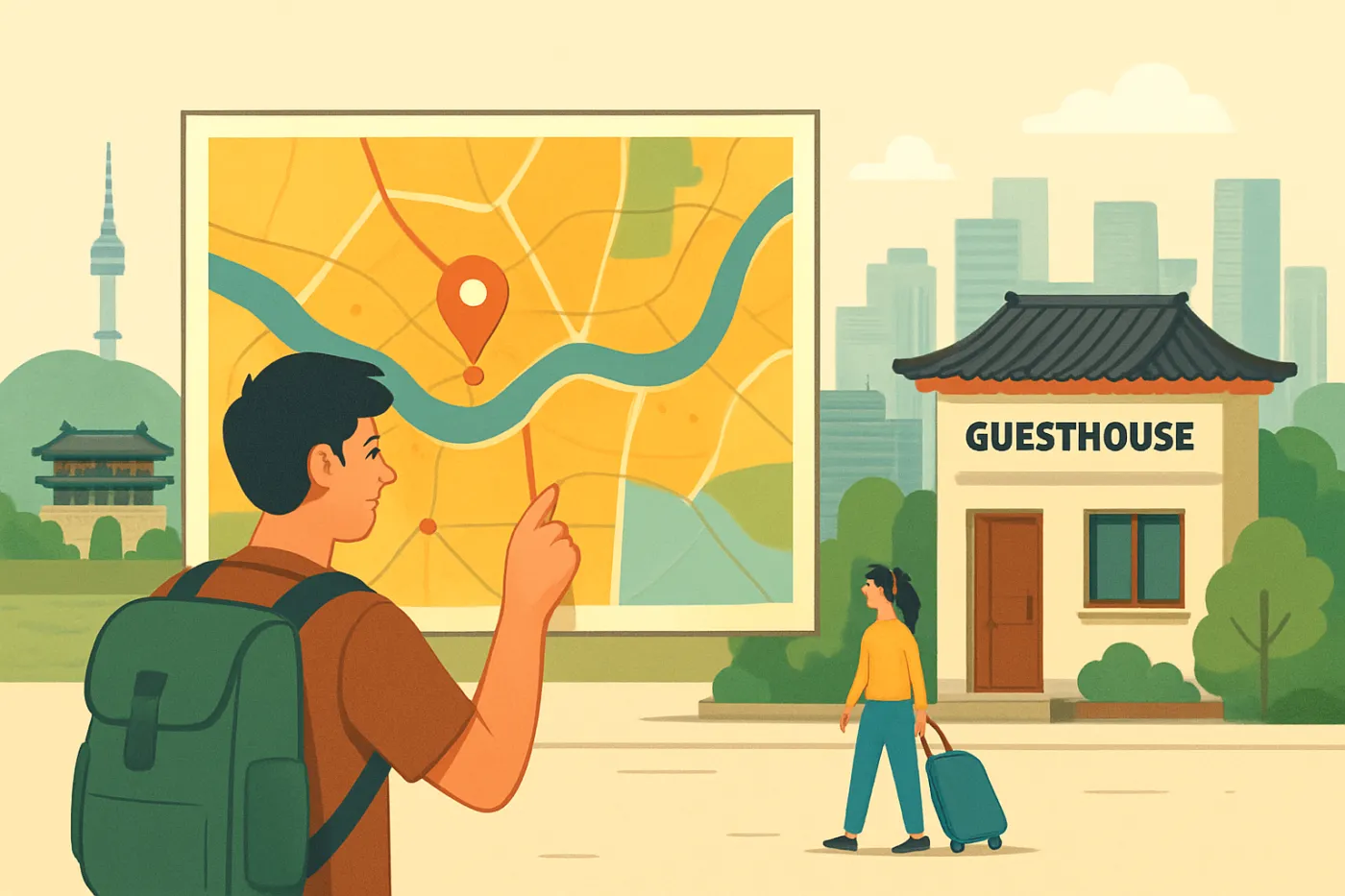
- Look at a map and see if your accommodation is directly on a main nightlife street or one block back.
- Read recent reviews mentioning noise, thin walls, or quiet rooms.
- Check if the property offers rooms on higher floors or facing away from main roads.
Safety and comfort
In busy districts, the main risks are usually pickpocketing in crowds and minor late-night disturbances rather than serious crime. To feel comfortable:
- Choose accommodation close to a subway station so you do not walk long distances late at night.
- Prefer well-lit streets with other people around over isolated alleys.
- For solo travelers, especially at night, consider Hongdae, Myeongdong, or Jongno main streets where there is steady foot traffic.
Getting from Incheon Airport to each neighborhood
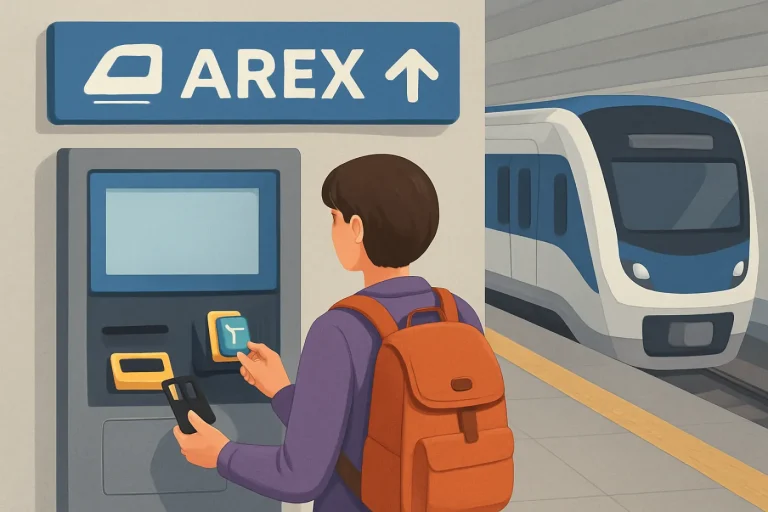
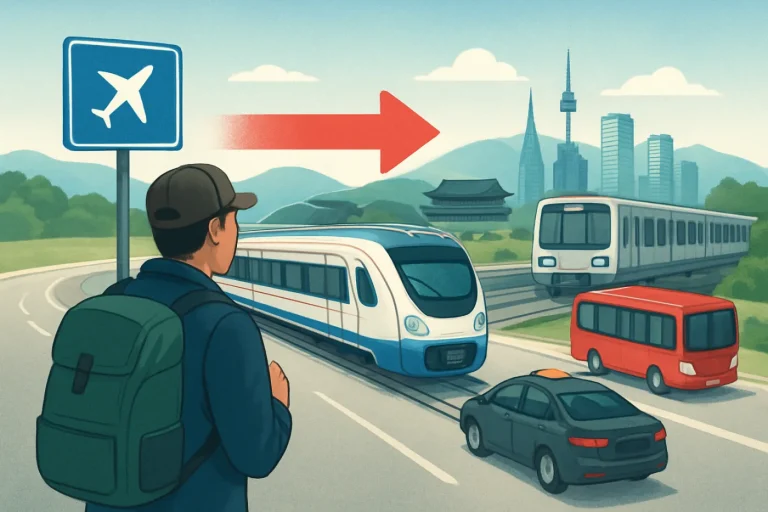
Most first-time visitors arrive at Incheon International Airport. You can reach Seoul by airport train (AREX), airport limousine bus, or taxi. To plan your route, it can be helpful to look at an AREX route map before you land.
AREX airport train
- To Hongdae: take AREX to Hongik Univ. Station. Many guesthouses are within walking distance.
- To Myeongdong or Jongno/Insadong: take AREX to Seoul Station, then transfer to the subway or a short taxi ride.
- To Gangnam, Dongdaemun, Jamsil, Itaewon: AREX to Seoul Station, then subway transfer toward your line.
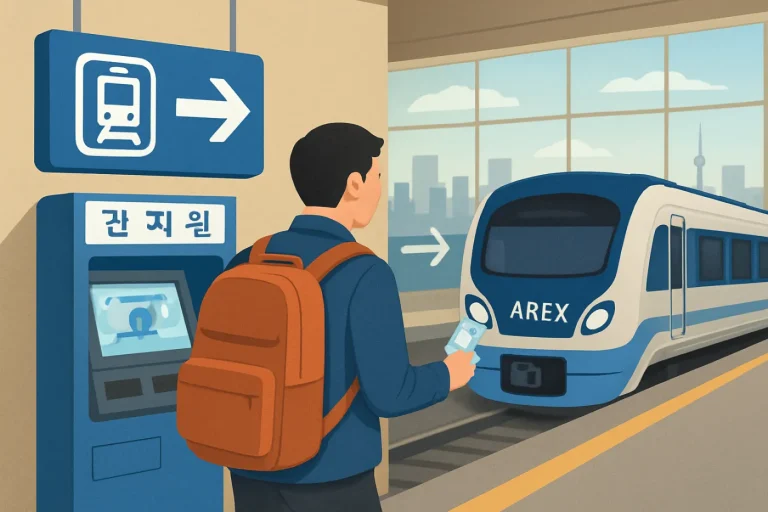
You can pay for the train with a transport card or dedicated tickets; if you want to compare options in detail, check an AREX ticket guide before you travel.
Airport limousine buses
Airport buses run from Incheon to many major hotel zones, including Myeongdong, Jongno, Gangnam, Dongdaemun, and Jamsil. They are convenient if you have heavy luggage and want to avoid subway transfers. Check current routes and stops close to your accommodation before you fly, because bus numbers and stops can change.
Taxis
Taxis from Incheon to central Seoul are the most comfortable but usually the most expensive option. They are useful if:
- You arrive very late at night or very early in the morning.
- You are traveling as a group and can share the fare.
- You have large luggage or young children and want a direct ride.
Always confirm the approximate fare range and any night surcharges before you travel, and use official taxi stands at the airport.
Example 3–5 day itineraries anchored in different neighborhoods
These sample itineraries show how your base changes your daily rhythm. Adjust days and order to your own schedule.
Staying in Myeongdong: classic first-time itinerary (4 days)
- Day 1: Arrive, check in, explore Myeongdong shopping streets and street food. Early night if jet-lagged.
- Day 2: Subway to Gyeongbokgung Palace and Bukchon hanok streets. Walk through Insadong. Evening back in Myeongdong.
- Day 3: Morning at Namsan Seoul Tower (via cable car or bus). Afternoon in Namdaemun Market. Optional evening visit to Dongdaemun for night shopping.
- Day 4: Half-day trip to Hongdae for cafes and street performances, then return to Myeongdong for last-minute shopping before departure.
Staying in Jongno/Insadong: culture-focused itinerary (3–5 days)
- Day 1: Arrive, walk Insadong main street, visit a tea house, and explore nearby alleys.
- Day 2: Gyeongbokgung Palace, Bukchon hanok area, and nearby museums. Evening stroll by Cheonggyecheon Stream.
- Day 3: Changdeokgung Palace and secret garden (if available), then walk to Myeongdong or Namdaemun Market.
- Day 4–5 (optional): Day trip to Hongdae or Gangnam; another evening in Dongdaemun for shopping.
Staying in Hongdae: nightlife and youth culture itinerary (4 days)
- Day 1: Arrive by AREX, check in, explore Hongdae streets, cafes, and street performances.
- Day 2: Day trip to Jongno/Insadong and palaces, evening back in Hongdae for bars or live music.
- Day 3: Visit Myeongdong and Namsan Tower, then late-night snacks in Hongdae.
- Day 4: Relaxed brunch, last-minute shopping, and departure via AREX.
Staying in Jamsil: family itinerary (3–4 days)
- Day 1: Arrive, check in, explore nearby mall and lakeside park.
- Day 2: Full day at Lotte World theme park and aquarium.
- Day 3: Subway to Jongno/Insadong for palaces and traditional streets, return early to Jamsil for a calm evening.
- Day 4: Optional half-day in Myeongdong or Dongdaemun for shopping before departure.
Structured checklist: how to choose your Seoul base
Use this checklist to narrow down your neighborhood. Answer each question and match your answers to the suggestions.
- How many full days do you have in Seoul?
- 3–4 days: prioritize central areas – Myeongdong or Jongno/Insadong.
- 5+ days: you can stay in Hongdae, Gangnam, or Jamsil and still see the main sights.
- What is your top priority?
- Palaces and history: Jongno/Insadong.
- Shopping and street food: Myeongdong or Dongdaemun.
- Nightlife and cafes: Hongdae or Itaewon.
- Modern city feel: Gangnam.
- Theme parks and kids’ activities: Jamsil.
- How sensitive are you to noise at night?
- Very sensitive: choose side streets in Jongno/Insadong, Jamsil, or quieter parts of Myeongdong.
- Moderately sensitive: Myeongdong or Dongdaemun, but avoid main intersections.
- Not very sensitive: Hongdae, Itaewon, or busy parts of Gangnam.
- How important is direct airport access?
- Very important: Hongdae (direct AREX stop) or areas with easy airport bus stops like Myeongdong.
- Somewhat important: any area near a subway line from Seoul Station.
- What kind of accommodation do you prefer?
- Guesthouses/hostels: Hongdae, Jongno side streets, parts of Itaewon.
- Mid-range hotels: Myeongdong, Dongdaemun, Jongno, Gangnam.
- Family hotels or serviced apartments: Jamsil and Gangnam.
- Traditional hanok stays: Jongno/Bukchon area.
- Do you plan to stay out late most nights?
- Yes, for nightlife: Hongdae or Itaewon.
- Mostly early nights: Jongno/Insadong, Jamsil, or quieter parts of Myeongdong.
After going through the checklist, you should have 1–2 areas that fit best. Compare a few properties there and double-check subway access and recent reviews before booking.
Common mistakes when choosing where to stay in Seoul
- Chasing the cheapest room without checking location: saving a little per night can cost you a lot of time and subway fares if you end up far from the sights you care about.
- Underestimating Seoul’s size: staying too far from the subway or in a distant suburb can turn every outing into a long commute.
- Ignoring noise reviews: in nightlife areas, reviews often mention loud music or thin walls; do not skip these if you are a light sleeper.
- Booking a hanok stay without reading details: traditional rooms can be charming but may have floor bedding, shared bathrooms, or less sound insulation than modern hotels.
- Not checking airport transport options: especially for late-night arrivals or early departures, confirm whether trains or buses run at your times.
- Switching neighborhoods too often: changing hotels every night or two can eat into your sightseeing time; for a short trip, one well-chosen base is usually better.
FAQ: choosing the best area to stay in Seoul for first time visitors
Where should I stay in Seoul if I am visiting for the first time?
For most first-time visitors, Myeongdong or Jongno/Insadong work best. Myeongdong is ideal if you want easy shopping, lots of food options, and a very central base with simple transport connections. Jongno/Insadong is better if you care more about palaces, hanok streets, and a slightly calmer, more traditional atmosphere. From either area, you can reach Hongdae, Gangnam, and other districts by subway in under an hour.
Which part of Seoul is best to stay in for tourists who want nightlife?
If nightlife is a priority, Hongdae and Itaewon are the main choices. Hongdae offers a mix of clubs, live music, and street performances with many hostels and guesthouses. Itaewon has a strong bar and club scene with lots of international restaurants. Both are well-connected by subway, but you will travel farther to reach palaces and markets than from Myeongdong or Jongno.
Is it better to stay in Myeongdong or Gangnam for a first trip?
For a first trip focused on classic sights, Myeongdong is usually more convenient. You are closer to markets, Namsan Tower, and a short subway ride from palaces and Insadong. Gangnam is better if you prefer a modern business and shopping district and do not mind longer rides to the historic center. Many visitors who stay in Gangnam still plan at least one full day north of the river for palaces and markets.
Is staying near Seoul Station a good idea for first-time visitors?
Staying near Seoul Station can be practical if you are arriving by train from another city or catching early trains or airport connections. You will have quick access to the AREX airport line and other rail services. However, the immediate area feels more like a transport hub than a sightseeing district. For a first trip focused on exploring, many visitors prefer Myeongdong or Jongno/Insadong and simply travel to Seoul Station when needed.
Should I switch neighborhoods mid-trip in Seoul?
Switching neighborhoods can make sense if you have a longer stay (for example, a week) and want to experience two very different sides of the city, such as a few nights in Jongno/Insadong for palaces and then a few nights in Hongdae or Gangnam. For shorter trips of 3–4 nights, changing hotels usually costs more time than it is worth. In that case, pick one central base and visit other areas by subway or taxi instead of moving your luggage.