How laundry and kitchen facilities usually work in Korean guesthouses
If you choose Korean guesthouses to keep your trip budget-friendly, you can usually wash clothes and prepare simple meals on site, but the setup varies a lot. Some places offer free laundry and a full shared kitchen, while others only have a microwave and a paid washing machine. To avoid surprise costs, assume nothing is included until you see it clearly listed in the description or confirm it with the host.
In most Korean guesthouses you will typically find:
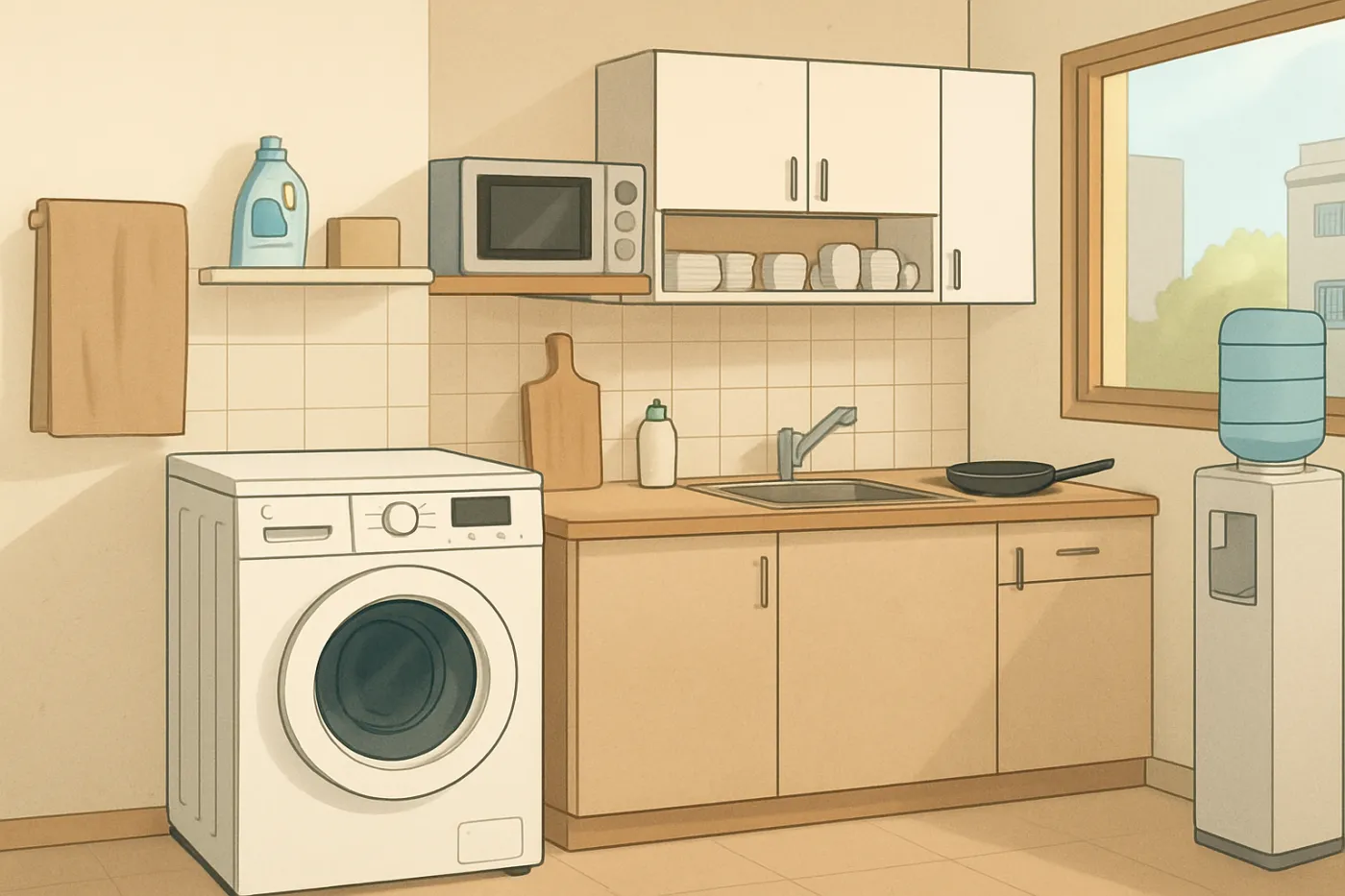
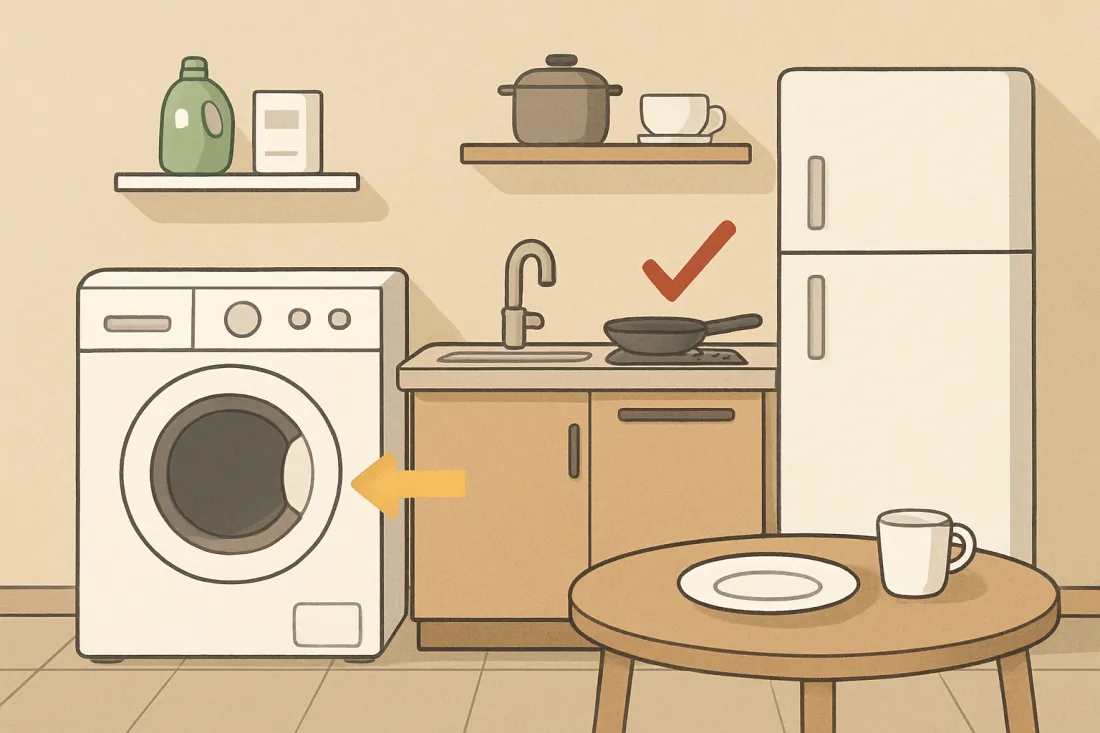
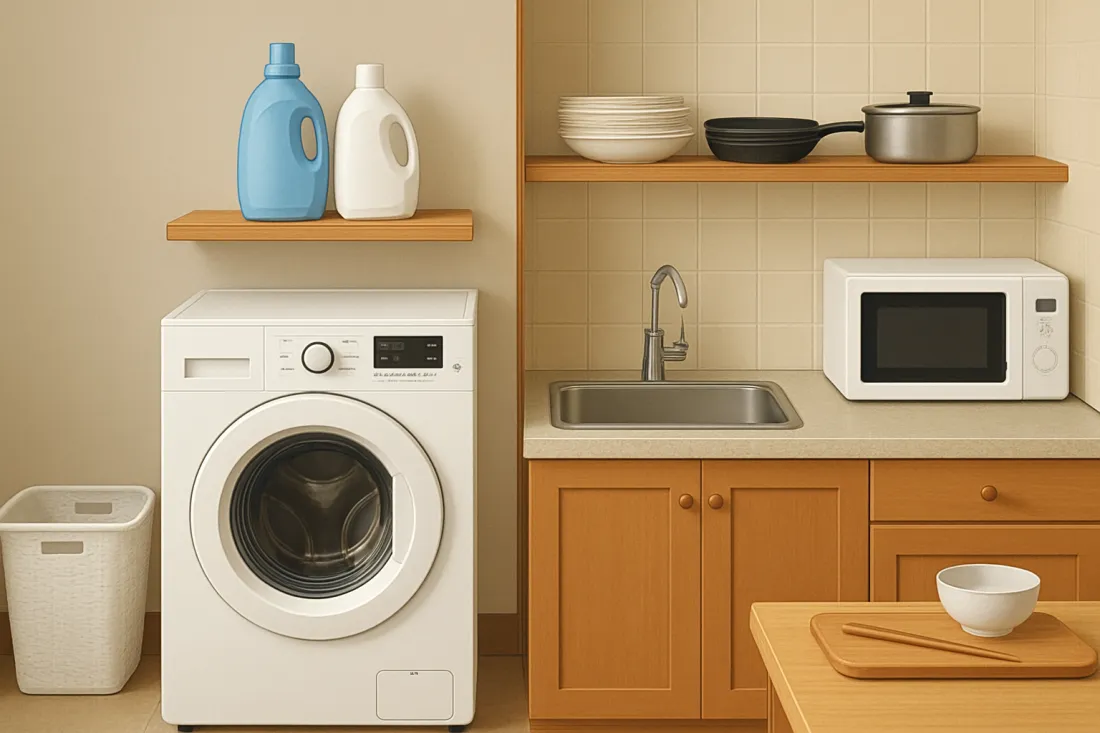
- Laundry: a shared washing machine (sometimes free, sometimes coin-operated), and less often a dryer; detergent may or may not be provided.
- Kitchen: a shared kitchenette with fridge, basic cookware, and dishes, but often no oven and limited space during peak times.
- House rules: quiet hours, set times for using laundry or kitchen, and expectations about cleaning up immediately after use.
The rest of this guide shows how to check what is really available, what might cost extra, and how to use these facilities smoothly.
Guesthouse laundry options in South Korea: what to expect
Most Korean guesthouses understand that travelers stay several nights and need to wash clothes. However, the exact setup can differ even within the same city. Expect one of these three main models:
- Free self-service laundry
Common in smaller, traveler-focused guesthouses. You use a shared washing machine (and sometimes a dryer) without paying per load. There may be a limit, such as only one load per day or only on certain days of the week. - Coin or paid self-service laundry
The guesthouse has machines on site, but you pay per wash and sometimes per dry. Payment is usually by coins, a small cash box, or a local payment app. This setup is similar to a small laundromat inside the property. - Paid laundry service
Less common but useful if you are busy. You hand over a bag of clothes and the staff wash and dry them for a set fee. Turnaround is usually same day or next day, depending on when you drop the clothes off.
Drying options also vary:
- Indoor drying racks in a laundry room or hallway.
- Outdoor lines or balcony racks, especially in smaller cities or coastal areas.
- Electric dryer, more likely in newer or higher-priced guesthouses.
Because of this variety, always check the exact wording: “washing machine available” does not automatically mean it is free, and “laundry service” usually means staff do it for you at a cost.
Typical laundry costs and how to avoid surprises
Exact prices change over time and differ by city and property, so treat any numbers you see online as examples, not guarantees. Instead of relying on a fixed figure, use these practical checks:
- Look for price notes in the room description or “Facilities” section, such as “Laundry (extra charge)” or “Free use of washing machine.”
- Check for minimum stay conditions like “Free laundry for stays of 3 nights or more.”
- Ask directly before booking: “Is there a fee per load for the washing machine or dryer?”
- Compare with a nearby laundromat using a map app to see if external laundry might be cheaper or more flexible.
As a rough planning approach, many travelers allow a small daily amount in their budget for laundry across the whole trip, then adjust on the spot depending on how often they actually wash. For example, if you expect to do laundry every 4–5 days, you can spread the expected cost across those days and treat it as part of your accommodation-related expenses.
How detergent is provided or charged in Korean guesthouses
Detergent is one of the most confusing parts of guesthouse laundry, because listings often mention the machine but not the soap. Expect one of these setups:
- Detergent included
A bottle of liquid detergent or a container of powder is kept next to the machine for guests to use. Sometimes there is a note asking you to use only a small scoop. - Detergent sold in small portions
The host sells single-use packets or small cups of detergent at reception or via a small honesty box in the laundry area. - Bring or buy your own
No detergent is provided. You buy a small pack at a nearby convenience store or supermarket.
To avoid last-minute runs to the shop, do the following:
- Check the listing photos for a laundry area; sometimes detergent bottles are visible.
- Read recent reviews; guests often mention if detergent is free or if they had to buy it.
- Ask the host in advance: “Is laundry detergent provided, or should I bring my own?”
- Carry a few travel-sized detergent sheets or powder sachets if you move between multiple guesthouses.
Kitchen facilities in Korean guesthouses: what is usually available
Shared kitchens in Korean guesthouses are designed more for simple meals than for complex cooking. They are ideal for breakfast, quick noodles, or reheating leftovers, not for multi-course dinners. Typical features include:
- Cooking equipment
- One or two gas or induction hobs.
- A microwave for reheating food.
- An electric kettle or hot water dispenser.
- Sometimes a small rice cooker.
- Storage and cold items
- Shared fridge with shelves or labeled baskets.
- Free drinking water or water purifier.
- Sometimes basic condiments such as salt, oil, soy sauce, or instant coffee.
- Utensils and dishes
- Basic pots and pans.
- Bowls, plates, and cups.
- Chopsticks, spoons, and a few knives.
What you are less likely to find:
- Full-size oven or baking trays.
- Specialty equipment like blenders or large roasting pans.
- Enough space for several people to cook full meals at the same time.
Plan your meals around this reality: think rice, noodles, eggs, simple stir-fries, sandwiches, and salads rather than complicated recipes.
Common kitchen rules and etiquette in Korean guesthouses
Shared kitchens only work if everyone respects the rules. Korean guesthouses often post house rules in English and Korean near the kitchen. Typical expectations include:
- Quiet hours: No cooking late at night or early in the morning to avoid noise and smells disturbing other guests.
- Clean as you go: Wash your dishes, wipe the counter, and leave the stove clean immediately after use.
- Label your food: Write your name and checkout date on items in the fridge to avoid confusion and waste.
- Do not take others’ food: Even if something looks unused, assume it belongs to someone unless it is clearly marked as free.
- Use only what is meant for guests: Do not open staff-only cupboards or use personal items left by others.
- Limit cooking time during peak hours: Breakfast and dinner times can be busy; keep your cooking simple so others can use the space too.
Following these rules not only avoids conflict but also makes hosts more willing to offer extras like free rice or coffee.
Comparison: types of Korean guesthouses by laundry and kitchen setup
| Guesthouse style | Typical laundry setup | Typical kitchen setup | When this suits you | Possible downsides |
|---|---|---|---|---|
| Backpacker / budget traveler guesthouse | Shared washing machine, sometimes free or low-cost; drying racks in hallway or rooftop | Small shared kitchen with hob, microwave, kettle, basic cookware and dishes | Best if you travel light, wash every few days, and cook simple meals to save money | Kitchen and laundry can be crowded; limited space in fridge; rules may be strict |
| Family-oriented guesthouse | On-site laundry, often paid per load; staff may help with operating machines | More spacious kitchen or dining area, sometimes with rice cooker and high chair | Good for families who need to wash kids’ clothes and prepare simple child-friendly meals | May restrict cooking times to keep noise down; laundry may be limited to certain hours |
| Design / boutique guesthouse | May offer paid laundry service instead of self-service machines | Compact kitchenette mainly for reheating and making drinks | Works if you prefer eating out and only need occasional laundry handled for you | Less control over laundry timing; higher cost per wash compared to self-service |
| Traditional house-style guesthouse | Simple washing machine, often shared with host; drying on balcony or yard | Home-style kitchen shared with host, with rice cooker and basic Korean cookware | Great if you want a homely feel and are comfortable sharing space closely with hosts | Less privacy; you may need to follow the family’s schedule and customs closely |
If you are still deciding what type of place to book, it can help to read more broadly about what is a guesthouse in Korea and how it compares to other accommodation types.
How to check laundry and kitchen details before booking
To avoid unexpected costs or missing facilities, treat laundry and kitchen as key filters when you search for a guesthouse. Use this process:
- Filter by facilities
On booking platforms, use filters such as “kitchen,” “laundry,” or “washing machine.” This quickly removes properties that definitely do not offer what you need. - Read the facilities list carefully
Look for exact phrases like “shared kitchen,” “kitchenette,” “laundry (additional charge),” or “washing machine (free).” If the wording is vague, assume there may be a cost or limitation. - Study recent reviews
Search within reviews for words like “laundry,” “washing machine,” “kitchen,” or “cooking.” Guests often mention if the kitchen was crowded, if detergent was free, or if laundry times were restricted. - Check photos
Photos of the kitchen and laundry area reveal how many hobs there are, whether there is a dryer, and how much space you will actually have. - Message the host
Before booking, send a short, clear message with your key questions (see the checklist below). Keep it specific so the host can answer quickly. - Confirm at check-in
When you arrive, ask staff to show you the laundry and kitchen, explain any time limits, and point out where detergent and shared items are kept.
You are planning a stay in a Korean guesthouse and want to avoid surprise costs for laundry and cooking. You have a shortlist of properties that mention a kitchen or washing machine, but the details are not fully clear from the listing alone.
For each shortlisted guesthouse, gather: the facilities list, recent guest reviews, and photos of the kitchen and laundry areas. Note your own needs, such as how often you plan to wash clothes, whether you need a dryer, and how many meals per day you expect to cook on site.
First, scan the facilities list for specific terms like “shared kitchen,” “laundry (additional charge),” and “washing machine (free).” Second, search within reviews for “laundry” and “kitchen” to see how guests describe real usage, crowding, and any hidden fees. Third, inspect photos to confirm the number of hobs, presence of a microwave, and whether a dryer or only drying racks are available. Finally, send the host a short message with two or three precise questions about laundry fees, detergent, and kitchen rules if anything remains unclear.
You know the procedure worked when you can write a one-line summary for each property, such as “Free washing machine, no dryer, detergent included; small kitchen with two hobs, no oven, quiet hours after 10 p.m.” If you cannot summarize a property this clearly, follow up with the host again or choose a different guesthouse where the facilities and rules are fully transparent.
Structured checklist: laundry and kitchen questions to ask or check online
Use this checklist while browsing listings or messaging hosts. It helps you compare options quickly and avoid missing an important detail.
Laundry checklist
- Is there a washing machine on site? Is it self-service or staff-operated?
- Is the washing machine free to use, or is there a fee per load?
- Are there time limits for using the machine (for example, not during late-night hours)?
- Is there a dryer, or only drying racks or balcony space?
- Is detergent provided for free, sold in small portions, or should you bring your own?
- Are there any limits per stay, such as “one free load per week” or “laundry only for stays over three nights”?
- Where is the laundry area located, and is it easy to access from your room?
Kitchen checklist
- Is there a shared kitchen or only a microwave and kettle?
- How many hobs are there, and are they gas or induction?
- Is there a microwave and an electric kettle?
- Is a rice cooker available for guests?
- What cookware and utensils are provided (pots, pans, knives, cutting boards)?
- Is there a shared fridge with space for your food, and how should you label items?
- Are any basic ingredients provided (oil, salt, soy sauce, instant coffee)?
- What are the kitchen hours and quiet times for cooking?
- Are there any restrictions (for example, no strong-smelling foods, no deep frying)?
Budget and rules checklist
- Is there a clear note in the listing about laundry being free or paid?
- Do reviews mention any unexpected charges for laundry or kitchen use?
- Are there house rules posted in English about cleaning and quiet hours?
- Does the guesthouse feel suitable for your style (quiet cooking, family meals, or mostly eating out)?
Example daily budget: how laundry and self-catering can change costs
Exact prices for food and laundry in South Korea vary by city and season, so use this section as a way to think about your budget rather than as fixed numbers. The idea is to see how using guesthouse facilities can shift your daily spending.
Imagine a traveler staying in a Korean guesthouse for one week. They plan to:
- Eat breakfast and one simple dinner in the guesthouse kitchen most days.
- Eat lunch out while sightseeing.
- Do two loads of laundry during the week.
To build a daily budget, they might:
- Estimate the cost of groceries for simple breakfasts (bread, eggs, fruit) and dinners (rice, vegetables, noodles).
- Estimate the cost of eating lunch out each day.
- Estimate the total cost of two laundry loads (including any detergent or dryer fees) and spread that across seven days.
- Add a small buffer for unexpected items, such as buying extra detergent or eating an extra meal out when the kitchen is busy.
By comparing this to a scenario where they eat every meal out and use a commercial laundromat, they can see how much the guesthouse kitchen and laundry might save over a week. Even if the exact amounts differ, the structure of the budget helps avoid surprises.
Common mistakes with laundry and kitchens in Korean guesthouses
Many problems with guesthouse facilities come from assumptions. Avoid these typical mistakes:
- Assuming “washing machine” means free laundry
Some listings simply state that a washing machine exists, without mentioning that it is coin-operated or staff-operated. Always confirm whether there is a fee per load. - Expecting a full Western-style kitchen
Most guesthouse kitchens are compact and designed for simple dishes. Do not plan complex recipes that require an oven, many burners, or special tools unless you have seen them in photos. - Ignoring kitchen and laundry hours
Trying to cook or wash clothes late at night can cause friction with hosts and other guests. Check posted hours and plan ahead. - Not bringing or checking for detergent
Arriving with a bag of dirty clothes and discovering there is no detergent on site is frustrating. Ask in advance or carry a small supply. - Leaving a mess in the kitchen
Failing to clean up immediately is one of the fastest ways to annoy hosts. It can even lead to stricter rules for everyone. - Overloading the washing machine
Trying to wash too many clothes at once can damage machines or leave clothes poorly cleaned. Follow the instructions posted near the machine. - Not labeling food in the fridge
Unlabeled food may be thrown away during cleaning or mistaken for abandoned items. Use labels or tape if provided.
Decision criteria: choosing the right guesthouse for your laundry and cooking needs
When comparing guesthouses, think about your own habits and priorities rather than just the nightly rate. Consider:
- Trip length
On a short trip, you may not need laundry at all. On a longer trip, convenient laundry can be more important than a slightly lower room price. - Travel style
If you enjoy exploring local restaurants, a simple kitchenette may be enough. If you prefer to cook most meals, look for a larger kitchen and reviews that praise it. - Season and weather
In humid or rainy seasons, having a dryer or good indoor drying space becomes more important than in dry weather. - Who you travel with
Families with children often benefit from easy laundry and a reliable kitchen more than solo travelers who can pack light and eat out. - Budget flexibility
If your budget is tight, prioritize guesthouses that clearly offer free or low-cost laundry and a usable kitchen. If you have more flexibility, you might accept paid laundry or a smaller kitchen in exchange for location or comfort.
If you are still weighing different accommodation types, it may help to compare them with broader guides on budget accommodation in South Korea or family-focused options like family accommodation in Korea guesthouse vs hotel.
FAQ about laundry and kitchen facilities in Korean guesthouses
What should travelers understand first about laundry and kitchen facilities in Korean guesthouses?
Travelers should understand that laundry and kitchen facilities are usually shared and vary widely between properties. A guesthouse might have a free washing machine and a well-equipped kitchen, or it might only offer a microwave and paid laundry service. Listings often mention the existence of a kitchen or washing machine without clearly stating whether they are free, what hours they can be used, or whether detergent and basic cooking items are included. Because of this, it is essential to read reviews, check photos, and ask the host specific questions before booking.
What mistakes do guests commonly make with laundry and kitchens in Korean guesthouses?
Common mistakes include assuming that any mention of a washing machine means free, unlimited laundry; planning complex meals that require an oven or multiple burners when the kitchen is small; ignoring posted hours for laundry and cooking; and failing to clean up immediately after using the kitchen. Guests also sometimes forget to label food in the shared fridge or to check whether detergent is provided. These oversights can lead to extra costs, inconvenience, or tension with hosts and other guests.
How can I avoid unexpected laundry costs in a Korean guesthouse?
To avoid unexpected laundry costs, look for clear notes in the listing about whether laundry is free or charged per load, and read recent reviews for mentions of laundry fees. If the information is not explicit, message the host with a direct question such as, “Is there a fee per load for the washing machine or dryer, and is detergent included?” You can also check the area on a map app for nearby laundromats as a backup option. When you arrive, confirm any prices again at check-in so you can plan how often to wash clothes during your stay.
What should I do next after learning about laundry and kitchen setups in Korean guesthouses?
Next, review your travel plans and decide how important on-site laundry and cooking are for your trip. Use the checklists above to filter and compare guesthouses, then message your top choices with any remaining questions about laundry fees, detergent, kitchen hours, and equipment. Once you book, plan a simple meal strategy and a rough laundry schedule based on your stay length and the facilities available. This preparation helps you control your daily budget and avoid last-minute stress about where to wash clothes or cook a quick meal.