If your main goal is sightseeing, most visitors find it easier and usually cheaper to stay north of the river in areas like Myeongdong or Jongno, and then visit Gangnam for a day or night out. Gangnam works best if you care more about modern city vibes, shopping, and business meetings than ticking off classic Seoul sights.
How Seoul is split: Gangnam vs north of the Han River
Before choosing between Gangnam and Myeongdong, it helps to understand Seoul’s basic layout.
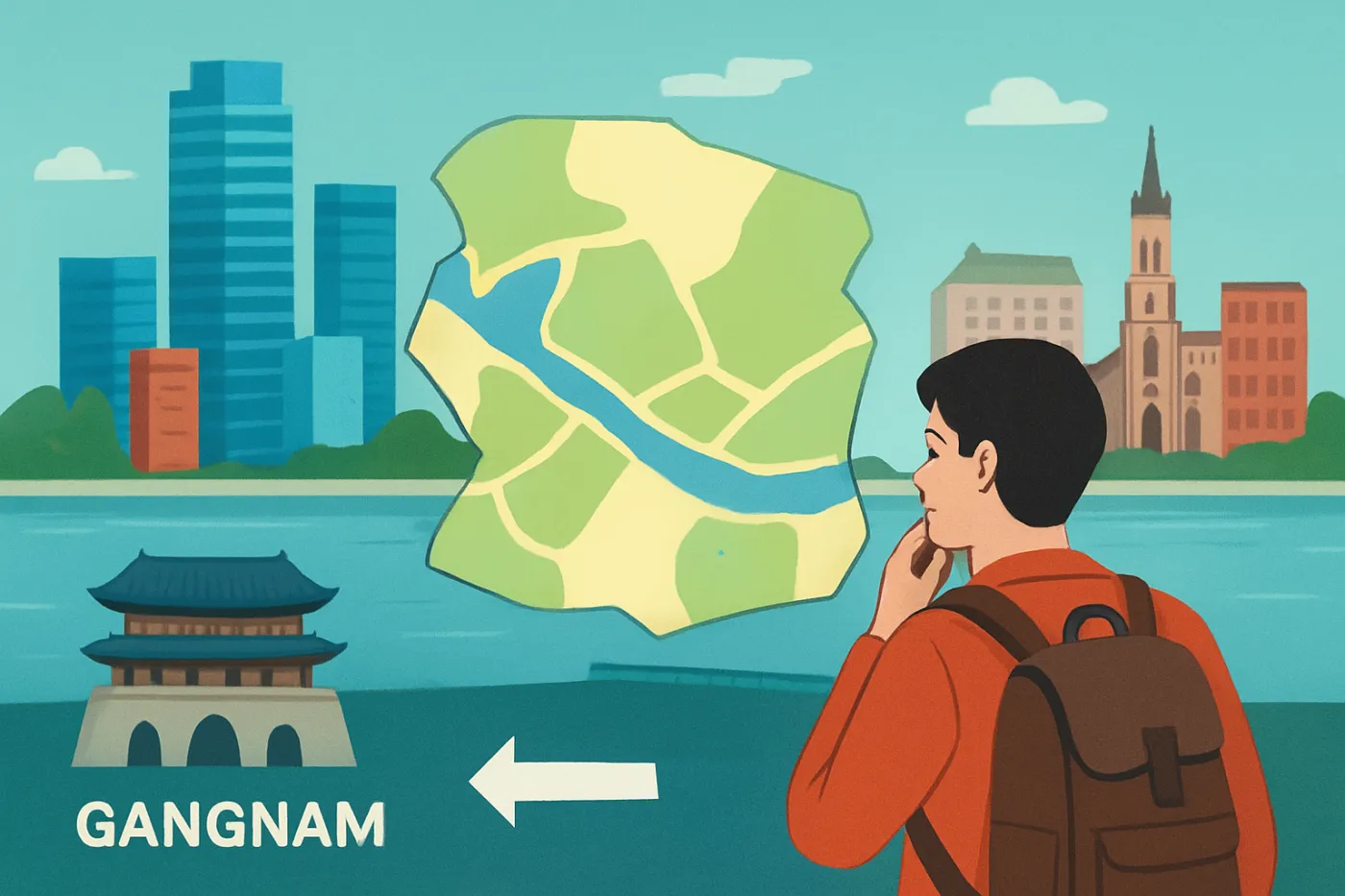
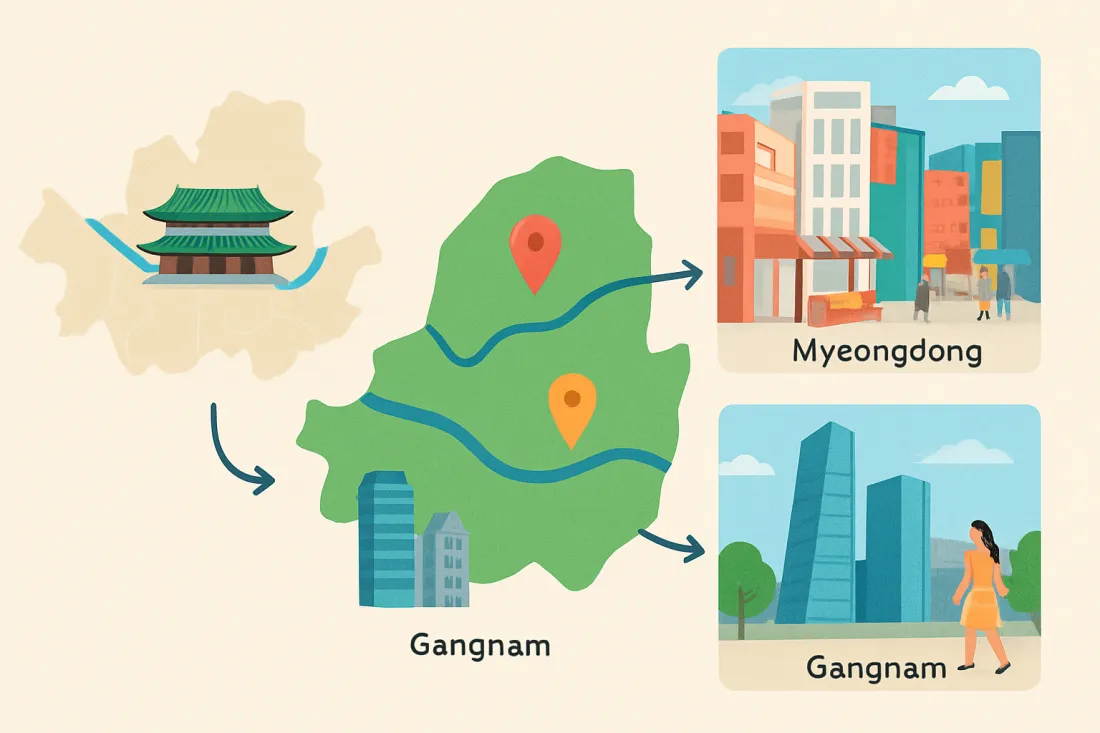
- Han River: The wide river running through the city. Locals often talk about Gangbuk (north of the river) and Gangnam (literally “south of the river”).
- North of the river (Gangbuk): This is where you find most of the classic tourist sights and older neighborhoods – Gyeongbokgung Palace, Bukchon Hanok Village, Insadong, Myeongdong, Jongno, Hongdae, and many museums and markets.
- South of the river (Gangnam and beyond): Newer, denser, and more business-focused. Gangnam, COEX, Sinsa, and Jamsil (Lotte World area) sit here, with big malls, offices, and nightlife.
Subway lines cross the river in many places, so you are not “stuck” on one side. But your base will affect:
- How often you need to cross the river
- How long your average ride is to key sights
- What you see when you step out of your hotel or guesthouse
Vibe check: Gangnam vs Myeongdong and other central areas
Gangnam and Myeongdong both feel busy and urban, but the atmosphere is very different.
Gangnam’s overall feel
- Modern and business-heavy: High-rise offices, glass towers, and wide roads. It feels like a financial and tech hub.
- Trendy and polished: Stylish cafes, designer boutiques, beauty clinics, and bars. Many locals in business attire or fashion-forward outfits.
- Evenings are lively, mornings can be quiet: After work, restaurants and bars fill up. Weekends are busy with shoppers and diners.
- Less “old Seoul” charm: You will not see hanok houses or traditional markets on your doorstep.
Myeongdong and central/northern neighborhoods
When people ask “Is it better to stay in Gangnam or Myeongdong?”, they usually mean Gangnam vs the main tourist belt north of the river: Myeongdong, Jongno, Insadong, and sometimes Hongdae.
- Myeongdong: Compact, walkable, and very tourist-oriented. Famous for skincare shops, street food, and bright signs. It is busy and can feel crowded at night, but many attractions are a short subway ride away.
- Jongno / Insadong: More traditional feel, with palaces, hanok alleys, tea houses, and galleries. Streets are smaller, and you see more local life mixed with tourists.
- Hongdae: Youthful, artsy, and nightlife-focused, with buskers, clubs, and casual eateries. Great if you like music and late nights.
In short:
- Choose Gangnam if you want a sleek, modern city base and do not mind longer rides to the palaces and markets.
- Choose Myeongdong/Jongno if you want quick access to classic sights and do not care if the area feels touristy.
Sightseeing convenience: getting around from Gangnam vs Myeongdong
Both Gangnam and Myeongdong are on major subway lines, so you can reach most places without changing trains too many times. The difference is how often you need to cross the river and how long each ride feels.
Typical travel times and patterns
Exact minutes depend on your exact hotel and transfer times, but you can think in rough ranges and patterns:
- Gangnam to Myeongdong: Often around 20–30 minutes on the subway with at least one transfer. It is not far, but you will likely cross the river.
- Gangnam to palaces (Gyeongbokgung / Changdeokgung area): Often around 30–40 minutes with a transfer. You will be going north of the river and then further up.
- Myeongdong to palaces: Often around 10–20 minutes, sometimes with no transfer or just one quick change.
- Myeongdong to Hongdae: Often around 20–30 minutes by subway with a transfer.
- Gangnam to COEX / Sinsa / Apgujeong: Often 5–20 minutes by subway or bus, sometimes walkable depending on where you stay.
For a short 3-night trip focused on sightseeing, those extra 10–20 minutes each way can add up, especially if you go back to your room to rest midday.
Airport access patterns
From Incheon Airport, you can reach both Gangnam and Myeongdong by train plus subway, airport bus, or taxi. The best option depends on your arrival time, luggage, and budget. If you want to compare routes in more detail, check guides such as the AREX route map or practical breakdowns like the cheapest way from Incheon Airport to Seoul.
Accommodation types and typical price patterns
You can find everything from hostels to luxury hotels on both sides of the river, but the mix and price patterns differ.
North of the river (Myeongdong, Jongno, Hongdae)
- More budget and mid-range options: Guesthouses, hostels, and small hotels are common, especially around Myeongdong, Jongno, and Hongdae.
- Compact rooms: Many buildings are older and space is tight, so rooms can be small but functional.
- Tourist-focused services: Staff are often used to foreign visitors, with luggage storage, tour desks, and simple breakfast options.
- Price pattern: Often more affordable than similar-quality places in prime Gangnam business areas, especially during weekdays when business demand is high in the south.
Gangnam and south of the river
- More business hotels and upscale chains: Many properties target business travelers, conferences, and medical tourists.
- Serviced apartments and residences: Good for longer stays or families who want a kitchenette and laundry.
- Stylish boutique stays: Especially around Sinsa and Apgujeong, with design-focused interiors and trendy cafes downstairs.
- Price pattern: Often higher than similar-sized rooms north of the river, especially near major office clusters and malls. You may pay a premium for the address and newer buildings.
Because exact prices change with season and demand, always compare a few dates and room types before deciding. Use the patterns above as a guide rather than fixed rules.
Business focus, tourist focus, and English signage
Both Gangnam and Myeongdong see many international visitors, but the kind of visitor differs.
- Gangnam
- Strong business and medical tourism presence: many clinics, corporate offices, and conference venues.
- English signage is common in big malls, subway stations, and chain restaurants, but smaller local spots may be more Korean-language focused.
- Staff in hotels and larger venues usually speak some English, but neighborhood eateries may rely more on picture menus or translation apps.
- Myeongdong / central north
- Very tourist-focused, especially Myeongdong itself. Many shops and restaurants are used to foreign customers.
- English, and sometimes other languages, appear on menus, signs, and promotions in busy streets.
- Guesthouses and hostels often have multilingual staff or detailed English instructions for check-in, laundry, and local tips.
If you are nervous about language barriers, Myeongdong and nearby central areas usually feel easier for first-time visitors.
Nightlife, dining, and shopping: how the areas differ
Both sides of the river are great for food and shopping, but the style is different.
Gangnam side
- Dining: Trendy cafes, dessert shops, barbecue restaurants, and high-end dining. Many places are popular with office workers and locals on dates.
- Nightlife: Bars, lounges, and clubs with a polished feel. Some venues have dress codes or table reservations, especially in the most upscale spots.
- Shopping: Big malls (like those around COEX and Jamsil), department stores, and designer boutiques in Sinsa and Apgujeong. Great for fashion and beauty shopping in a modern setting.
Myeongdong and central north
- Dining: Street food stalls, casual eateries, and traditional restaurants. Easy to grab quick bites between sights.
- Nightlife: Myeongdong itself is more about shopping than clubbing, but Jongno and Hongdae nearby offer bars, craft beer spots, and live music.
- Shopping: Skincare and cosmetics shops, souvenir stores, and mid-range fashion chains. Prices and promotions target tourists heavily.
If your ideal evening is wandering busy streets, snacking on street food, and doing last-minute shopping, Myeongdong is very convenient. If you prefer sitting in stylish cafes or going to modern bars and clubs, Gangnam may suit you better.
Gangnam vs Myeongdong: comparison table by travel style
| Factor | Gangnam (south of river) | Myeongdong / central north |
|---|---|---|
| Main vibe | Modern, business, polished, high-rise city feel | Touristy, busy, closer to historic Seoul and markets |
| Access to classic sights | Often 30–40 minutes with river crossing for palaces and old town | Often 10–20 minutes to palaces, markets, and museums |
| Access to modern malls and clinics | Very convenient for COEX, Sinsa, Apgujeong, and medical centers | Requires 20–40 minutes southbound by subway |
| Typical accommodation mix | Business hotels, serviced apartments, upscale and boutique stays | Guesthouses, hostels, budget and mid-range hotels |
| Price tendency | Often higher in prime business zones, especially weekdays | Often more budget-friendly for similar room size and quality |
| English friendliness | Good in hotels and malls, more Korean-only in small local spots | Very tourist-oriented; English menus and signs common in busy streets |
| Best for | Business trips, modern city lovers, shoppers, repeat visitors | First-timers, sightseeing-focused trips, budget travelers |
| Potential downside | Longer rides to historic sights; less “old Seoul” character | Can feel crowded and touristy; smaller rooms in older buildings |
Who should stay in Gangnam vs who is better north of the river
Gangnam is a good base if you:
- Have business meetings, conferences, or medical appointments in Gangnam, COEX, or nearby districts.
- Prefer a modern, polished city feel with big malls, designer shops, and trendy cafes.
- Are a repeat visitor who has already seen the main palaces and markets and now wants to explore a different side of Seoul.
- Plan to spend most evenings in bars, lounges, or clubs south of the river.
- Do not mind 30–40 minute subway rides to reach historic sights on some days.
Myeongdong / central north is a better base if you:
- Are a first-time visitor focused on palaces, markets, museums, and traditional neighborhoods.
- Have a short stay (2–4 nights) and want to minimize travel time between sights.
- Prefer budget or mid-range accommodation and do not need large rooms.
- Feel more comfortable in tourist-oriented areas with lots of English signage and other travelers around.
- Enjoy street food, casual dining, and late-night shopping more than upscale lounges.
If you are still unsure and it is your first trip, many travelers find it easier to pick a central north base and simply visit Gangnam for one or two afternoons or evenings.
Decision checklist: is Gangnam right for your Seoul trip?
Use this quick checklist to see which side of the river fits you better. If you answer “yes” to most items in one column, that side is likely your best base.
- 1. Trip length
- Staying 3 nights or less and want to see the main sights? → Lean toward Myeongdong / central north.
- Staying a week or more and want to explore multiple areas in depth? → Either side can work; consider splitting your stay.
- 2. Main purpose
- Business meetings, clinics, shopping in COEX/Sinsa? → Gangnam makes sense.
- Palaces, markets, museums, hanok villages? → Myeongdong / Jongno is more convenient.
- 3. Daily schedule
- Okay with 30–40 minute subway rides to start your sightseeing day? → Gangnam is fine.
- Prefer to reach most sights in 10–20 minutes and pop back to your room easily? → North of the river is better.
- 4. Budget comfort zone
- Happy to pay a bit more for a newer building and business-style hotel? → Gangnam can fit.
- Want to stretch your budget with guesthouses or compact hotels? → Myeongdong, Jongno, or Hongdae usually offer more options.
- 5. Evening plans
- Bars, lounges, and modern restaurants are your priority? → Gangnam side.
- Street food, night shopping, and casual eateries sound better? → Myeongdong / central north.
- 6. Comfort with language
- Comfortable using translation apps and exploring more local-feeling streets? → Either side is fine.
- Want maximum English menus and tourist services right outside your door? → Myeongdong is usually easier.
Sample 3-day sightseeing plans from each base
To picture the difference, here are example 3-day plans. Adjust times and stops to your interests, but notice how much back-and-forth each base requires.
3-day plan from a Myeongdong / Jongno base
Day 1 – Palaces and traditional Seoul
- Morning: Walk or take a short subway ride to Gyeongbokgung Palace.
- Late morning: Explore Bukchon Hanok Village on foot.
- Lunch: Traditional restaurant in Insadong.
- Afternoon: Visit a museum or tea house nearby.
- Evening: Return to Myeongdong in 10–20 minutes, enjoy street food and shopping.
Day 2 – Markets and Namsan views
- Morning: Short subway ride to Gwangjang Market or another central market.
- Lunch: Try local specialties at the market.
- Afternoon: Head back toward Myeongdong, rest at your hotel.
- Late afternoon/evening: Go up Namsan Seoul Tower for city views, then walk back or take a quick bus/taxi.
Day 3 – Hongdae and a taste of Gangnam
- Morning: Subway to Hongdae for cafes, street art, and shopping.
- Afternoon: Return to your base to rest or shop in Myeongdong.
- Evening: Take the subway to Gangnam for dinner and a walk around the neon-lit streets, then head back north.
From a Myeongdong base, most days involve short rides, and you only cross the river when you choose to.
3-day plan from a Gangnam base
Day 1 – Modern Seoul and COEX
- Morning: Explore COEX Mall, its library, and nearby attractions.
- Lunch: Eat in the mall or nearby streets.
- Afternoon: Visit a nearby temple or park south of the river.
- Evening: Dinner in Gangnam or Sinsa, enjoy cafes or bars close to your hotel.
Day 2 – Crossing the river for palaces
- Morning: Take the subway north (often 30–40 minutes) to Gyeongbokgung Palace.
- Late morning: Walk to Bukchon Hanok Village.
- Lunch: Eat in Insadong or nearby.
- Afternoon: Explore another central sight, such as a museum or market.
- Late afternoon: Take the subway back to Gangnam to rest.
- Evening: Dinner and drinks near your hotel.
Day 3 – Markets and Hongdae or Jamsil
- Option A (north-focused): Morning subway north to a central market, lunch there, then continue to Hongdae before returning south in the evening.
- Option B (south-focused): Stay south of the river, visiting Jamsil and nearby attractions, then return to Gangnam for a final night out.
From a Gangnam base, you can keep one or two days entirely south of the river, but any palace or old-town day will involve longer subway rides.
Common mistakes when choosing between Gangnam and Myeongdong
- Assuming “Gangnam” automatically means best location: It is famous worldwide, but that does not mean it is the most convenient base for sightseeing.
- Underestimating travel time: Looking at the map and thinking “it is just a few stops” without considering transfers and walking inside big stations.
- Ignoring your daily rhythm: Night owls may love Gangnam’s nightlife, while early risers focused on palaces might find the extra commute tiring.
- Choosing only by hotel brand: Picking a familiar chain in Gangnam when a smaller hotel north of the river would save time and better match your plans.
- Not checking exact station distance: In both areas, some hotels are right by the subway, others require a 10–15 minute walk. That matters if you will ride the subway multiple times a day.
- Forgetting airport logistics: If you arrive late at night or leave very early, check which airport bus or train options run at your times for each area. Guides like the AREX vs airport bus vs taxi Incheon to Seoul comparison can help you plan.
Putting it together: how to make your final choice
If you are a first-time visitor, staying north of the river in Myeongdong or Jongno is usually the most straightforward option. You will spend less time commuting to the main sights and more time actually exploring. Gangnam is a great place to visit for an afternoon or evening, and it becomes a stronger base if your plans are already focused there.
If you want to explore other neighborhoods beyond Gangnam and Myeongdong, or you are still unsure which area fits your style, you can also look at a broader guide to the best area to stay in Seoul for first time visitors to compare more options.
FAQ about staying in Gangnam vs Myeongdong
Which area in Seoul is generally best to stay in for first-time visitors?
For most first-time visitors focused on sightseeing, an area north of the river such as Myeongdong or Jongno works best. You are closer to the main palaces, markets, and museums, and daily travel times are shorter. These neighborhoods also have many guesthouses and mid-range hotels that are used to international travelers, with plenty of English signage and easy food options.
Is Gangnam a good area to stay in at all?
Yes, Gangnam is a good base for certain types of trips. It is especially convenient if you have business meetings, medical appointments, or events in the area, or if you are a repeat visitor who wants to focus on modern malls, cafes, and nightlife. The main trade-off is longer subway rides to historic sights north of the river, so it is less ideal if your priority is ticking off classic Seoul attractions in a short time.
How far is Gangnam from Myeongdong in practice?
On the subway, many travelers find the ride between Gangnam and Myeongdong takes roughly 20–30 minutes, usually with at least one transfer and some walking inside stations. It is an easy commute for a day or evening out, but if you do it twice a day for several days, it can feel long compared with staying directly in Myeongdong or nearby.
Is Gangnam really the most expensive part of Seoul to stay in?
Gangnam is known as a premium area with many upscale hotels, clinics, and shopping streets, so prices there often trend higher than in more budget-friendly neighborhoods. However, it is not the only expensive area, and actual room rates vary by date, hotel type, and demand. You can sometimes find deals in Gangnam, and you can also find high-end hotels north of the river. Instead of assuming one side is always more expensive, compare a few properties in both areas for your exact dates.
Can I stay in Myeongdong and still enjoy Gangnam’s nightlife and shopping?
Yes. Many visitors stay in Myeongdong or nearby and take the subway to Gangnam for an afternoon or evening. The ride is manageable for occasional trips, and this approach lets you keep your base close to the main tourist sights while still experiencing the modern, trendy side of Seoul.